Upon release from David’s Island hospital T.F. returned to Richmond, VA to await exchange. He was furloughed and went home where he remained until the exchange was made official in May of 1864. T. F. had numerous opportunities to fight with other Confederate forces but he chose to return to Company “K”.
On his way back he helped to defend the Staunton River Bridge. I’m assuming that he traveled through New Orleans, as he did at the start of the war. T.F. states in one of his bios, “On my way back I walked nearly 300 miles before reaching transportation and had to walk from Danville, VA to Petersburg, VA after defending the railroad bridge across the Staunton River. I would assume that rail travel had become pretty sketchy by then. The distance between Danville and Petersburg was an additional 135 miles that he had to walk.
The Battle of the Staunton River Bridge occurred on June 25th, 1864. Grant wanted to cut off the supply lines, Richmond and Danville Railroad, to Petersburg. They intended to take and burn the bridge. The bridge was defended by 938 Confederates, which included T.F., under the command of Captain Benjamin L. Farinholt. They were able to successfully defend the bridge against 5,000 Union cavalry and 16 artillery pieces. T.F. stated, “Here I had a close call as a ball from a sharpshooter passed between my arm and body, cutting both the sleeve and body of my coat. I did not know of this till next day. I thought the ball knocked the dirt against me by hitting the bank in front of me.” He would finally reach his Company in Petersburg, VA on July 4th, 1864.
In August of 1864, Company K, as part of the 5th Texas Infantry Regiment, was engaged in the Siege of Petersburg, Virginia. According to T.F., he had rejoined his company at Petersburg in July of 1864. T.F. stated that he was injured at White Oak Swamp or the Second Battle of White Oak Swamp. His muster card even states W.O. Swamp, wounded severely–neck & left lung. There was only one recognized battle fought at White Oak Swamp and it occurred in June of 1862. It was a part of the Seven Days Battles (Peninsula Campaign).
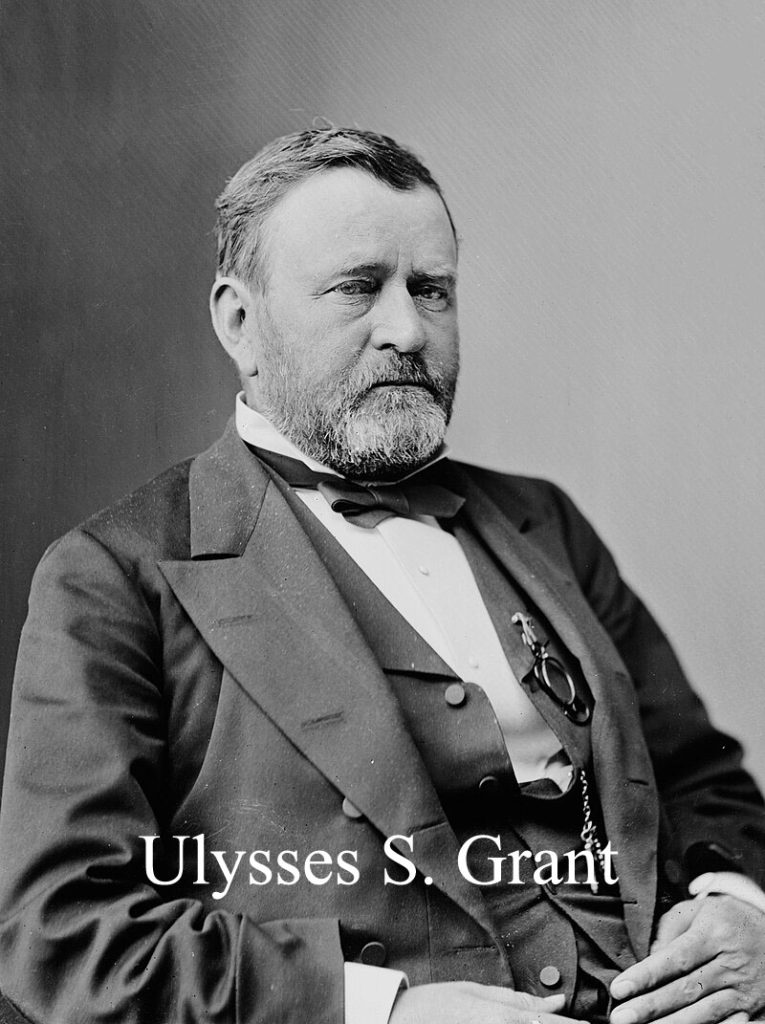
The Richmond-Petersburg campaign or the Siege of Petersburg was fought from June 9th, 1864 until March 25th, 1865. Grant’s strategy was to surround Petersburg, cutting off Lee’s supply route to the South and the Confederate Capital of Richmond, VA. Lee would finally abandon both cities in April of 1865. Lee and his forces would retreat west to the central Virginia village of Appomattox Court House. Robert E. Lee and his Army of Northern Virginia would surrender to the Union Army of the Potomac under the Commanding General of the United States Army, Ulysses S. Grant.
The 5th Texas, along with the rest of the Texas Brigade, fought in numerous engagements during the Siege of Petersburg. In August of 1864, one such engagement was the Second Battle of Deep Bottom, which occurred from August 14th to the 20th in Henrico County, VA. It was also known as Fussell’s Mill, New Market Road, Bailey’s Creek, Charles City Road or White’s Tavern. Confusing right? It’s no small wonder that T.F. referred to it as the Second Battle of White Swamp. The 1st and 5th Texas moved north from Fussell’s mill towards Charles City Road. William Henry Fitzhugh Lee’s Confederate cavalry was engaged with David McMurtrie Gregg’s Union cavalry. The Texas regiments attacked the flank of Gregg’s forces and together they forced the Union cavalry back towards Fisher’s Farm in White Oak Swamp. This is where T.F. was injured. While the skirmish was a success for the Confederate forces, it was by no means considered a significant battle.
T.F. was severely wounded in the neck and left lung during the battle. At the Second Battle of White Oak Swamp (remember, it was the Second Battle of Double Bottom), T. F. Meece recalled, “I was shot in the neck, the ball lodging against the upper posterior portion of the shoulder blade, cutting the windpipe and swallow. I breathed through the wound until closed by lint. .No one thought I could possibly live but was well and could have gone back to the command in 30 days. Took furlough for thirty days and went home and missed the battle in which Gen. Gregg was killed.”
General John Gregg was wounded at the Battle of Chickamauga in Georgia. Gregg was then transferred to Virginia and placed in command of the famous Hood’s Texas Brigade. He participated in most of the battles of the Army of Northern Virginia and was killed in action during the Battle of New Market Road, near Richmond on October 7, 1864.
He was sent to Howard’s Grove Hospital in Richmond, VA for treatment. The Hospital pass shows T.F. as being 6′ tall, he had grey eyes, dark hair, and a florid complexion. The Grove was originally a popular Richmond picnic and recreation area. It was taken over by the Confederacy at the outbreak of the Civil War and used as a drill and bivouac point for the first incoming troops to arrive in Richmond. The Howard’s Grove Hospital, along with other medical buildings, were constructed on this site in June of 1862. Following the war, in December of 1869, it was designated as a mental health hospital for African-Americans. The name was later changed to the Central Lunatic Asylum.
I have absolutely no idea of how to explain this injury. Was this even possible? Lint was used as a material to pack and absorb blood from wounds. Women would often pick lint from old cotton or linen clothing. This could not have been sanitary. The germ theory of disease and how infections spread were not known by physicians at the time of the Civil War.
The treatment of gunshot wounds was one of the most common medical procedures of the war. The bullet, if located, was extracted from the wound, the blood vessels sutured and the wound packed with medicinal lint and bandaged. Were surgeons capable of repairing the trachea or esophagus? A damaged trachea or esophagus can heal, depending on the severity of the damage, with small tears or injuries often healing on their own with proper care. Was any of this possible in 1864??? It was rumored that T.F. was buried with a Yankee bullet lodged in his body. Was this the one? T.F. would return to his Company following rehabilitation.
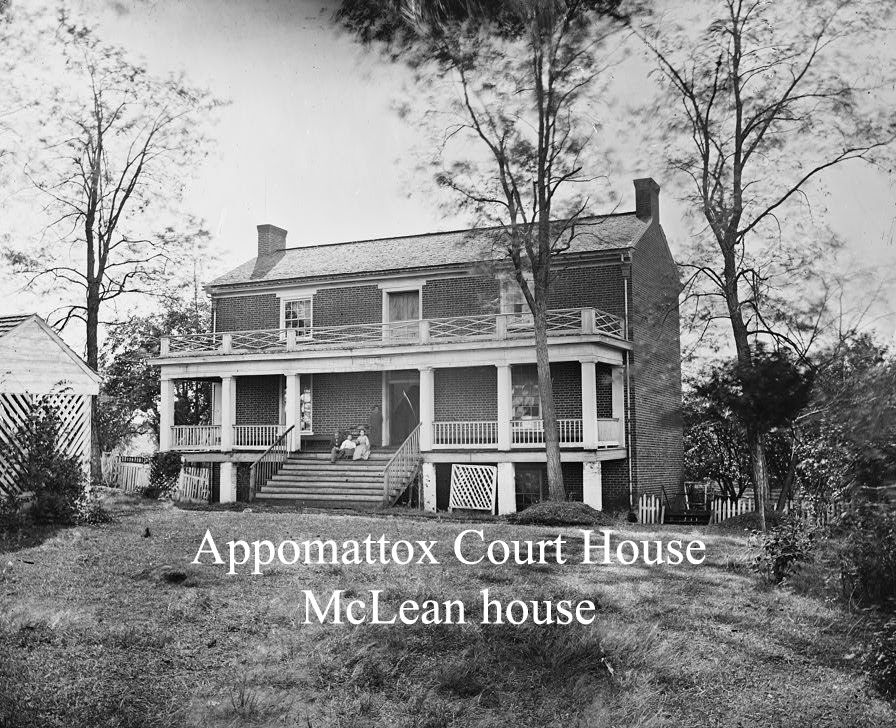
The end was near. Robert E. Lee realized his Army was cornered and he sent two letters to Ulysses S. Grant seeking terms for surrender. They would meet at the McLean House on April 9th, 1865 in a village named Appomattox Court House. It was previously called Clover Hill. T.F. was one of the few remnants of the Army of Virginia remaining to take part in the surrender. The regiment surrendered 12 officers and 149 enlisted men at Appomattox, the largest unit of what was left of the Texas Brigade.
According to Civil War records, T.F. was on a “List of Prisoners of War belonging to the Army of Northern Virginia who have been this day surrendered by General Robert E. Lee, C.S.A. commanding said Army to Lieut. Genl. U.S. Grant, commanding Armies of the United States. Paroled/Done at Appomattox Court House, Virginia, April, 9, 1865.” I’ve included a roster of “The Men of the Original Battery K 5TH TEX. VOL. INF. REGT. COMPANY K – POLK COUNTY FLYING ARTILLERY”, which denotes each soldiers status following the Civil War.
According to his biography, T.F. returned to Livingston via New Orleans and Galveston. He home in June of 1865, just in time for his 25th birthday. Unfortunately, his brothers Calvin and James did not return home with him.