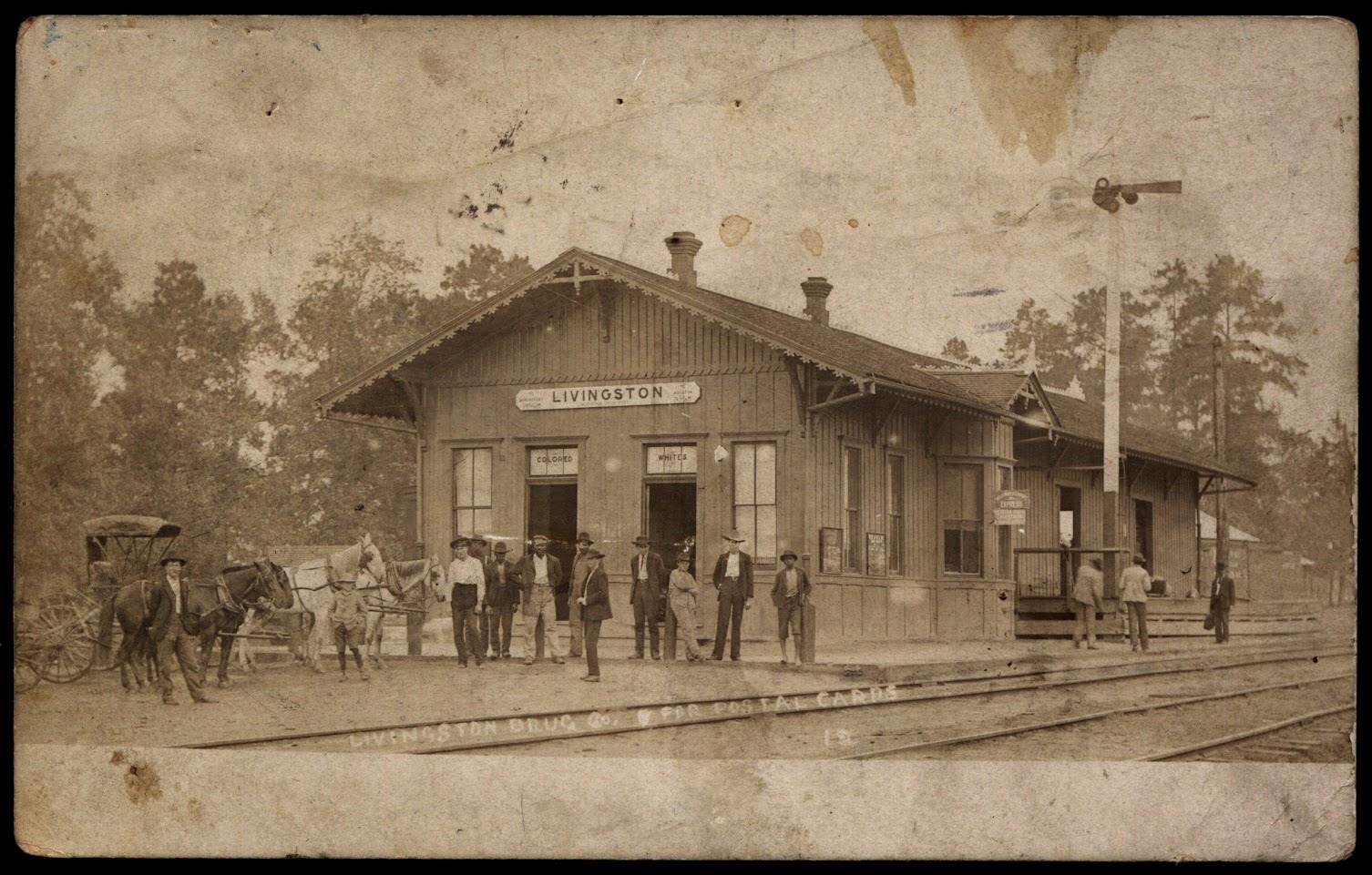
The hotel was ideally located directly across the railroad tracks from the (Houston East & West Railway Company) HE&WT Railroad Depot. I want to thank the Texas Transit Authority for providing me with the photograph of the railroad depot (above) dated 1907. Segregated waiting rooms can be clearly seen under the Livingston sign. You will also note the horse drawn carriages lined up waiting for guests from the next train.
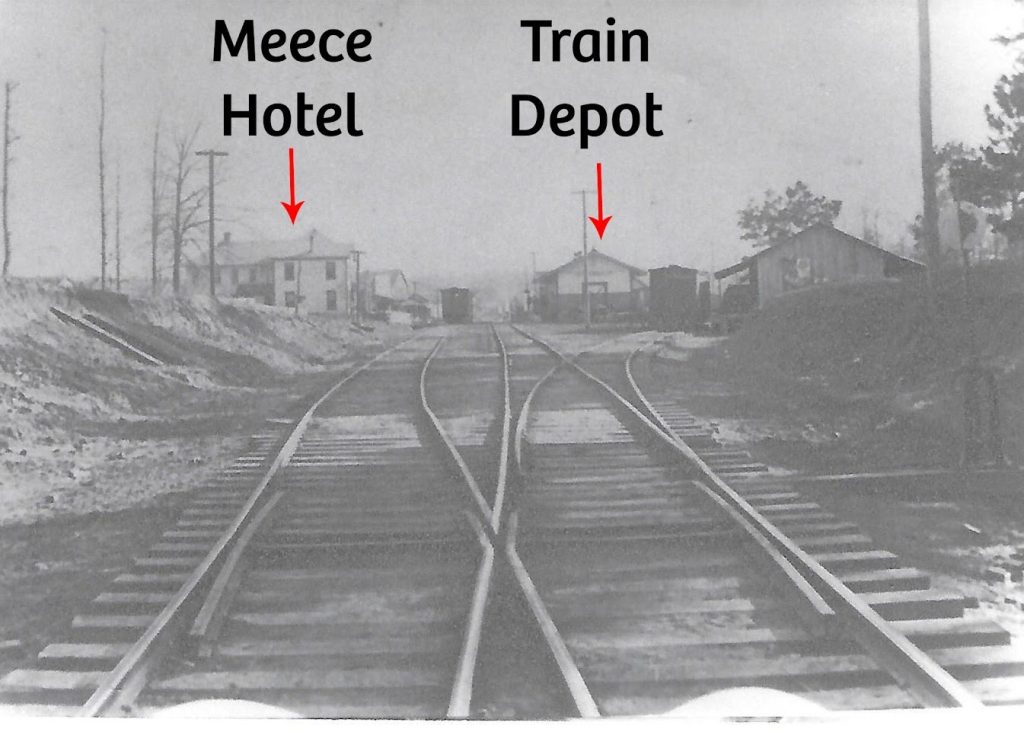
The Andress Inn would actually operate a horse drawn shuttle to and from its hotel. This is the exact POV from the Meece Hotel. Guest of the Meece Hotel would simply have to maneuver two sets of rails to reach the hotel. The photo depicting the Meece Hotel and the Train Depot is misleading in that the hotel was the Oleander at the time of the photo.
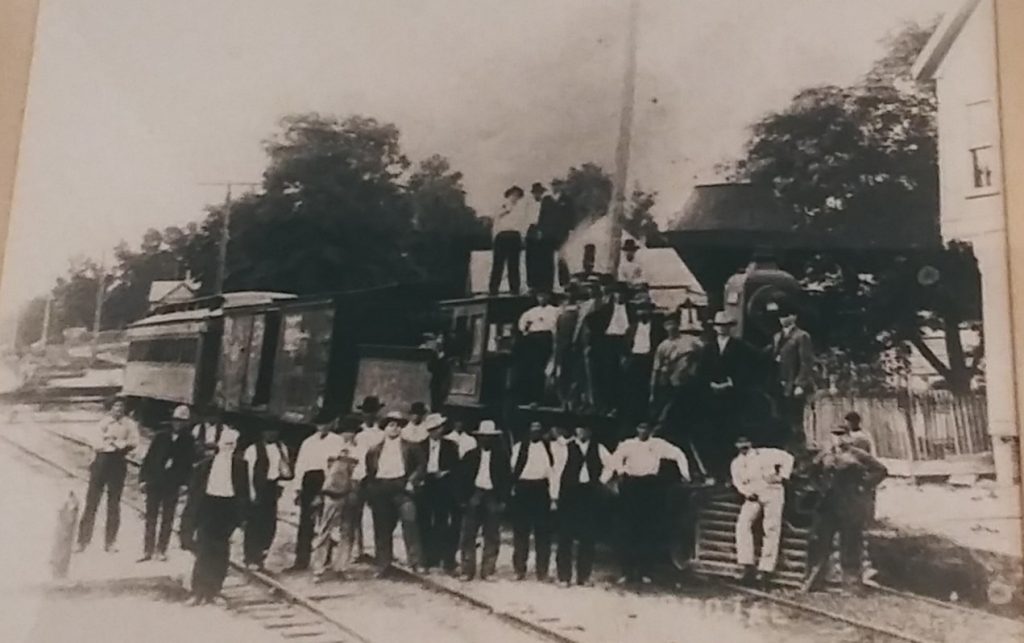
The adjoining photo depicting the train, it’s crew and townspeople was taken in 1908 in front of the Meece Hotel. You can see the corner of the hotel to the right of the train. The train was called the “Bailey Special” named after Pete Bailey, holding the mail sack, who for years was conductor of the train. The newspaper article incorrectly identified the hotel as the Oleander Hotel.
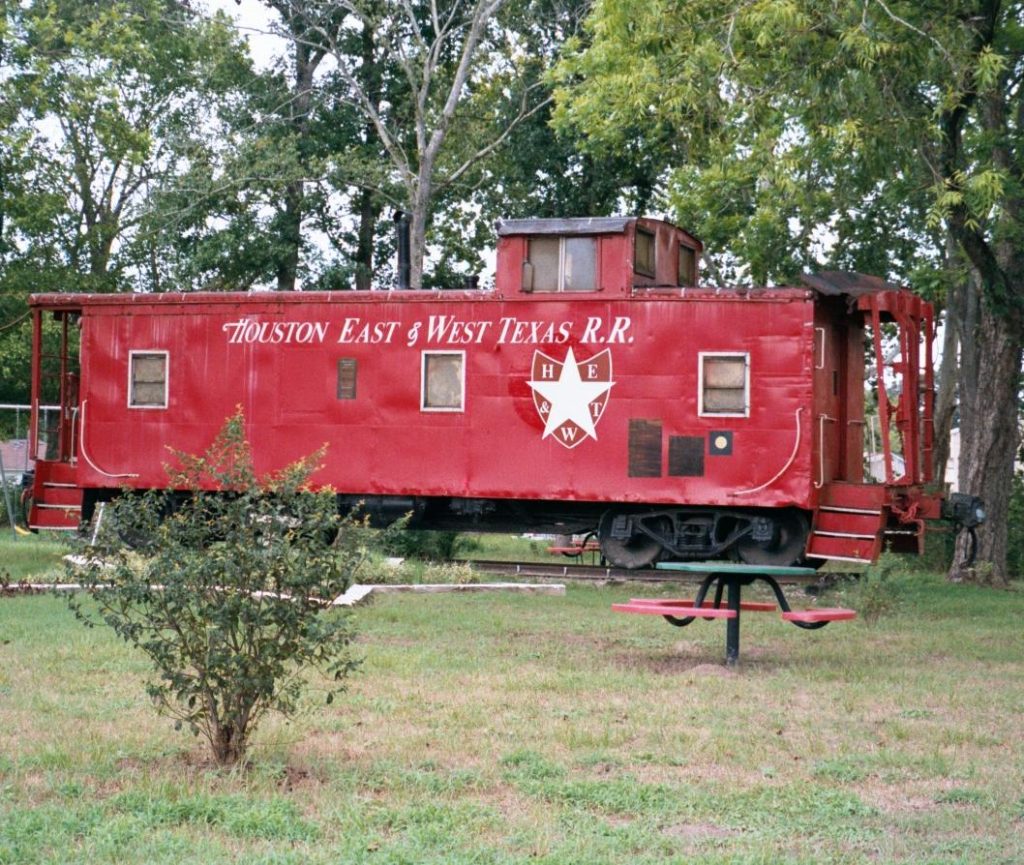
The Houston East and West Texas Railway Company was chartered on March 11, 1875, to build a narrow gauge railroad between Houston and Texarkana and to connect Houston with Corpus Christi and Laredo through Victoria and Goliad. The company’s initials were said to stand for “Hell Either Way Taken.”
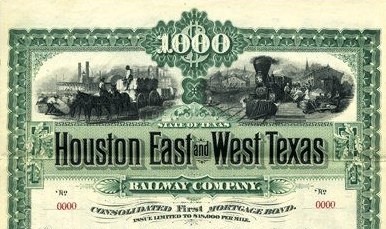
The railroad was nicknamed the “Rabbit,” and the line is still known by that name. The name refers to the sometimes rough ride offered by the line’s best known locomotive, “The Rabbit,” so named because of the many times it “jumped” from the track.
In 1885, passenger train cars in Texas likely featured simple, functional designs, with wooden benches and limited comfort. Seating was often arranged in rows, with passengers seated side-by-side in a close-quarters arrangement. The focus was on transportation rather than comfort, and safety was a concern due to the early stage of railroad technology.
Riding the Houston, East & West Texas Railroad, like many railroads of the time, would have been a mixed experience. While offering a smoother and faster alternative to horse-drawn carriages & stagecoaches, comfort levels likely varied. The quality of train travel could be affected by track conditions. If tracks were poorly maintained, the train might experience significant shaking or even derailment. Trains could be subject to hopping, rocking or shimming depending on their length and load.
T.F. was a strong proponent of the railroad and a frequent passenger. He routinely travelled to Corrigan, Lufkin, Moscow, Houston, Galveston, etc. The combination of the HE&WT and the East Texas timber industry was a match made in heaven. The timber industry provided the crossties for the track and the railroad provided transportation of the lumber to markets everywhere.
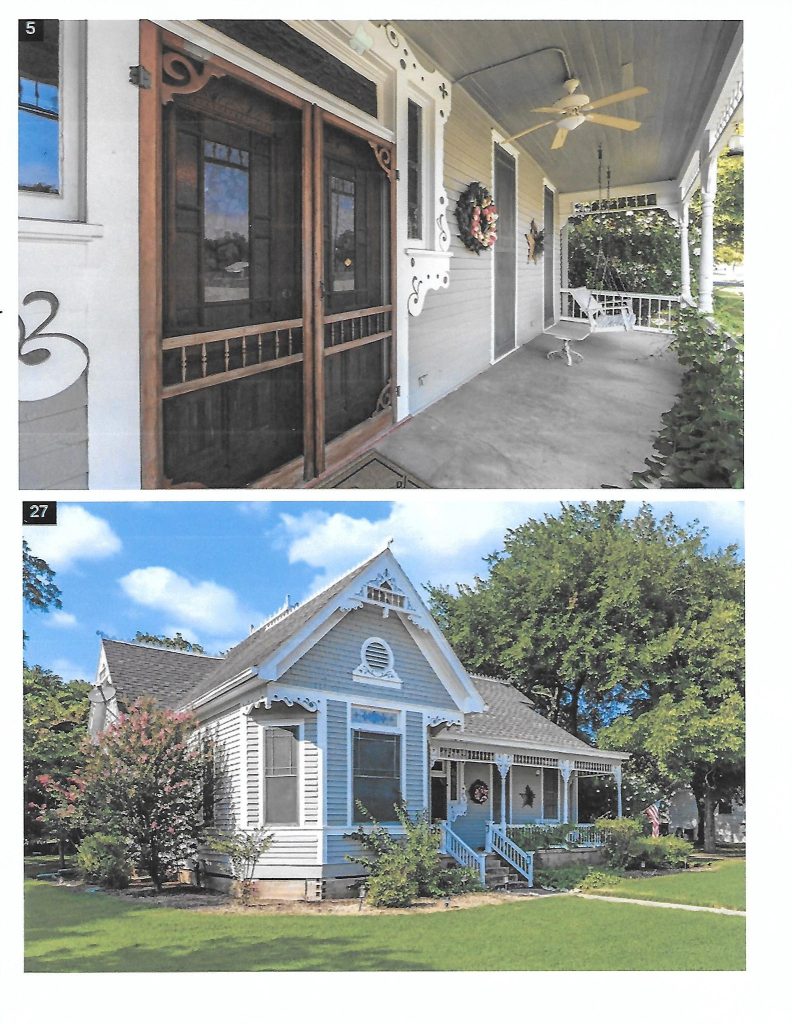
According to the Texas Historical Commission the architecture style of buildings at that time were a mix of Gingerbread, Folk Victorian and Queen Anne. There are no photographs of the interior so I can only guess as to what sort of selections were made. A Queen Anne style building interior in 1890 Texas would likely feature an asymmetrical floor plan with rooms flowing into one another, a prominent central staircase, ornate woodwork detailing on doors, windows, and mantels, high ceilings, decorative wainscoting, and a mix of rich, bold colors throughout. To say that lumber was readily available in Livingston would be a gross understatement. The period from 1880 to the Great Depression was called the “bonanza period” in Texas lumbering. Electricity wasn’t introduced in Livingston until 1905 and it only provided light to 15 homes. The hotel relied on the hearth, candles and oil lamps for light.
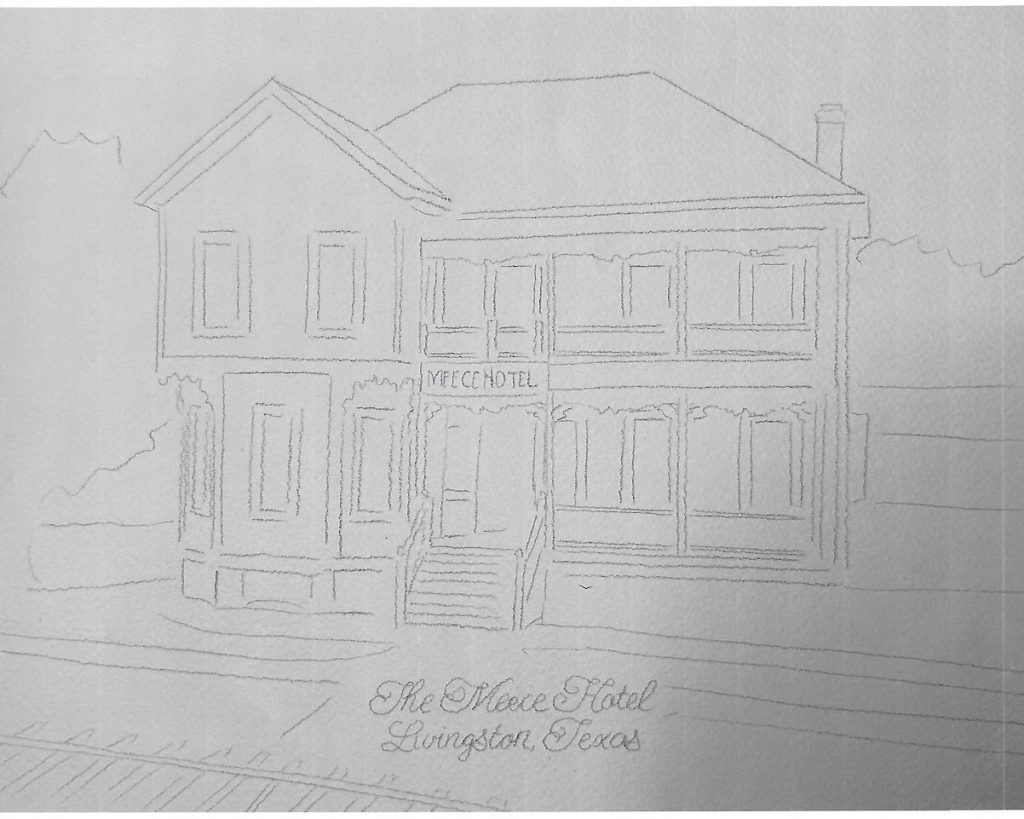
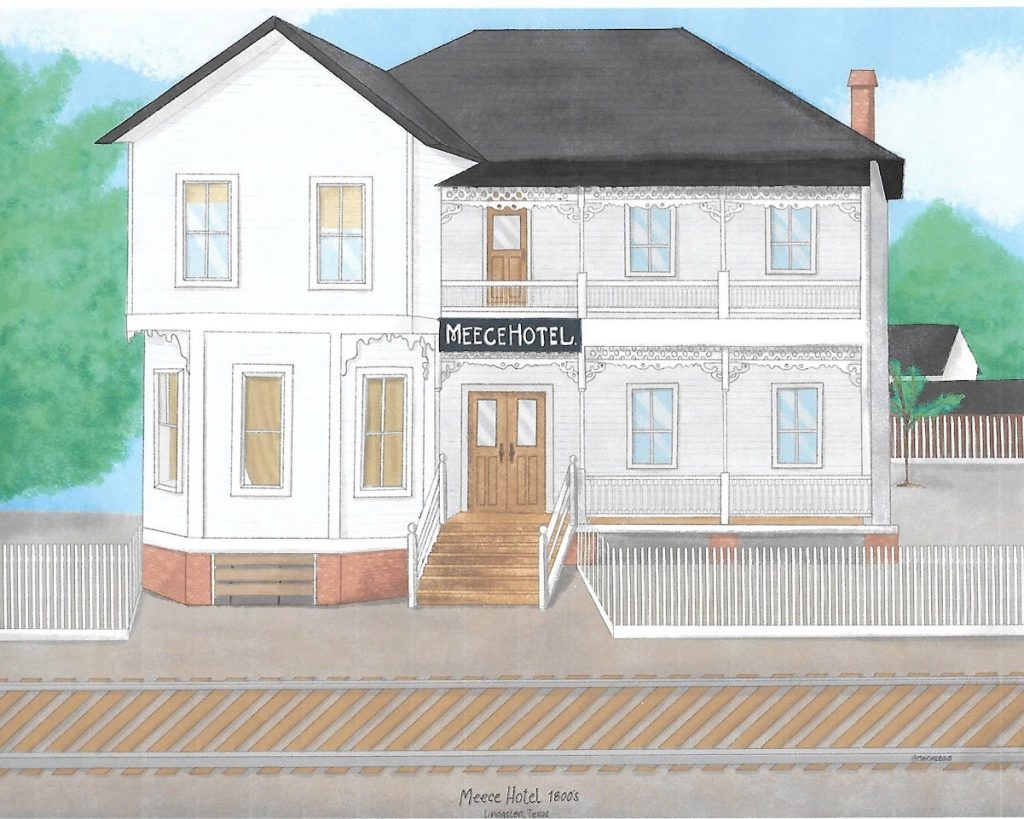
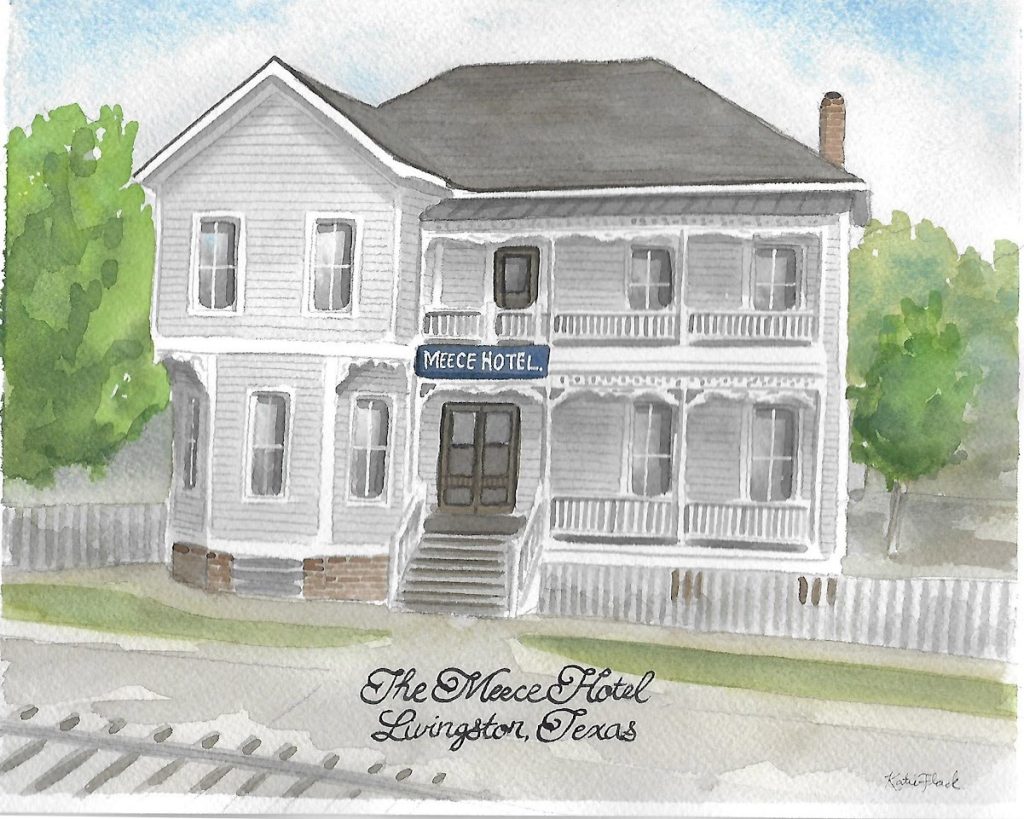
My better half commissioned artists, as a Christmas gift, to reproduce their rendition of the Meece Hotel based upon a Queen Anne style structure built in 1897. This particular house, pictured in the last two photographs, is located in Schulenburg, TX, which is near Livingston.