I’ll assume that the Hotel did not have a saloon or bar. In March of 1909 T.F. headed up a citizen committee to prevent the opening of a “Hiawatha” joint, a drink considered to be intoxicating. Polk County, TX was a prohibition district at the time. They sent a notice of this action to the agent for the Houston East & West Railway Company. Apparently this so called “beer” was being stored at the train depot across from the Meece Hotel.
I don’t believe that T.F. was simply a teetotaler. He was one of the original members and church clerk of the Central Baptist Church. He was also a founder and charter member of the Livingston Baptist Church, which broke away from the Central Baptist Church over a disagreement regarding missionaries. The Southern Baptists “believed you would be hard pressed to identify any other single factor that caused so much widespread suffering, injury and damage as the widespread abuse of alcohol.”
A local historian from Livingston, by the name of Gary B. Davis, wrote an excellent narrative entitled “The Saloons” on 12/7/2023. According to the segment entitled “The Capitol Saloon and The Lone Star Saloon” Gary writes: “Harding, at the same time, also operated the Lone Star Saloon (photo above) opposite the H.E.&W.T. Ry. and fifty-three feet north from the southwest corner of block 10. Harding purchased this lot in a deed dated January 5, 1892, from Max London of Corsicana, who recovered the property when the D.S. Chandler Company, as stated above, lost the property due to bankruptcy. The purchase price was $333.35 down with one payment of $166.65 due in twelve months.”
“Harding advertised in the East Texas Pinery of September 15, 1892, a “new saloon, a dealer in Wines, Liquors, etc., located at the railroad depot near the Alliance Store (SW corner blk 10) where the country and travelling public will find the best beer, wines and whiskies with polite attention and fair dealing.” Another ad that stated, “The Lone Star Saloon is just opposite the depot, where the tired passengers may get a cold glass of beer, a drink of the best whisky in town, or a splendid cigar.”
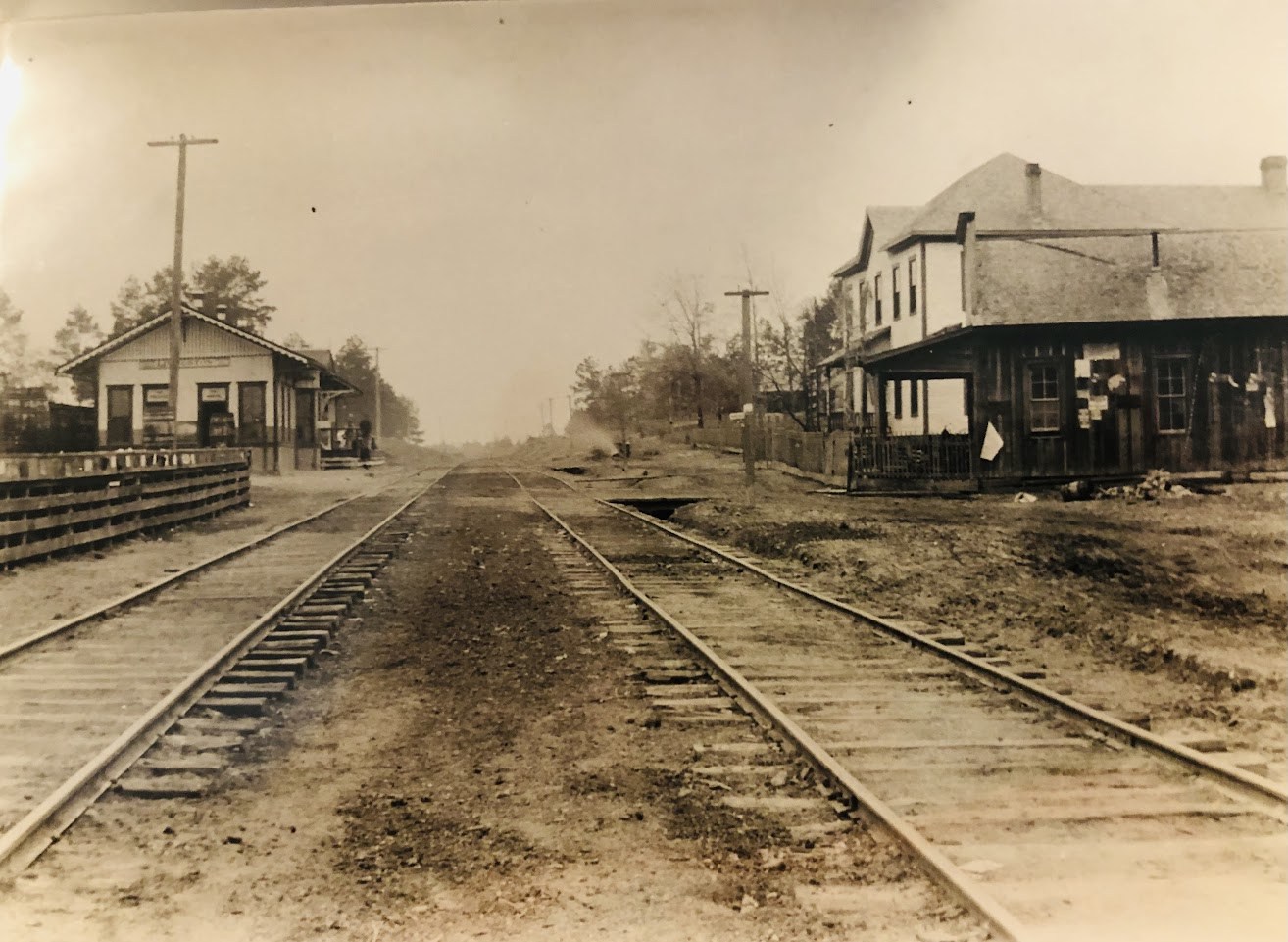
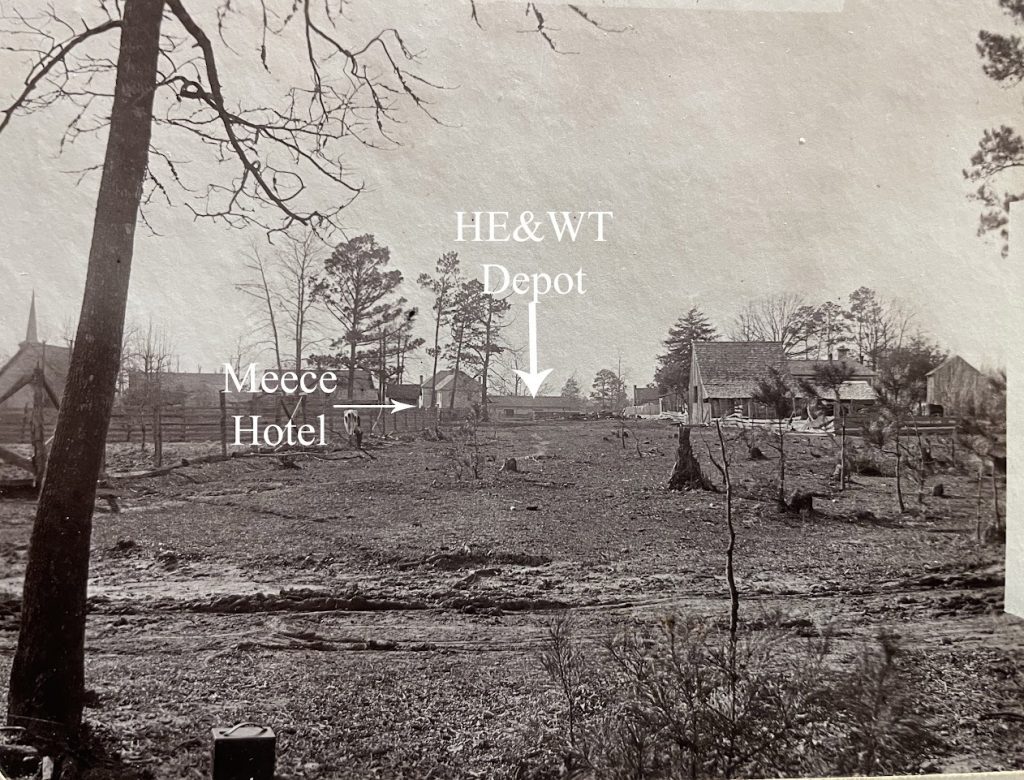
T.F. must have been beside himself. This is a polite way of saying he was probably in a state of intense emotional disturbance and anguish over the location and construction of the saloon next to his hotel. According to Gary’s description of the photo above, “Lone Star Saloon on the right in front of the Meece Hotel. The HE&WT depot is on the left.” The photo was taken from Yell Street which later became Feagin Street, the only street from the original townsite from 1847 to have a different name.
In an unrelated incident, my grandaunt was involved in an incident, which occurred on October 6th, 1890, involving the The W.E. Fitze Bon Ton Saloon. According to Gary, “Sheriff J.W. Hammond, who served from 1888 to 1890, testified that he was at the Meece Hotel (NW corner blk 10) at 7:30 p.m. when he was informed of the disturbance by Miss Mattie Meece, daughter of the owner T.F. Meece. Hammond at once went down into town where he met J.P. Snow, who told him of the trouble at Fitze’s Saloon.”
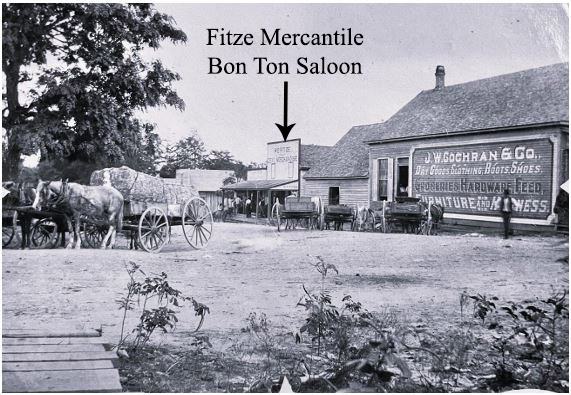
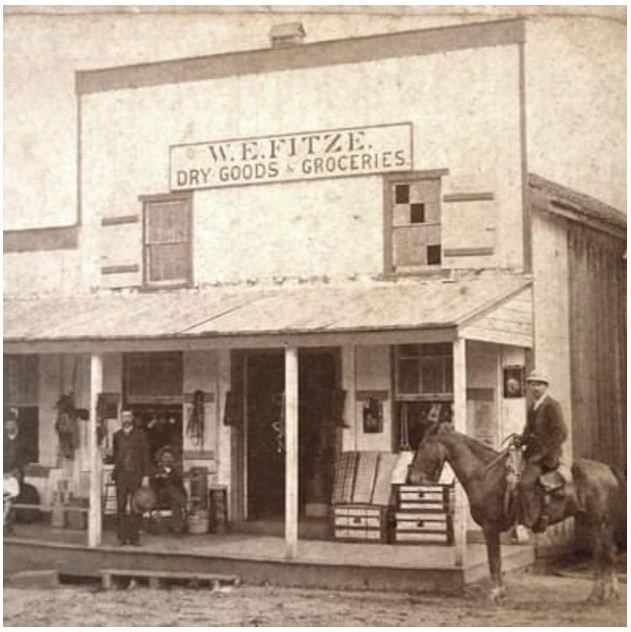
Gary writes “The political wrangle, in which three men were senselessly killed, was widely covered by newspapers around the country, including The Los Angeles Herald, The Salem Oregon Statesman Journal, The Houston Post, The Brenham Weekly Banner, The Galveston Daily News and the Dallas Morning News.”
There is only one thing I’m unsure of. How did my grandaunt, Ms. Mattie Minerva Meece, (she was 15 at the time) know about an event that happened approximately six city blocks away? There were no phones at the time. Was she notified by one of the hotel guests?
A good portion of downtown Livingston was set ablaze and burnt to the ground by intoxicated saw mill workers in 1902. With the exception of a few buildings, most were built of wood at that time. The arsonist(s) did so to protest the upcoming vote for prohibition. At least a dozen saloons and a couple of stores that sold whiskey by the jug were destinations for the sawmill workers on Saturday nights. Drunken brawls were frequent and the situation would denigrate to the point where side arms were randomly fired throughout the town.
There was one report that at least 8 people were wounded one raucous afternoon. Women and children were forced to stay at home. On the evening of the fire one of the more vocal citizens in favor of prohibition was shot and killed. No one was ever arrested for the arson or murder. Livingston, TX was truly the Wild Wild West. The citizens of Livingston were outraged and the referendum for prohibition passed.
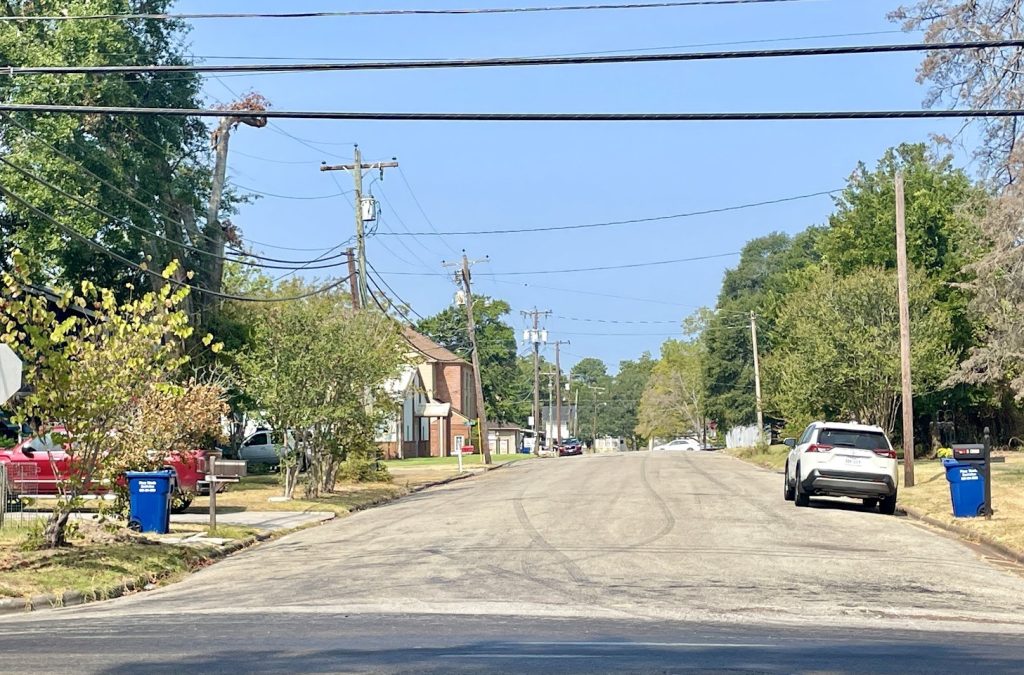
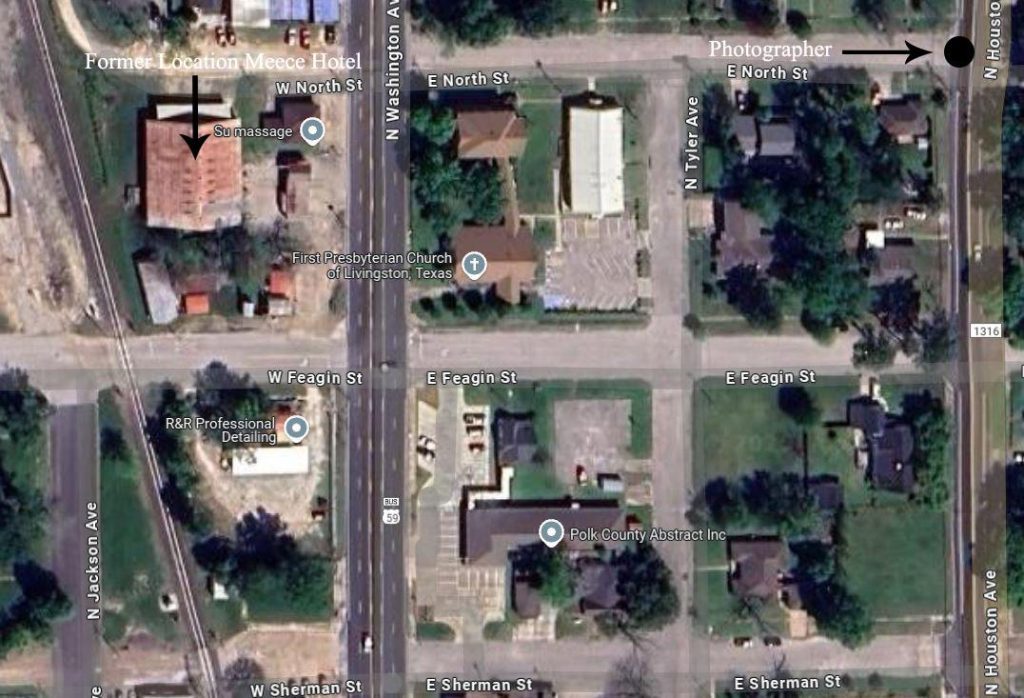
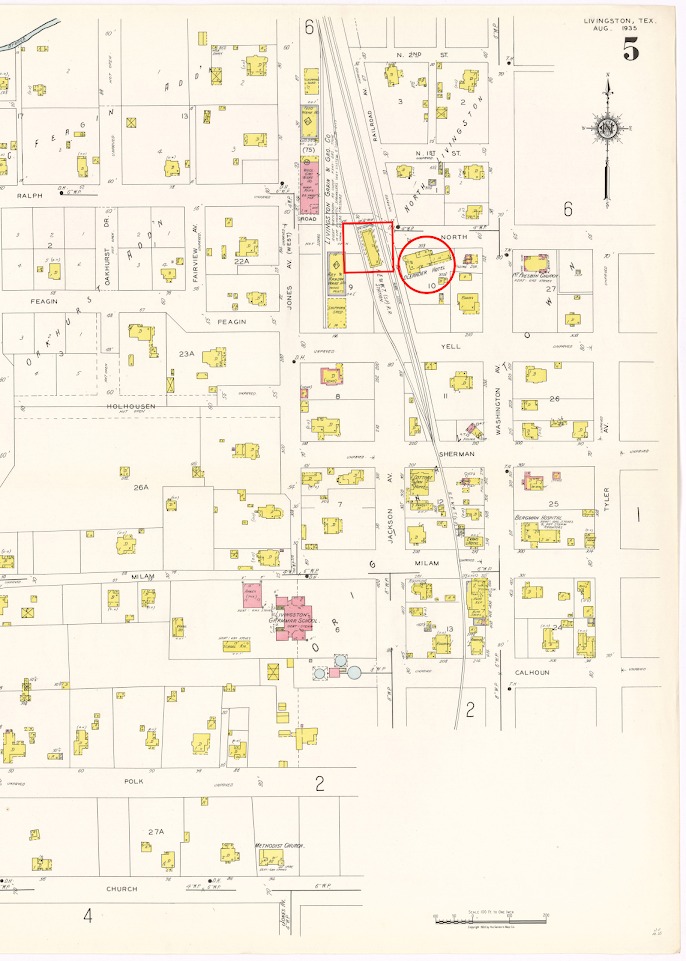
Attached is a photograph showing the Meece Hotel and the HE&WT Railway Depot from a different perspective. I now have photos of the hotel from the north, south, east and west. The second photo is from the same vantage point, Houston at North, taken in 2023. Pretty awesome! And, once again, I wish to thank Gary B. Davis. I’ve also include a map to further clarify the perspective of the photographer.
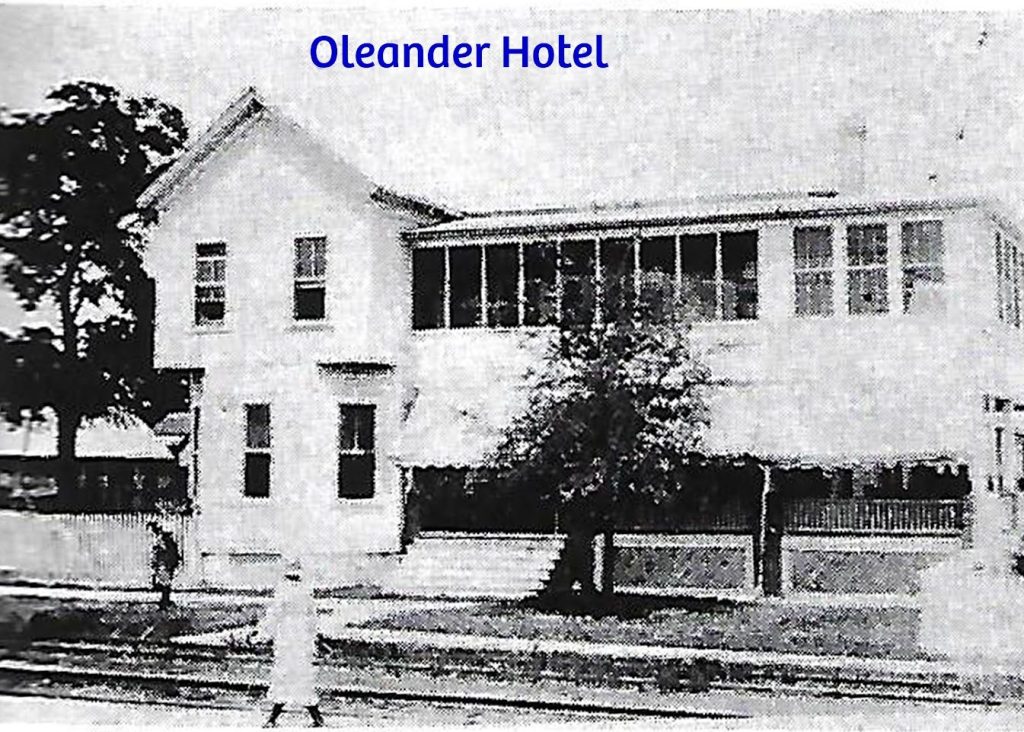
The Polk County Enterprise reported on 10/06/1910 that T.F. Meece had sold the hotel to Mr. John Ross of Houston, TX. The hotel was operated by his son-in-law F.E. Macinerney as the Pine Lodge Hotel. In 1916 Ross sold the hotel to J.H. Holley who remodeled and expanded the hotel. The Pine Lodge Hotel was renamed the Oleander Hotel.
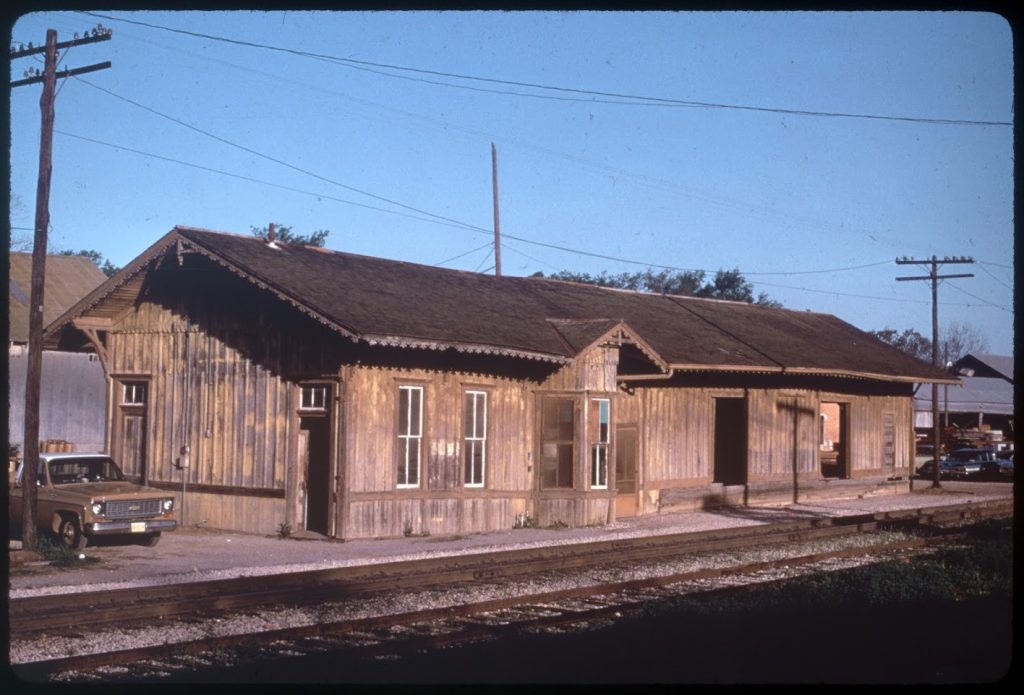
The Sanborn Insurance Maps show the location of The Oleander Hotel (formerly the Meece Hotel) and the H.E. & W.T. Railroad Depot in 1935. At that time the depot might have been owned by the Southern Pacific Railroad. The 2nd photo of the station is circa. 1970’s. The depot was eventually demolished. Ultimately the passenger trains would be supplanted by the automobile and the hotel business would dry up. Towards the end, the Oleander was advertising long term rentals.
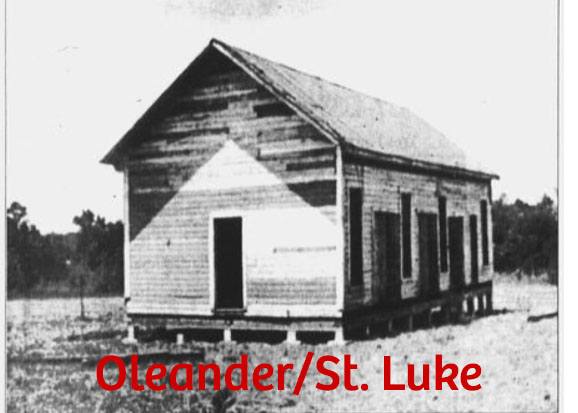
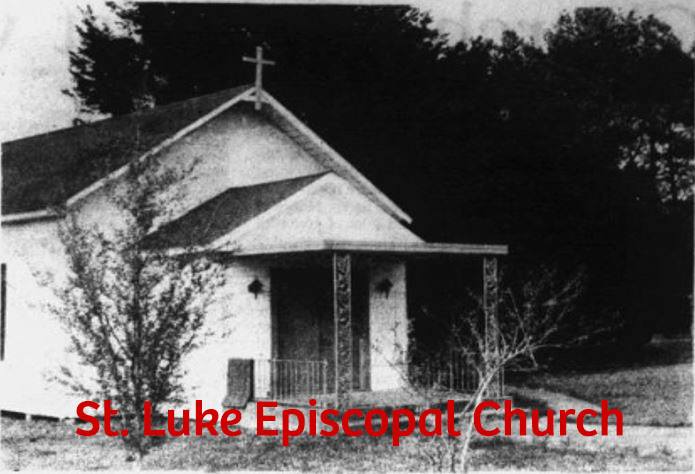
In 1953 a gentleman by the name of A.A. Wells donated one half of the Oleander Hotel to St. Luke’s Episcopal Church. The building was moved to 836 W. Jones Street where it was renovated and converted in to a church (see photo). Services began on June 25th, 1954. The rest of the hotel was moved and converted to residences on Jones Street. The latest rendition of the church sits on that same lot today. Most parishioners didn’t realize the origin of the church until it was dismantled in 2001. A sign identifying the Oleander Hotel was discovered during the process. Pretty cool! I believe that T.F. would be surprised, pleased and proud that his beloved hotel withstood the test of time.