“I have always been proud of my service in the Confederate Army, believing that it was my duty, also a privilege to respond to the call to my country’s defense.”
T.F. Meece
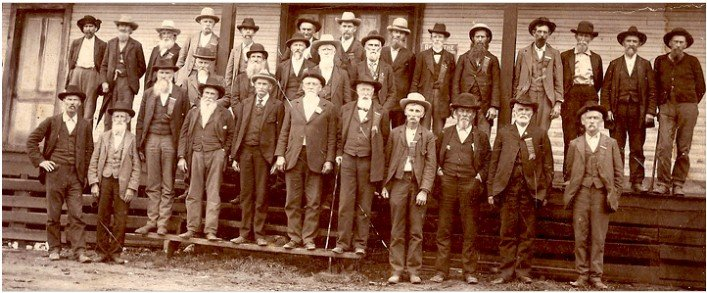
Members of the Ike Turner Camp C.S.A. This picture was taken one day during a regular meeting of the Confederate veterans’ organization. They are standing on the porch of Bergman’s Store in Moscow. The following have been identified: Front row: (2) Mr. Kent, (3) J.G. Locke, (4) Foster Poe, (5) I.N. Snell, (6) W.M. Kennedy, (7) J.R. Doughty, (10) Luce DeWalt, (11) Pleas Rowe. Second Row: (1) A.B. Green, (2) Dr. E.P. Angell, (3) R. Newton Green, (5) Prof. Marcellus Winston. Back Row: (1) T.L. Epperson, (2) D.S. Chandler, (5) Wyley Polk, (#8) A.C. Garvey, (9) T.F. Meece, (10) M.N. Kinard, (12) D.T. Manry.
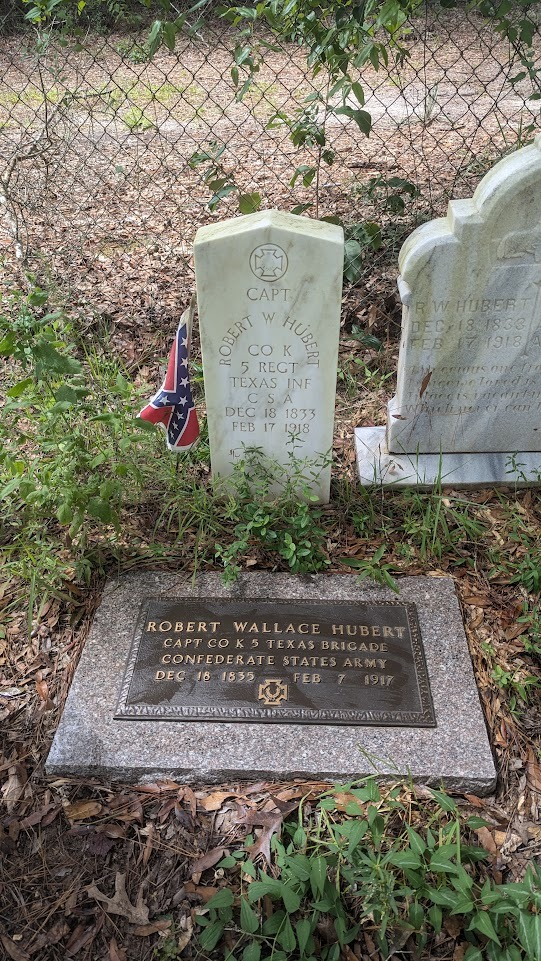
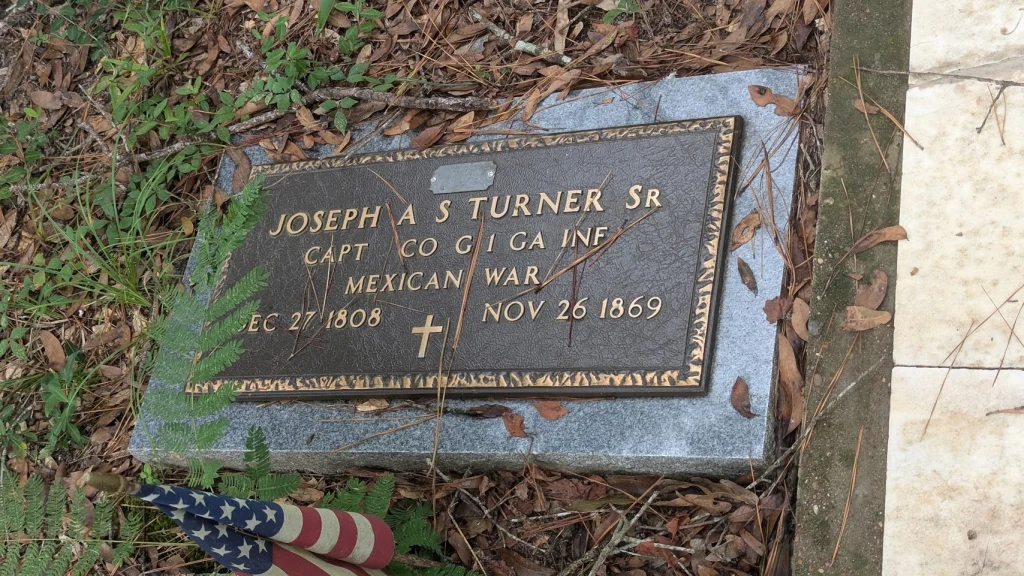
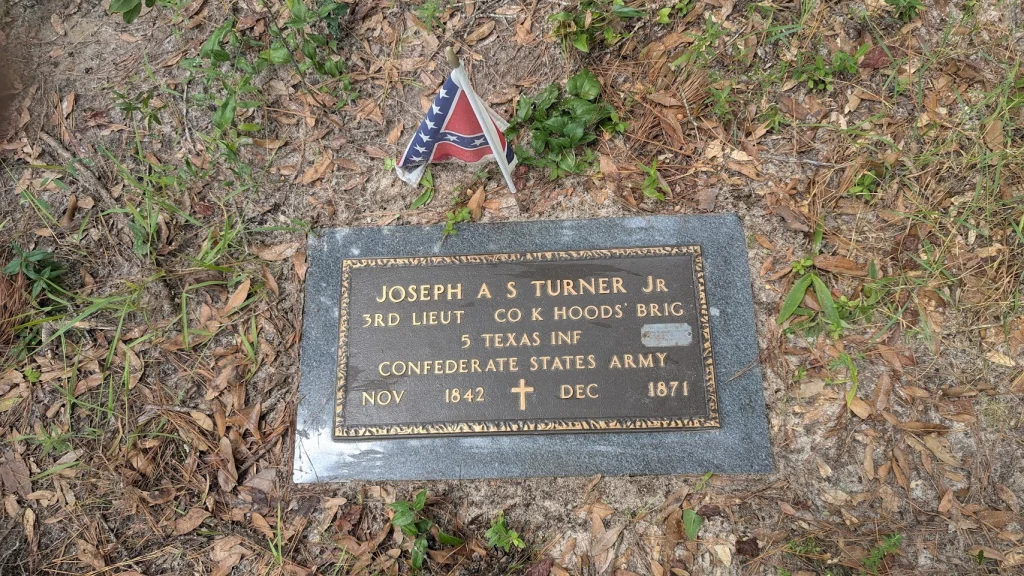
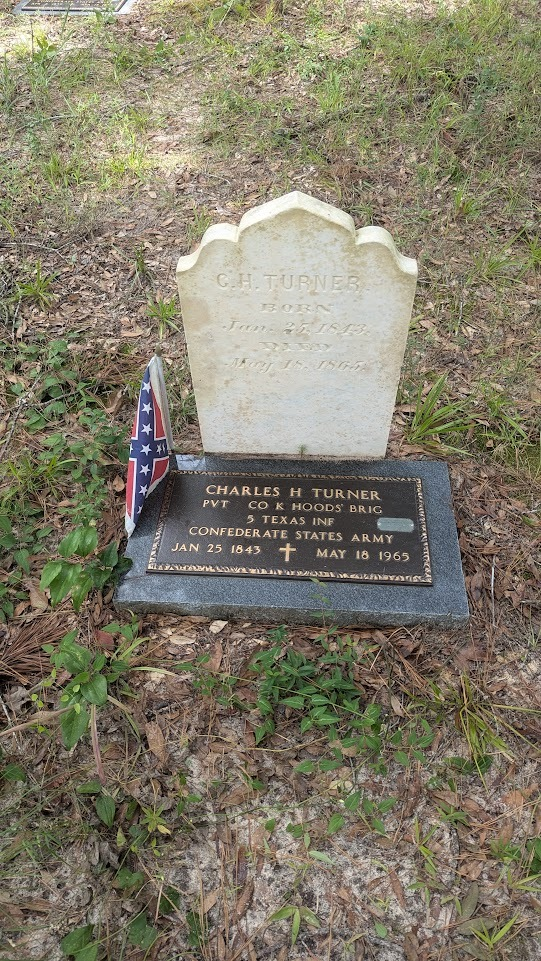
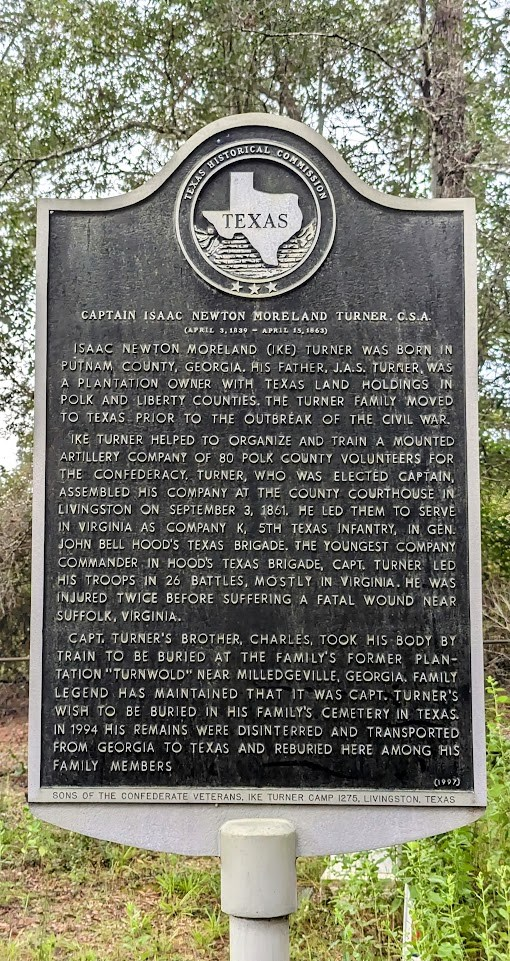
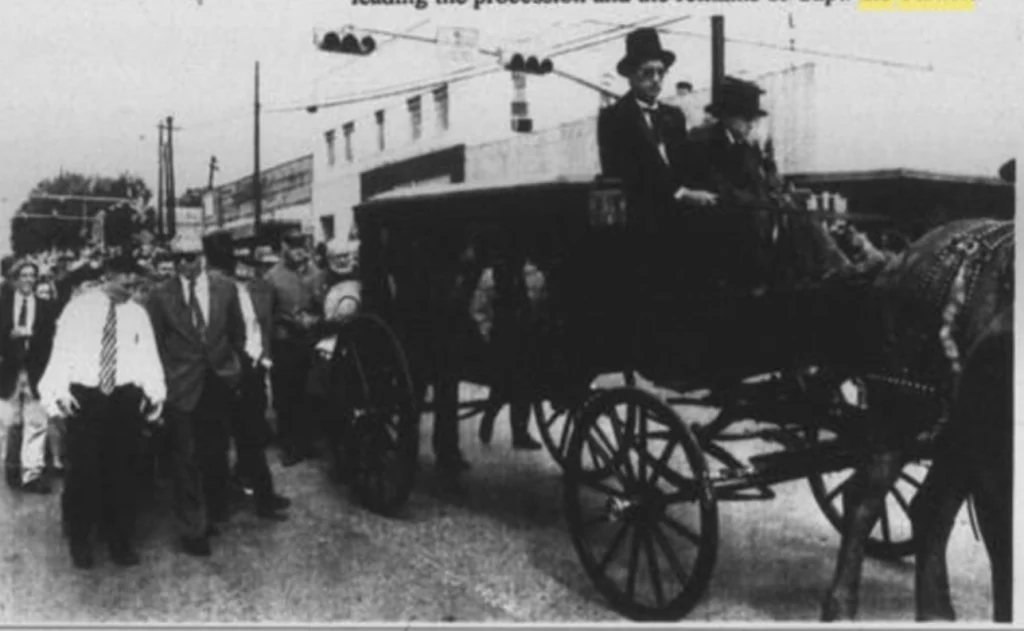
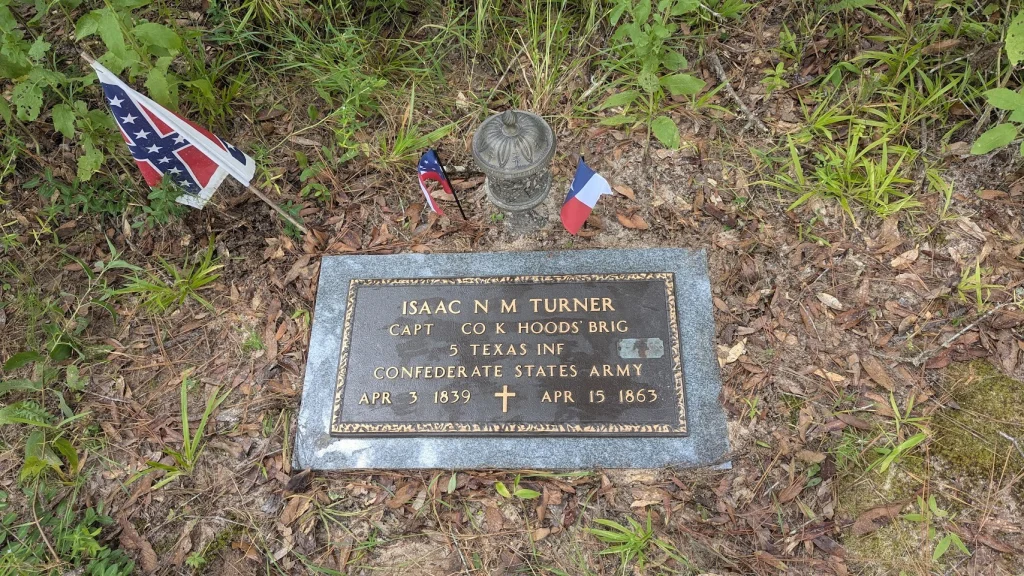
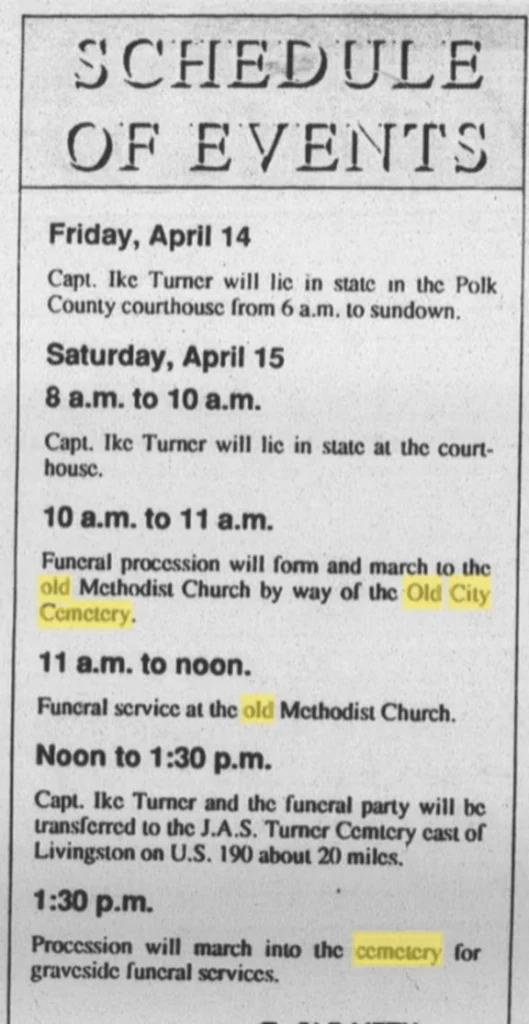
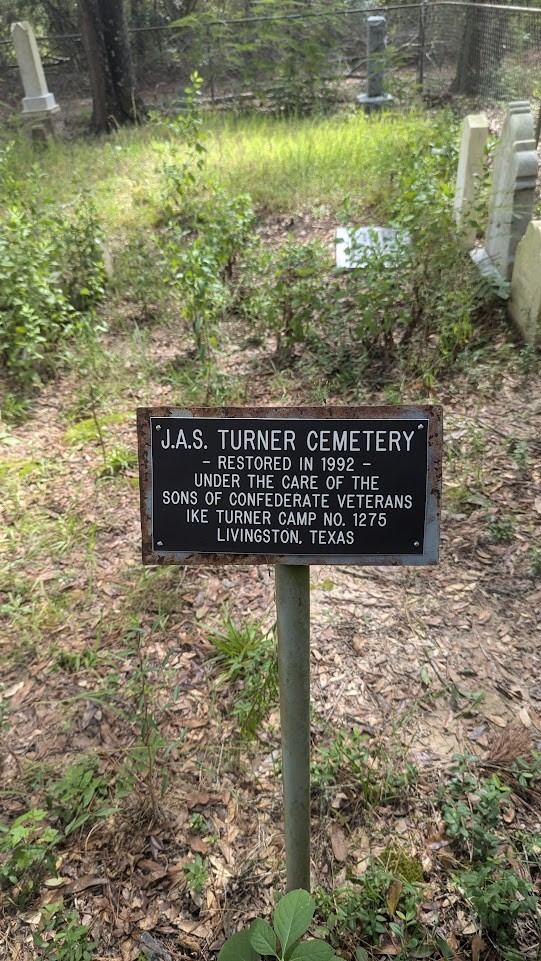
On April 15th, 1995 the remains of Captain Isaac Newton Moreland (Ike) Turner were buried at the J.A.S. Turner Cemetery. The cemetery is located approximately 17.3 miles east of Livingston, TX in Polk County. The remains were disinterred from the Turnwold Plantation, near Milledgeville, Georgia. The entire affair was conceptualized and carried out by the Ike Turner Camp 1275 of the SCV. To my knowledge, this is the 2nd coming of the original Ike Turner Confederate Veterans Camp No. 321, which was organized in Livingston, TX on April 8th, 1893.
The body would lie in state at the courthouse until Saturday the 15th, which was the anniversary date (132 years) of his death. The funeral procession circled the Old Cemetery to honor the Confederate veterans buried there. This is where my great-grandfather (T.F.) is buried. This was quite an affair for both Milledgeville and Livingston. The event was recognized nationally in the press.
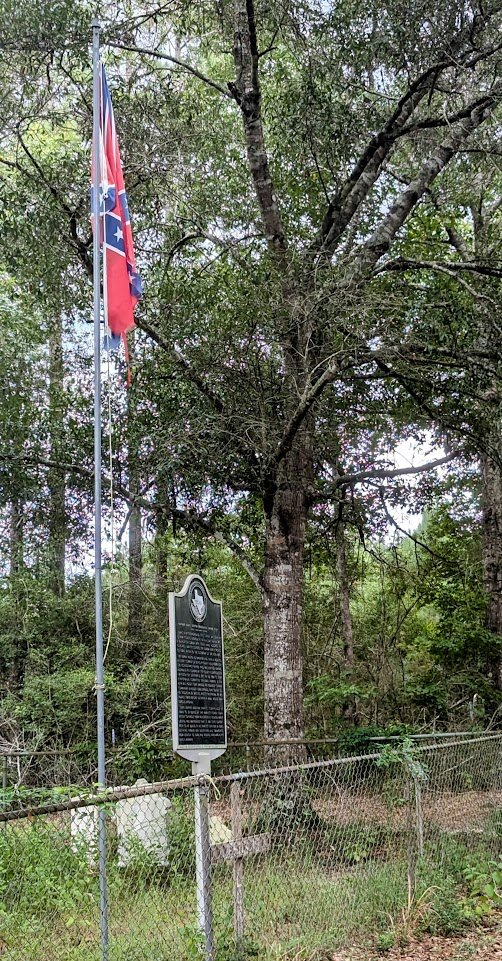
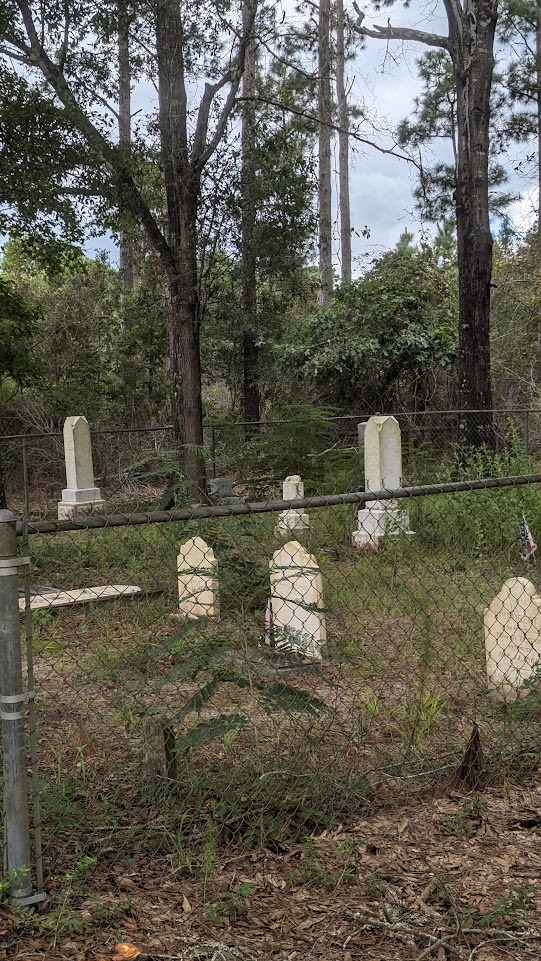
The Ike Turner Camp 1275 is still active. It is my understanding that there was a pause between the 1995 version and today’s version. They have both a website and a Facebook page. I had tried several times to contact the camp before they finally responded. They had little to no historical information about the camp. Based on what I was told, their primary focus is on Civil War reenactments and caring for the J.A.S. Turner Cemetery. From what my wife and I saw, during our visit to the cemetery, they do a very poor job of taking care of the cemetery. The cemetery was overgrown and the Confederate flag was in tatters.
In addition to his membership in the UCV United Confederate Veterans and the Ike Turner Confederate Veterans Camp No. 321, T.F. was a member of the Hood’s Texas Brigade Association. The Hood’s Texas Brigade Association was officially organized on May 14, 1872, and the first reunion of the veterans was held that same year. Between 1872 and 1933, the association held 63 reunions, with the last reunion taking place in Houston in 1933. Its primary purpose was to commemorate and honor the achievements of the Hood’s Texas Brigade.
It appears that T.F. attended several of these reunions. He was not in attendance for the 39th reunion in which the Association dedicated a monument to Hood’s Texas Brigade in Austin, TX. “President General Hamby read a letter/telegram from T.F.
According to an article in the East Texas Pinery dated July 2nd, 1891, a Hood’s Brigade Reunion was held in Livingston, TX on June 28th. There were reportedly over 300 people on the grounds of the courthouse to welcome the survivors of the brigade. A train arrived from Houston carrying three coaches packed to capacity. The train stopped at the courthouse just long enough for the passengers to disembark.
After reading any number of books about the Civil War and about Hood himself, I’m not sure that I understand my great-grandfather’s unvarnished allegiance to him. Perhaps, it was his successes at the Battle of Gaines Mill and Second Bull Run. Hood survived unscathed but his brigades suffered significant losses. Charles Bruce Catton won the Pulitzer Prize for History and the National Book Award for Nonfiction in 1954 for his book A Stillness at Appomattox, a study of the final campaign of the war in Virginia. He wrote that “the decision to replace Johnston with Hood was probably the single largest mistake that either government made during the war.”
His aggressive actions, seemingly without strategy or tactics, cost the lives of his men as well as physical harm to himself. He was severely wounded in the left arm at the beginning of his assault on “Devil’s Den” and “Little Round Top”, rendering his arm almost useless. Not to mention the fact that he left his troops without leadership at a critical moment in the Battle of Gettysburg. T.F. was wounded and captured. His brother James was mortally wounded and died on July 10th. His brother Calvin was captured and died while a Union prisoner.
Hood was again wounded at the Battle of Chickamauga, which resulted in the amputation of his right leg. He returned to battle, strapped to his horse, in the Atlanta campaign after relieving General Joe E. Johnston. He was nothing more than a gnat to Sherman and the Union Army. Hood withdrew, following significant losses, hoping that “Sherman would follow him. He did not. Hood would move his forces north into Tennessee where he would suffer successive failures in Columbia, Spring Hill, Franklin and finally Nashville. Ironically, T.F. was born in the Spring Hill/Columbus area.
Hood would launch a full-frontal assault, as expected and unfortunately, over two miles of open field at the Battle of Franklin. The Union commanding general claimed that the Confederates suffered 6,252 casualties, including 1,750 killed and 3,800 wounded. Critically, the military leadership was decimated. The casualties included (14) Generals and (55) regimental commanders. The Battle of Nashville marked the effective end of the Army of Tennessee. Hood resigned his command on January 13th, 1865 and he was not given another field command. Hood would attempt to lay the blame on his subordinates and the soldiers themselves.
It is estimated that at the beginning of the war, the Texas regiments comprised approximately 3,500 men. Recruitment increased that number to approximately 4,400. The brigade sustained a 61 percent casualty rate and, at its surrender, numbered close to 600 officers and men.
After the war, Hood moved to New Orleans and became a cotton broker and started an insurance business. The yellow fever epidemic of 1878 closed the New Orleans Cotton Exchange and bankrupted the local insurance industry. Hood (August 30th), his wife and his oldest daughter would die from yellow fever in 1879. The Texas Brigade Association supported his surviving ten children for more than 20 years.
John Bell Hood was buried in Metairie Cemetery in New Orleans. Amazingly enough, I attended funerals there and passed by the cemetery on countless occasions when I lived in New Orleans. I lived there for roughly (20) years and never realized that Hood was buried there. My father’s (Louis Harden Meece) house was only (4) minutes away. His house was flooded by Katrina and razed following the storm. Fortunately, he had moved north to Jeffersonville, IN several years earlier.
It’s difficult to criticize my great-grandfather’s adoration of Hood. We’re talking about events that occurred 160 years ago, in the midst of the Civil War. I’ve read numerous accounts about Hood, including The Lost Papers of Confederate General John Bell Hood, and the battles that he was fought in and none of it has changed my mind. I respectfully disagree with my great-grandfather.
Another topic that I’ll take issue with is “The Lost Cause.” The primary tenet is that “secession” from the Union had little or nothing to do with slavery. The southern states seceded to protect their rights, their homes and to break from a tyrannical government. “Secession” was both constitutional and noble. Robert E. Lee opposed secession. He wrote that “Secession is nothing but revolution.” After reading Company Aytch, by Sam R. Watkins, you would be hard pressed to find Privates that would tell you that they were fighting for State’s Rights or slavery. The antebellum plantation owners and political elites would espouse that, but the “everyman” was simply fighting for his comrades, his family and his land.
Secondly, slavery was portrayed as a positive good. Submissive, happy and faithful slaves were better off under slavery. I want to see that poll! According to a local paper, there were 2,949 slaves in Polk County compared to about 584 taxpayers or 429 voters. Approximately one-half of the property owners had slaves.
The third tenet states that the Union had a numerical advantage both in terms of men and resources. I believe that there is some truth to that. If McClellan hadn’t been so afraid of Lee’s shadow and had he focused on something other than becoming the next President, the Union could have ended the war sooner. The same goes for Pope. If he had been less braggadocios and more focused on the task at hand things could have ended differently. Burnside was the very definition of insanity at Fredericksburg. He repeatedly assaulted impregnable Confederate positions, failing to achieve success each and every time. The old axiom of “Doing the same thing over and over again and expecting different results.” applies here.
Maj. Gen. Joseph Hooker was outmaneuvered, outsmarted, outwitted and outfoxed by Lee and Stonewall Jackson at Chancellorsville. He foolishly, and publicly offered his resignation, not believing that it would be accepted. Lincoln did accept and replaced him with Meade. In all fairness, none of these men were a match for Lee. I do believe, however, that if Grant or Meade had been placed in charge of the Army of the Potomac earlier, the war would have ended sooner.
The fourth tenet was that Confederate soldiers are portrayed as heroic, gallant and saintly. I can only speak to what I know about my great-grandfather. That’s true.
The fifth tenet is that Robert E. Lee emerged as the most sanctified figure in “Lost Cause” lore. I’m sorry but Lee didn’t read the “tea leaves” when he decided to invade the north. The Confederacy suffered heavy casualties at Chancellorsville and his good luck charm, Lt. Gen. Stonewall Jackson was mortally wounded. He lost contact with James Ewell Brown “Jeb” Stuart, which seriously impacted intelligence gathering during the march north. Lee underestimated the strength of the Union forces at Gettysburg; the Union held the high ground and the “fish hook” defense allowed the Union to quickly defend any breaches.
In the end, Lee had met his match in Meade. Honestly, while Meade was meeting with his subordinates, prior to battle at Gettysburg, Lee and Longstreet were behaving like children and not talking to one another.
Finally Southern women were idealized as pure, saintly and white. In reality, Southern women steadfastly supported the cause, sacrificing their men, time and resources, more so than their Northern counterparts. They played a significant role in perpetuating the “Lost Cause” through their aid and memorial organizations, some of which still exist today.
Much has been said about Longstreet. He had his moments. Many believe that he was responsible for the loss at Gettysburg. Lee even denied that, stating that he wished that he had followed Longstreet’s advice. Longstreet did a complete 180° after the war. He called for acceptance of Reconstruction and federal laws, including those abolishing slavery and granting citizenship to blacks. He and Grant were good friends before the Civil War. They served together during the Mexican War. Longstreet was Grant’s best man at his wedding. Their friendship continued after the war with Longstreet supporting Grant’s presidential campaign.
There were, of course, political and monetary benefits to reversing his stance once the war ended. Most in the South felt that Longstreet was a traitor. I believe he was a good General but it’s difficult to comprehend such a dramatic reversal. I’m still trying to figure that one out.
On a recent trip to Washington DC, we visited the Arlington House. I was reminded that Robert E. Lee was offered command of the Union Army. This offer was made by his friend Francis Preston Blair, of the famed Blair House, and the Secretary of War Simon Cameron. Without hesitation, Lee refused. He wrote that “I declined the offer he made me to take command of the army that was to be brought into the field, stating as candidly and as courteously as I could, that though opposed to secession and deprecating war, I could take no part in an invasion of the Southern States.”
His mentor General Winfield Scott told Lee “You have made the greatest mistake of your life; but I feared it would be so.” His decision ultimately cost him and his family almost everything. Could you imagine what would have happened if Lee had accepted command of the Union Army? If he could have escaped the interference of Lincoln and Stanton and avoided the political appointments to military positions, I believe that Robert E. Lee would have made short work of the conflict. No harm or offense intended towards the south.
T.F. must have felt so much animosity and hatred towards the Union for the loss of his brothers. Not only that, the sheer loss of the war, Reconstruction, the abolition of slavery, the economic hardships, etc. would dramatically affect the lives of Southerners. Did he allow this bitterness and resentment to control him? No, he became educated, he got involved in local, State and National politics. He married Amelia and became a father of (11) children. He became a successful entrepreneur. T.F. became actively involved in organizations that cared for those veterans who were unable or incapable of taking care of themselves. Instead of allowing helplessness to overwhelm him, as many did, he became a tool for change in the community of Livingston, Polk County and the State of Texas
Despite our differences, I’ve never been so proud of or respected anyone more than my great-grandfather. The greatest tribute I could ever offer, is to tell his story.