“I have always been proud of my service in the Confederate Army, believing that it was my duty, also a privilege to respond to the call to my country’s defense.”
T.F. Meece
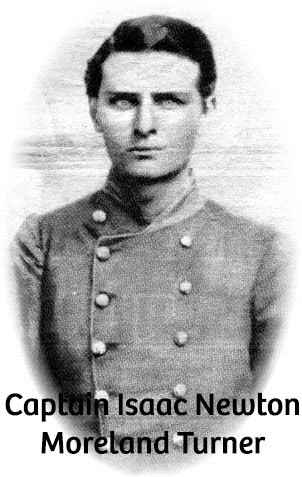
At the first meeting of the Ike Turner Camp, “Chairman T. F. Meece reported, recommending that the wives, daughters and sons of members of the camp and widows of Confederate soldiers or sailors be admitted as honorary or social members without fee. Adopted.” Aside from the usual business being concluded, delegates to the State and National (UCV) encampments were appointed and officers for the ensuing year were voted for.
Some of the other matters that would come up at these meetings included:
• A committee of five, including the commander, was appointed to obtain reduced rates on the railroads to the meeting in Houston.
• A committee was also appointed to examine the names of the applicants and recommend a superintendent for the confederate home at Austin.
• Committees on resolutions of respect for deceased comrades were appointed. (This, unfortunately, began to happen all too often.)
• The Camp would make donations to various individuals, comrades that were ill, and organizations such as the Old Ladies Confederate Home in Austin, TX.
• Comrades were requested to give personal accounts of their experiences in the war.
At the 04/16/1908 meeting in Livingston the by-laws were amended to reduce the number of meetings annually to three. As new officers were elected each year, T.F. would hold the office of Commander and Adjutant following his initial selection as 2nd Lieutenant. Commander was the highest-ranking officer within a camp. The Adjutant (or Adjutant General) served as the chief administrative and record-keeping officer, managing correspondence, membership, and other essential administrative tasks. Periodically, visiting Confederate comrades would visit. There were often meetings between old veterans that had not seen one another since the war ended. At the meeting that occurred on July 8th, 1909, “The Historical Committee was authorized to: have the historic data published as soon as sufficient funds can be raised to pay for its publication. T. F. Meece was appointed a committee of one to raise the funds for same.”
At the January 1st, 1910 meeting, there was sad news to report. “Notice also that I have appointed Ex-Judge T. F. Meece to fill the office of Adjutant, vacated by the death of our most honored, worthy and esteemed comrade, A. B. Green, who held this office from the organization up to his death. I hope the camp will look well to electing another to fill his place at the next annual meeting for electing officers. Comrade Green was always faithful to his business, ever at his post, never failed to attend a single meeting of the camp from the time the camp was organized up to the last meeting. He was elected to this office at the organization and held same until his death. His death has cast a sad gloom over the camp and community at large. Motion was adopted requesting Comrade James E. Hill to deliver a eulogy upon the life, habits and character of Adjutant A. B. Green at the next meeting of the camp and that Adjutant Meece notify him thereof.”
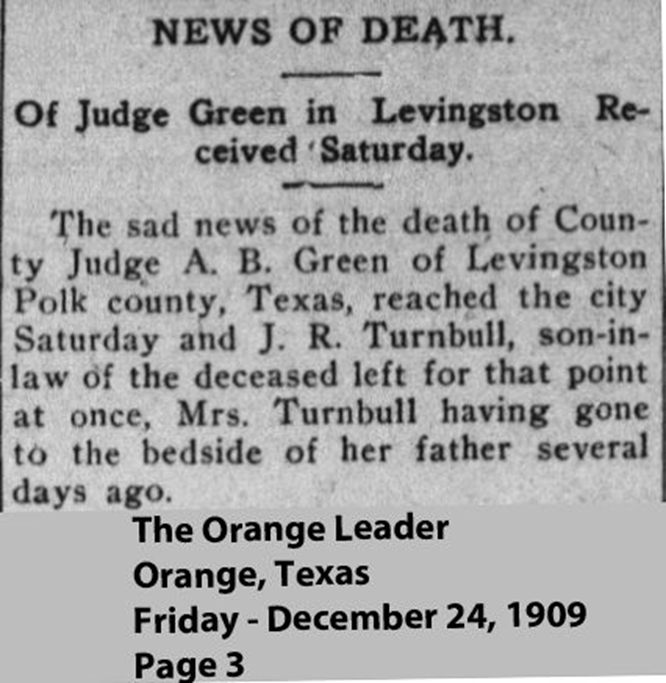
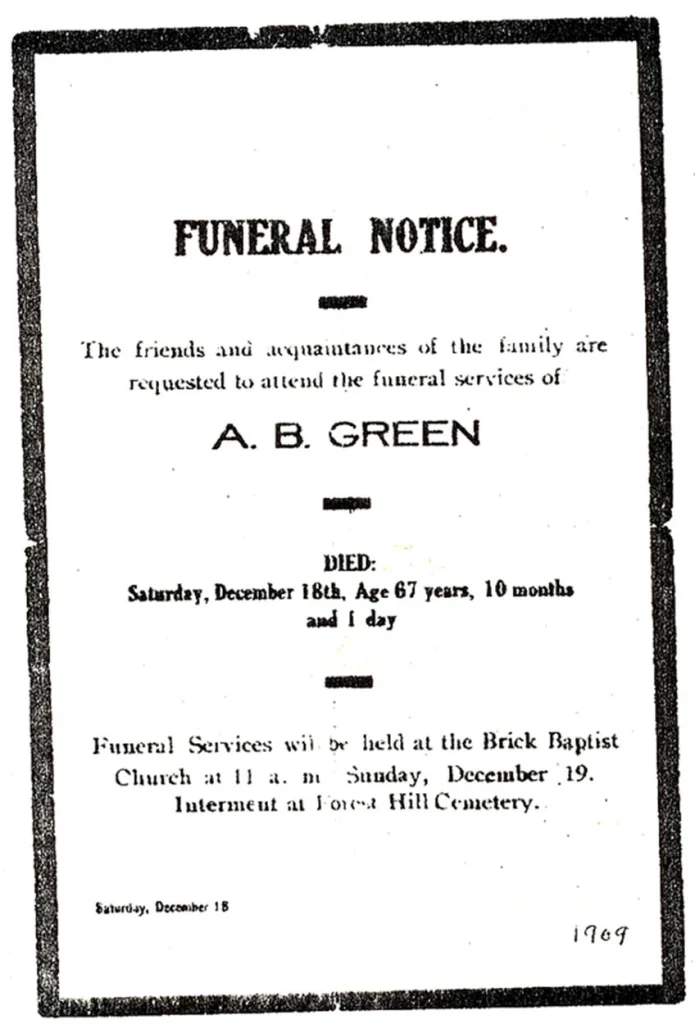
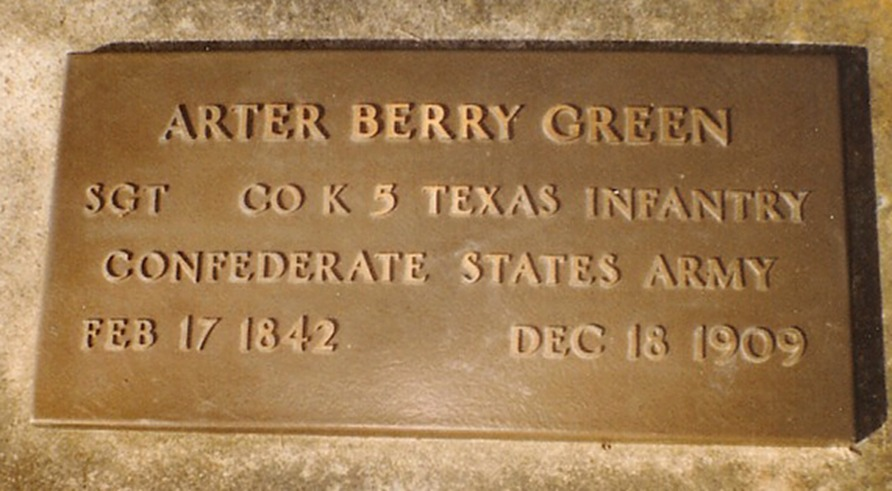
Arter Berry (A.B.) Green was born on February 17th, 1842. He was appointed the Adjutant for the Ike Turner Confederate Veterans Camp No. 321 upon its inception and held that position until the day he died on December 18th, 1909. A.B. was buried in Forest Hill Cemetery which is located in Livingston, TX. “Arter” is primarily a surname, not a given name, and it’s a variant of the name Arthur. It’s believed to have originated in England and Wales, likely influenced by the Gaelic form of Arthur, Artair. The name “Arthur” itself has various possible meanings, including “bear” or “strong man”.
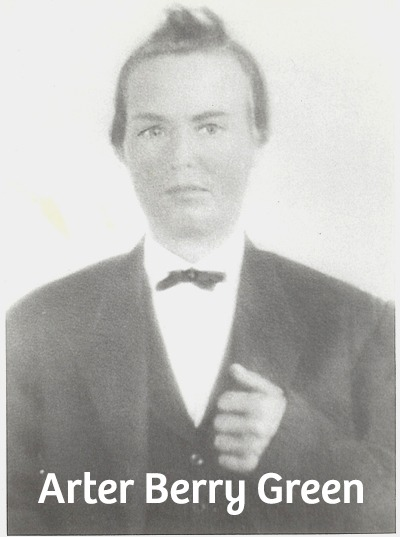
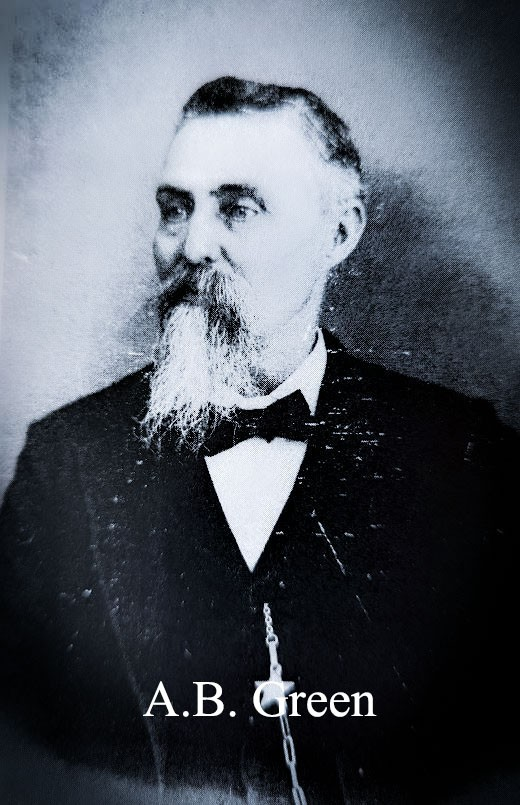
A.B.’s father was David Grigg Green who was born on October 4th, 1813 in Bell Buckle, Tenn. Bell Buckle is approximately 54 miles S/E of Nashville. David moved to Texas, what was Mexico at that time, in 1835. He did so in response to Sam Houston’s appeal for volunteers to fight the “Mexican Oppressors.” He was a veteran in the Army of the Republic of Texas. He was the original founder of Greenville, which would later become Moscow, TX, located just 16 miles from Livingston. He would marry Matilda Burch and they produced 11 children. He was a blacksmith by trade.
When he was 16 years old, A.B. worked in the store of Patrick & McConnell until 1861 when he and his brother Henry Robert joined Company K, 5th Texas Infantry. Neither they, nor their father, were slave owners. For them, it was their patriotic duty to fight for the State of Texas, the state that their father had helped win its independence. A.B. fought in the battles of Malvern Hill, Seven Pines, Gaines Farm, Manassas, Gettysburg, Chickamauga, Battle of the Wilderness, the Siege of Petersburg, Darbytown, the Siege of Richmond, and he was at the surrender at Appomattox Courthouse. He was wounded four times.
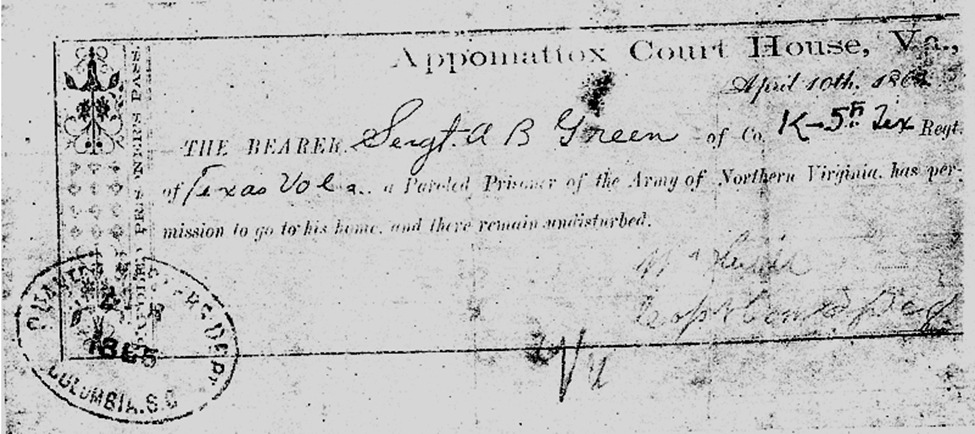
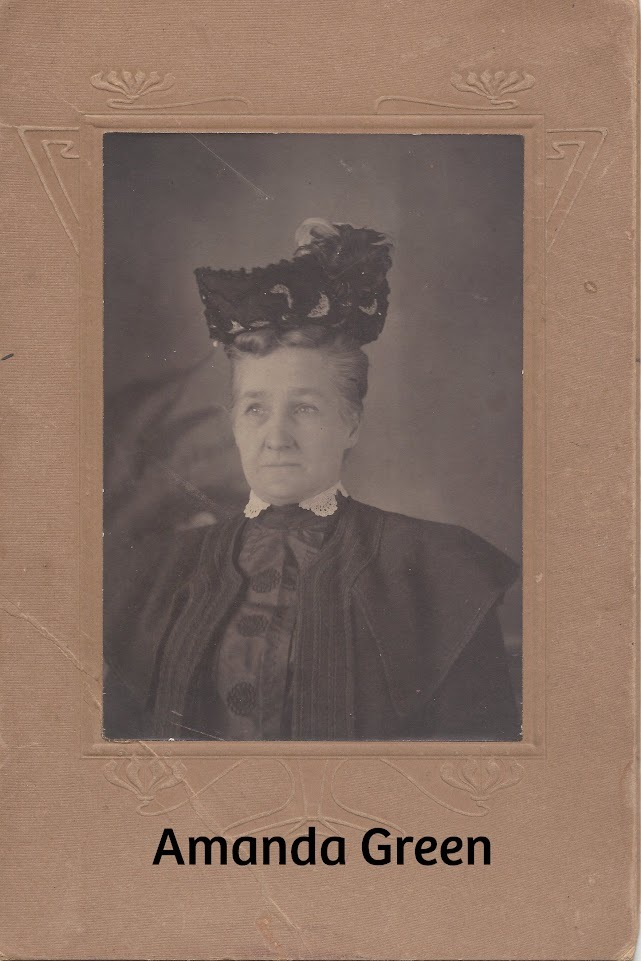
Art resumed his work with the general store in Moscow after the war and travelled throughout East Texas purchasing cow and deer hides. On March 25, 1869 he married Amanda Adelle Magee. Art and Amanda had 13 children, of which only 6 lived to be adults. Art operated a lumber company commissary for several years, as well as becoming a storekeeper and postmaster in Tyler County. He moved back to Moscow in 1881 so that his children could attend school. In 1884, he was elected County Clerk and resided in this position for the remainder of his life. Art served seven terms as County Clerk and two terms as County Judge. In addition to his political career, he was an abstractor and farm owner.
The following obituary was printed in the Confederate Veteran Magazine:
A. B. GREEN,
A. B. Green was born in November, 1842; and died at Livingston, Tex, in December, 1909, survived by his wife and six children.
Comrade Green enlisted in the Confederate army in September, 1861, as a member of Company K, 5th Texas Regiment, that being a part of the last Texas troops sent to Virginia. The 1st, 4th, and 5th Texas Regiments and the 18th Georgia Regiment composed the famous “Hood’s Texas Brigade.” Comrade Green was in nearly every battle from the first to the surrender of General Lee. He was wounded three times, but never so seriously as to keep him from his command any length of time. He did his duty faithfully as a soldier, and none was ever more deserving of honors through meritorious conduct. Returning to his home in Polk County at the close of the war, he began life again as a farmer, and in a few years entered the mercantile business. Later on he was elected to the office of County Clerk, and served for eight years, after which he was made county judge for four years. No fitter epitaph could be inscribed on his tomb than that “the corner stone of his life was integrity.”