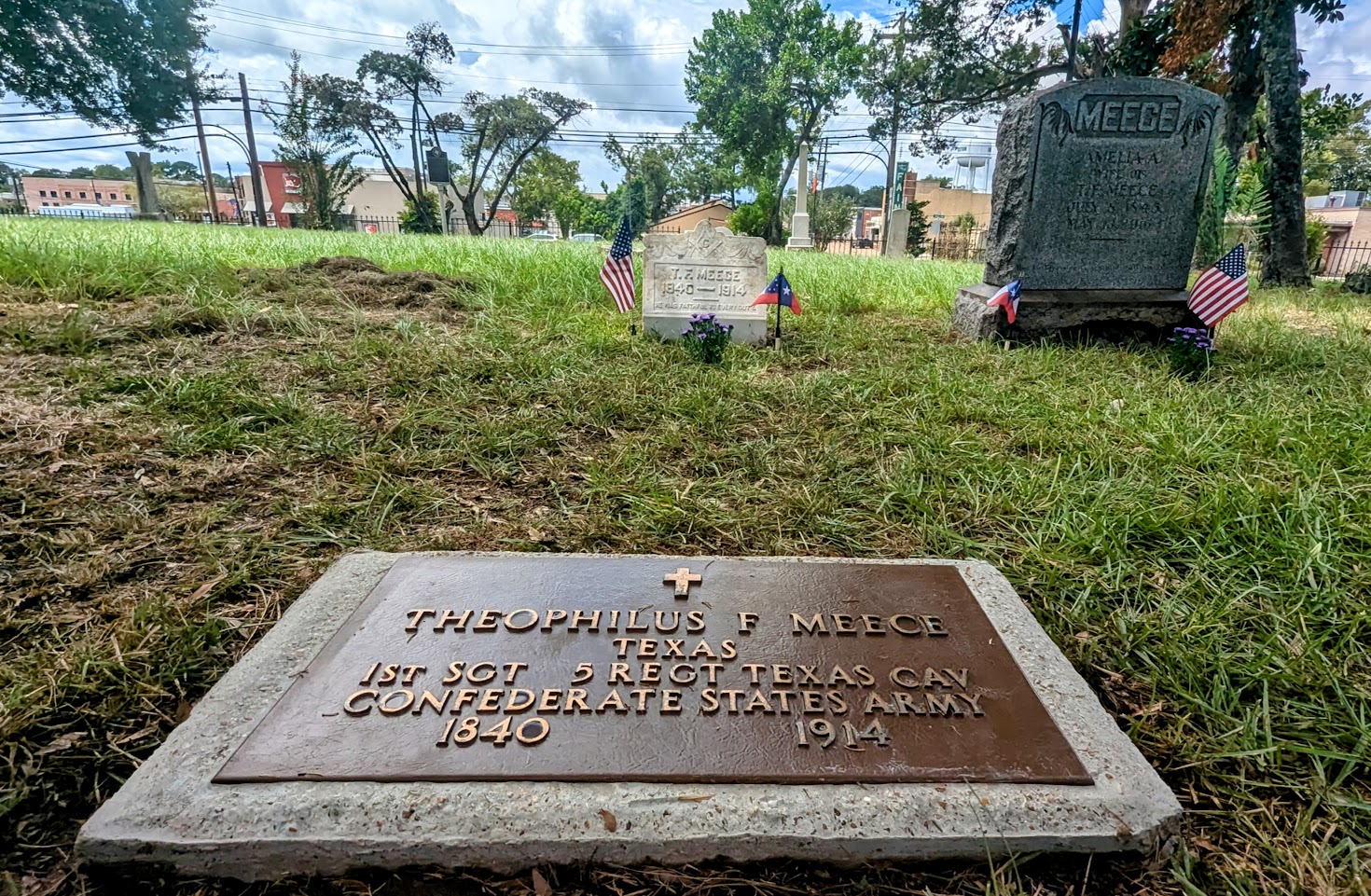
Texas declared its secession from the Union on February 1, 1861 and joined the Confederate States on March 2, 1861. The Civil War began on April 12th, 1861. On September 9th, 1861, at the age of 21, T.F. Meece enlisted in the Confederate Army as First Corporal of what would become Company K, Fifth Texas Infantry, Hood’s Brigade.
Theophilus Franklin Meece (T.F.) was a member of the Polk County Flying Artillery organized by Captain Isaac Newton Moreland Turner in May or early June of 1861. At the age of 22, Captain Turner was the youngest officer of his rank in Hood’s Brigade. Turner was able to procure (2) six-pounder cannon, through his Father, and they began to drill as a light artillery unit. These cannons were first used in the Mexican-American War. They were capable of firing a 6.1 lb. cannonball approximately 1,523 yards, as well as canister or spherical case shot (shrapnel).
The Company failed to get service as artillerist and eventually accepted an opportunity to go to Virginia as an infantry unit. The Company assembled in Livingston, TX on Tuesday 9/3/1861 where Captain Turner was presented a handsome flag (typically the Stars and Bars) during an address by the Honorable John L. Henry. Turner, in response, “promised to bring back heroes as husbands and sweethearts” for the noble women being left to cheer. Soldier dinners and entertainment were arranged for the entire Company prior to their departure. Optimism was high.
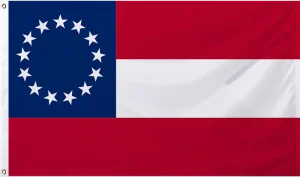
Confederate Stars and Bars
The Company marched approximately 50 miles to the city of Liberty, TX where they were officially mustered into service as Company “K” Fifth Texas Regiment Volunteer Infantry. Many of these Texas volunteers had little or no military training. They relied on the citizenry for locally supplied rations and uniforms. The Fifth Texas Regiment seemed to prefer gray hunting shirts of varying patterns for their uniforms. Some of the Confederates actually wore U.S. Army uniforms that were confiscated when the Army was banished from the State of Texas following secession. A few Companies left empty handed hoping to secure weapons along the way or they were carrying antiquated firearms.
All twenty Texas Companies were ordered to rendezvous at a staging area called Camp Van Dorn. Confederate Brigadier General Earl Van Dorn was a great-nephew of Andrew Jackson and was known for fighting with distinction in the Mexican-American War as well as his defense of Native American settlements against the Comanche.
Unfortunately he was also well known for womanizing. In May of 1863 he was shot dead at his headquarters in Spring Hill, TN by a Doctor who claimed that Van Dorn had carried on an affair with his wife. Camp Van Dorn was located in Harrisburg, TX which was a small village on Buffalo Bayou just a few miles east of Houston, TX. There was a steady curriculum of close order drills, handling and using weapons.
The Port of Galveston was blockaded by the Union Navy so the troops could not get to New Orleans by steamer. The troops began the journey east by rail on the Texas and New Orleans railroad to Beaumont, TX. From there they traveled by steam packet to Niblett’s Bluff on the Louisiana side of the Sabine River. They then marched approximately 150 miles through Lake Charles, LA, Lafayette, LA and on to New Iberia, LA which was located on Bayou Teche. Bayou Teche is a 125 mile long waterway that was once the main channel of the Mississippi River.
Heavy rains persisted throughout their journey and lower Louisiana remained flooded during the months of August and September. Many of the soldiers wrote of “water knee to waist deep.” As if the water wasn’t bad enough the men were tormented by “billions upon billions of the largest and fiercest mosquitos in the world.” And of course, there was always the threat of those pesky alligators.
I can attest to his description of the mosquitos. I lived in New Orleans, Algiers to be exact, right alongside the Mississippi River for approximately (20) years. If it wasn’t for Mosquito Control, New Orleans would be unlivable. The trucks spray a heavy mist of pesticide at night. When it happens, you want to make sure that you are indoors and that all of the windows are closed.
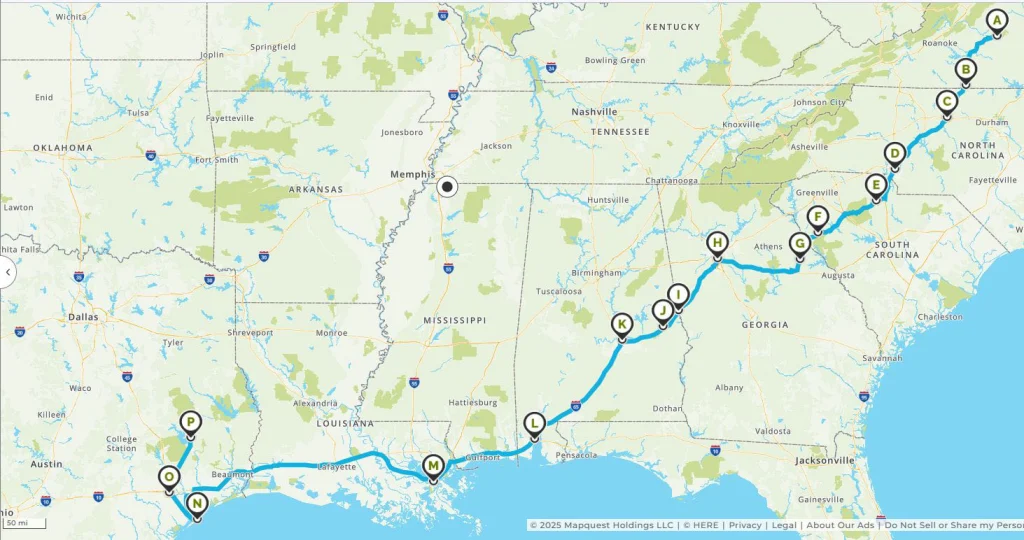
Company “K” then travelled by steamboat to Brashear City, now known as Morgan City, LA., where they boarded cars on the Opelousas and Great Western Railroad for New Orleans. Once in New Orleans they boarded the New Orleans, Jackson and Great Northern Railroad for the 1,200 mile trip to the Capital of the Confederacy, Richmond, VA. The initial leg of this journey, from Livingston, TX to New Orleans, La, encompassed approximately 419 miles (see map). The second leg of this trip, from New Orleans, LA to Richmond, VA, totaled approximately 899 miles (see map). The entire trek amounted to 1,317 miles, riding (8) different trains and it took roughly one month from the time they left Camp Van Dorn until they arrived in Richmond, VA.
The Texas Brigade would train just outside of Richmond until mid-November when the units would move to positions just outside of Dumfries, VA, alongside the Potomac River. The men began constructing their winter quarters in January of 1862. The 1st Texas camped near Quantico Creek at “Camp Quantico.” T.F.’s 5th Texas took up position a little to the north along Neabsco Creek at “Camp Neabsco” and the 4th Texas camped just south of Powell’s Run at “Camp Hood.”
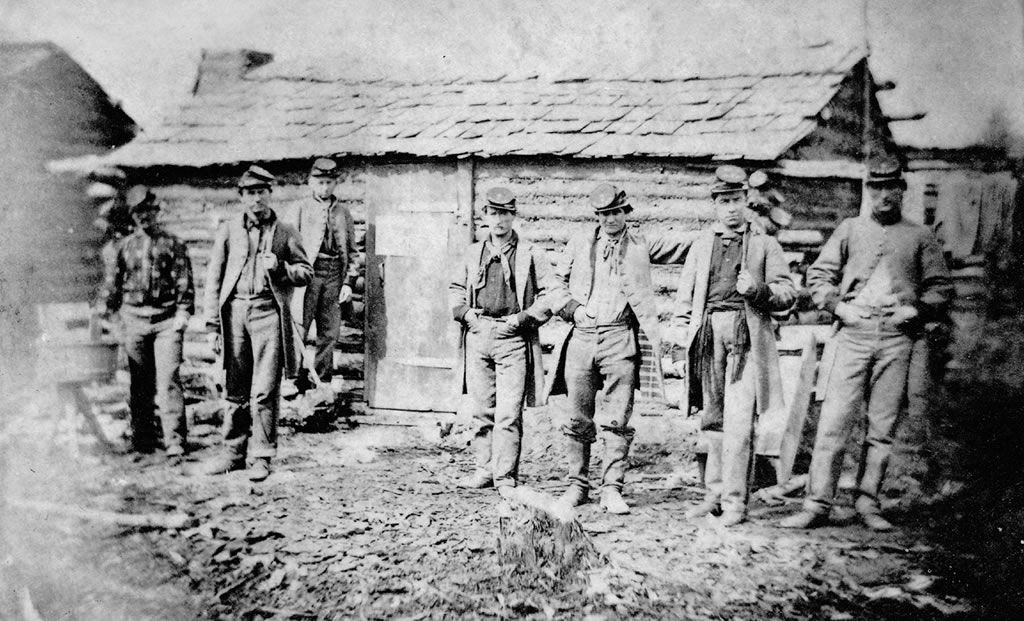
The relatively severe winter weather of northern Virginia was especially difficult for the men from Texas. Many of them had never experienced snow, let alone long harsh periods of freezing weather. T.F. had lived in Spring Hill, TN, just south of Nashville, so he was somewhat accustomed to the winter weather. Loneliness and homesickness prospered in the camps during these long winter months.
Fighting was limited to periodic skirmishes during their winter encampment. Confederate commanders favored the Texans as scouts both for their familiarity with rough frontier terrain as well as their ability to shoot and track. The Texans excelled in these pursuits, and soon became “a terror to the enemy.”
Their greatest foe was, by far, devastatingly widespread disease, sickness, and epidemics. On 11/20/1861, 47 men from Company K, (T.F.’s unit) were sick in a Richmond hospital. On 12/31/1861, only 5 soldiers were present, out of an assigned strength of 73. From October 11th, 1861 through December 31st of 1861 T.F. was reported as sick in camp on four different occasions, according to the attached Muster Roll Cards.
The 5th Texas seemed to be the hardest hit of all of the Confederate regiments. At one point, no more than 25 were fit for duty in the entire regiment, which consisted of approximately 800 men. Unfortunately, disease took many of these Texans, before they ever fired a shot in battle. That first winter the regiment lost 261 men due to sickness. 137 died and 124 were discharged or permanently furloughed. Thirty men in Company K alone died of yellow fever in the first six months of their enlistment.
Louis Trezevant Wigfall resigned his commission as Commander of the Texas Brigade to take a seat in the Confederate Congress. Wigfall was well known in Texas. He was widely credited with Sam Houston’s defeat for the governorship in 1857. He firmly believed in a society led by the planter class based on slavery and the chivalric code. John Bell Hood was promoted to brigadier general on March 8, 1862, and four days later he was formally assigned to command the Texas Brigade. Upon this assignment, this unit was known as “Hood’s Texas Brigade.” Consequently, John Bell Hood came to command the combined forces of the Texans in what was soon to be designated the “Army of Northern Virginia.”
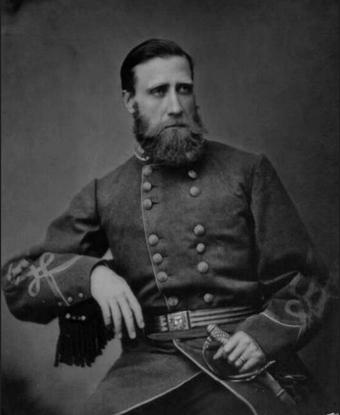
John Bell Hood
This is an account of the battles that Theophilus Franklin Meece (T.F.) fought in. On February 10th, 1862 T.F. would receive a promotion from 2nd Corporal to 5th Sergeant. On December 11th, 1862 he was promoted to 4th Sergeant. Both of his brothers, Calvin and James, would eventually join Company “K” Fifth Texas Regiment Volunteer Infantry. Calvin enlisted on April 29th, 1861, in Livingston, Texas, as a private in Company B, 1st Texas Infantry. Calvin had transferred from Company “B” 1st Texas Infantry on March 1st, 1863. James was recruited on March, 21st, 1863 in Livingston TX. I’m guessing that T.F. recruited both of his brothers to Company “K”, a decision he would later regret for the rest of his life.
The first real action for the Texas Brigade came on May 7th 1862 at Eltham’s Landing. McClellan’s Union troops were attempting to cut off the Confederate retreat towards Richmond, VA during the Peninsula Campaign. “Hood’s Texas Brigade” was successful in stopping this rear action or flanking maneuver. The battle resulted in 194 Union casualties 48 Confederate casualties. This event was considered more of a skirmish than a battle.
The Battle of Seven Pines was a part of the Peninsula Campaign. The battle ended inconclusively, with both sides claiming victory. During the Battle of Seven Pines, the Texas Brigade was instructed to support Longstreet’s command. Although the rest of Brigadier General William Henry Chase Whiting’s division was heavily engaged with considerable casualties, the Texas Brigade sat mostly idle during the battle and had just 10 casualties.
The most historically significant moment of the day occurred, when Joseph Eggleston Johnston, Commander of the Army of Northern Virginia, was struck in the right shoulder by a bullet. This was immediately followed by a shell fragment that hit him in the chest. He fell unconscious from his horse with a broken right shoulder blade and two broken ribs and was evacuated to Richmond, VA. Robert E. Lee took command of the Army of Northern Virginia in June of 1862.
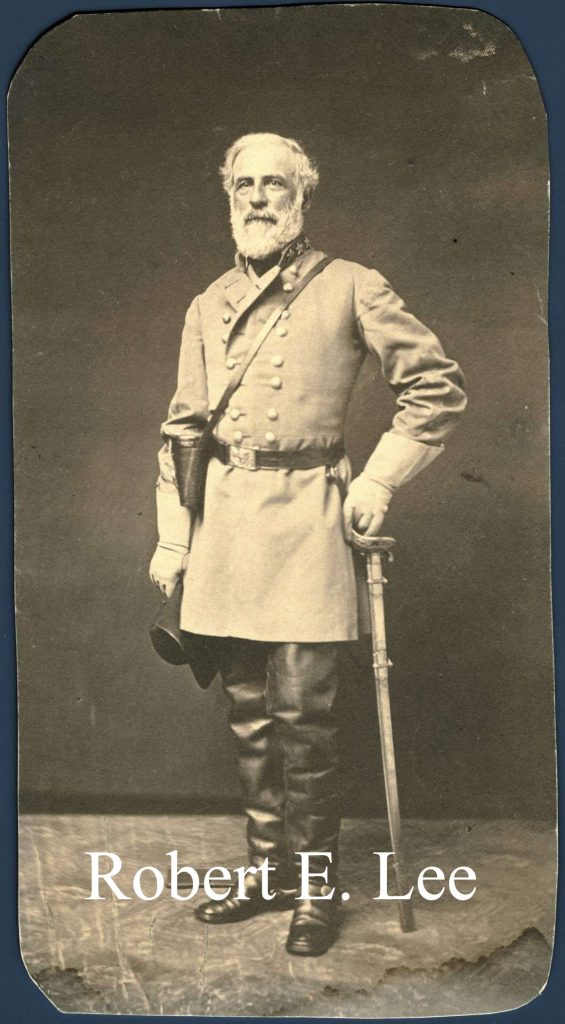
The brigade distinguished itself during the Seven Days Battles where it routed the enemy at Gaines’ Mill, captured a battery of guns, and repulsed a cavalry counterattack. The Seven Days Battles lasted from June 25th until July 1st, 1862. The Battle of Gaines Mill occurred on June 2th, 1862. Those seven days gave new life to the Confederacy. Stonewall Jackson, singled out the 4th Texas as “…soldiers indeed.” The Texas Brigade became known as the “elite shock troops” of the Army of Northern Virginia.
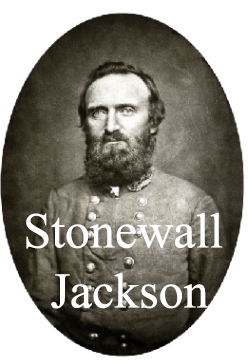
Lee had hoped to cut off George B. McClellan’s retreat but miscommunication and poor timing doomed the Confederate plan. The Federals had every advantage at Malvern Hill and the Confederates suffered 5,000 casualties. “It was not war,” wrote Confederate General D.H. Hill, whose brigades suffered severely, “it was murder.” The Texas Brigade was held in reserve, despite Hood’s requests to assault the Union entrenchments on the hill. Malvern Hill brought an end to the Peninsula Campaign.
It had been the bloodiest week in American history, producing more than 34,000 casualties (19,000 Confederate, 15,000 Union). The Confederates may have won but that success came at a high price. George Henry Chase Whiting’s Division lost over 1,017, almost a quarter of its total strength. The Texas Brigade lost 89 killed, 476 wounded, and 4 missing, almost one-half of those who had followed Hood into the charge. The 5th Texas itself had 76 casualties, including 13 dead and 62 wounded.
The battle at Freeman’s Ford was basically a skirmish that began when men from both sides mistakenly ran in to one another gathering corn in a cornfield on 08/22/1862. The Union Army thought that they had run across a couple of Confederate stragglers but in reality they had engaged five regiments of Confederate soldiers, led by the Texas Brigade. Two men were killed and four men were wounded.
The battle at Thoroughfare Gap was a prelude to Second Manassas. General James Longstreet began his march on 08/26/1862. The brigade now began what many in the regiment remembered to be the most grueling march of the war. The gap itself was just “a narrow passage through the mountain. The walls rose up some 300 to 400 feet on either side of the passage, nearly perpendicular. The narrow passage was barely wide enough to accommodate a railroad track. The battle was relatively small with approximately 100 casualties on both sides. It did however allow Longstreet’s forces to unite with Stonewall Jackson’s forces at Manassas.
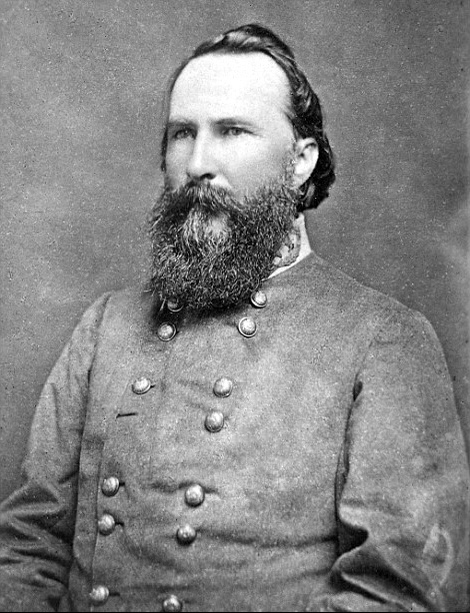
President Abraham Lincoln formed the Army of Virginia in June of 1862 and appointed Maj. Gen. John Pope to command it. On August 30th Maj. Gen. John Pope launched a major assault against the Confederate forces of Stonewall Jackson. Longstreet led a major counterattack, headed by the Texas Brigade, against the Union left. The brigade overran two Union regiments, nearly annihilated the 5th New York Zouaves, and captured a battery of guns. Its reputation for fighting was sealed when it closed a gap in the Confederate line and drove back the two Union Corps that were attacking.
Despite heavy Confederate casualties, Second Manassas was a decisive victory for the Rebels. It was the largest loss of life in any single battle for a regiment in the entire war. For its work that day, especially this assault, the 5th Texas earned the moniker “The Bloody Fifth”, a title they proudly carried with them for the rest of the war. The total estimated casualties were 21,849, which included 14,462 Union casualties as well as 7,387 Confederate casualties.
The Texas Brigade bore much more than its share of these terrible losses, 628 men in all, the greatest loss it would suffer in a single battle during the entire war. Of its five regiments, the 5th Texas, the most engaged in the fighting, suffered the heaviest casualties, over 260, more than any other regiment in Lee’s army. Initial reports placed the number killed at 15, but this figure increased to 36 when the mortally wounded were taken into account. The regiment’s wounded and dead were scattered over a distance of two miles.
A field hospital was set up in the Chinn House, a two and a half story farmhouse, where the regiment’s surgeons worked by candlelight to save the wounded. According to T.F., he “was severely wounded in the elbow”, on Aug. 30th, 1862, and treated at the Staunton Hospital in Staunton, VA. I can only assume that he travelled there by train and that he recuperated there as well. The Virginia School for the Deaf and the Blind, located in Staunton, was established in 1839. During the Civil War, the school’s Main Hall was used as a hospital by Confederate troops, and several staff members served as doctors or nurses. I’m guessing that T.F. was treated there. Ironically my Father and Mother would stay in Staunton on their honeymoon in 1953, while visiting the Natural Bridge. I’m sure that my Dad didn’t have a clue as to the historical significance that Staunton had for our family.
T.F. was very fortunate in that he was mobile and able to leave the battlefield. Three days after the fighting ended, at least 3,000 wounded still lay on the battlefield, unable to move themselves. Many suffered without food or water and had received no medical attention. Pelted by rain or burned by the sun, some of these wounded endured a week on the bloody field, and many died from exposure and lack of care.
T.F. was unable to fight in the Battle of Sharpsburg or Antietam, which occurred on 9/17/1862. He may have been fortunate however. Out of 854 that went into battle at Sharpsburg, 550 of the Texas Brigade were killed or wounded. It remains the bloodiest day in American history, with a tally of 22,727 dead, wounded, or missing on both sides. On the Company Muster Roll for the months of January and February of 1863, T.F. was reported as present but sick. Once again the harsh winter would take its toll. T.F. would receive a promotion to 3rd Sergeant on June, 22nd, 1863.
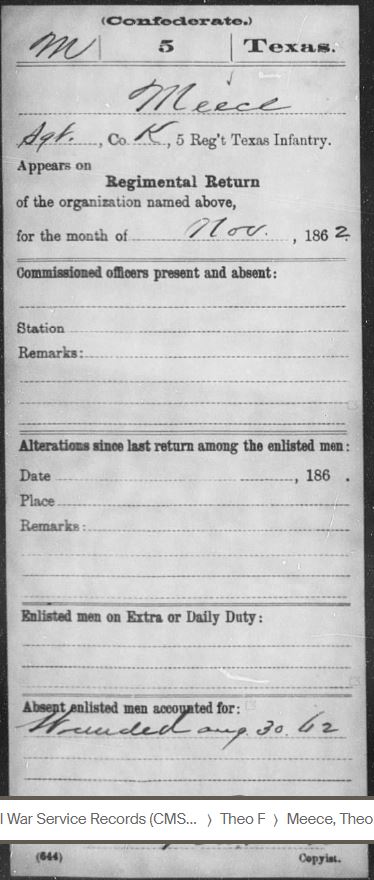
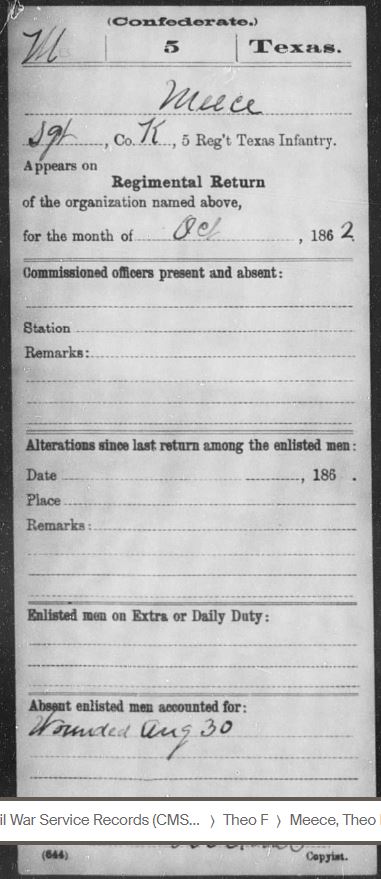
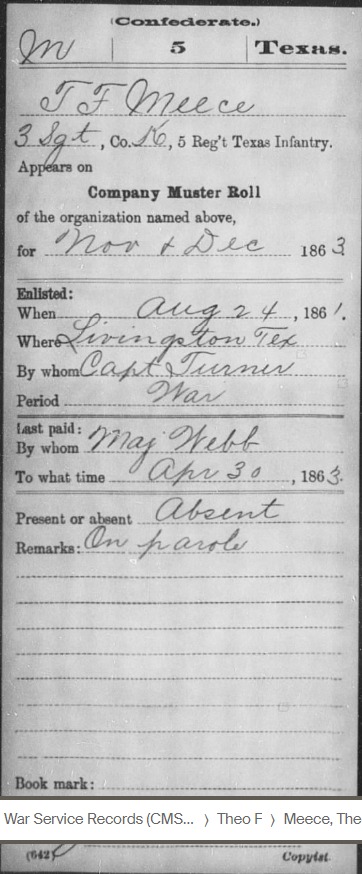
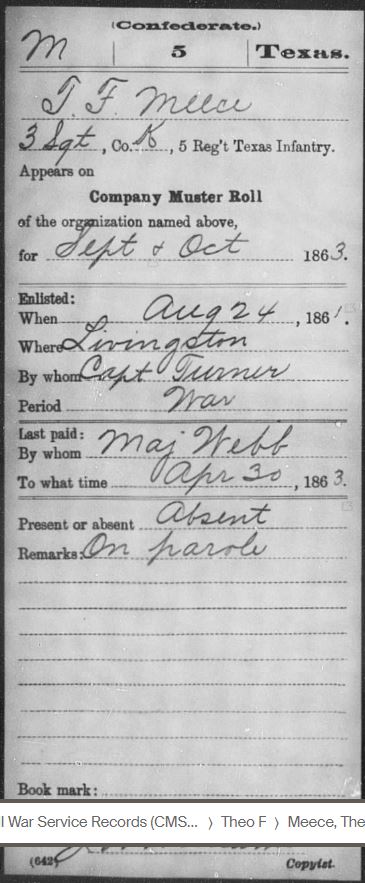
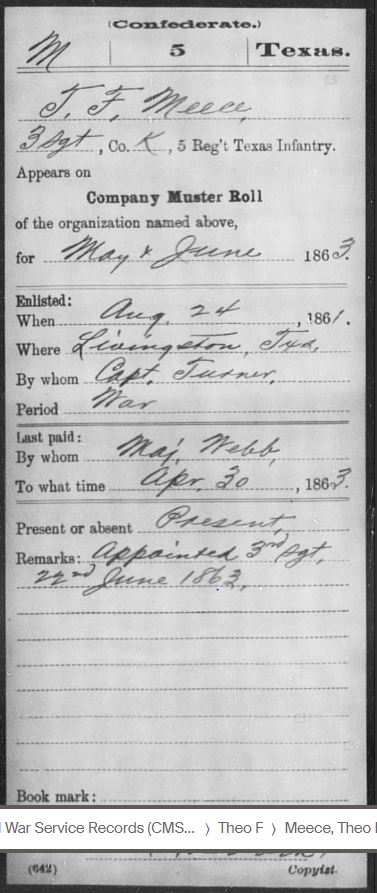
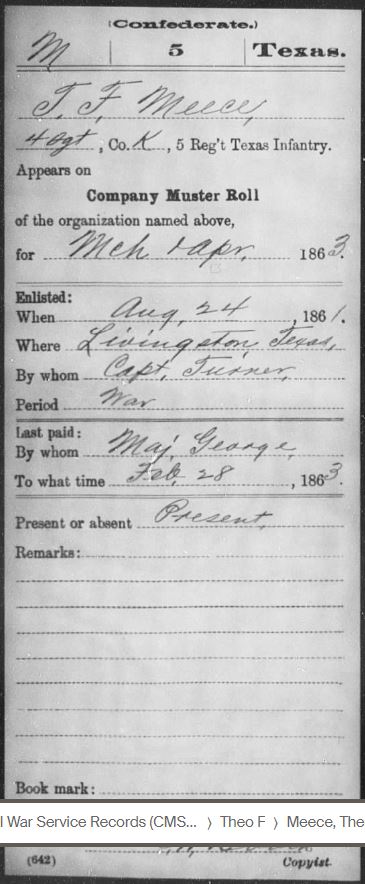
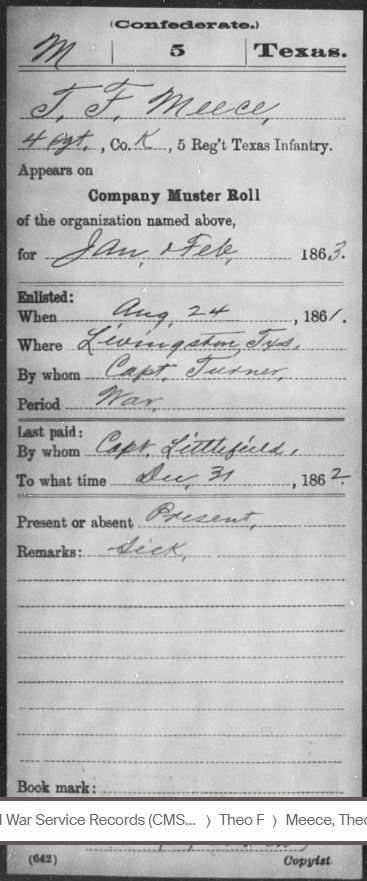
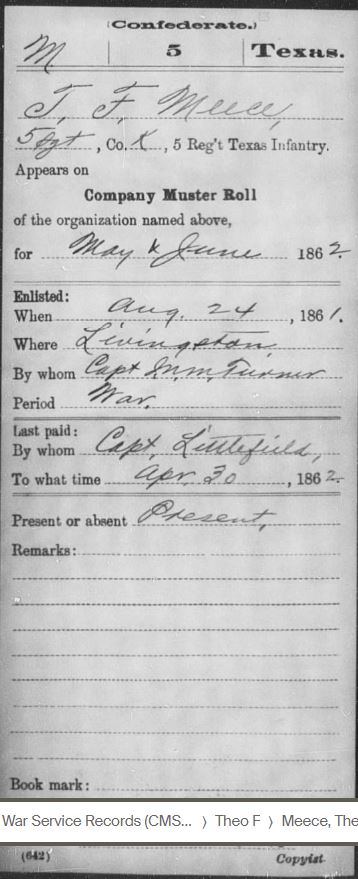
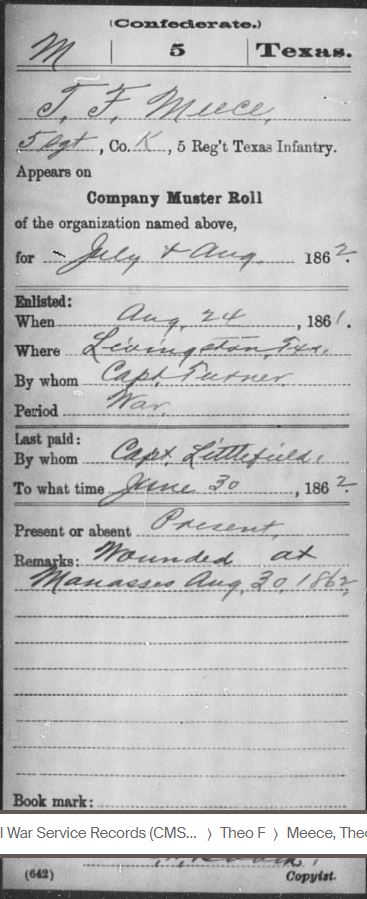
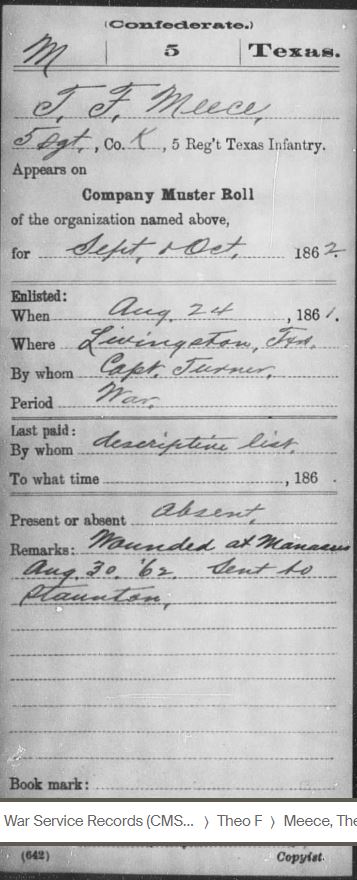
Upon returning to Company “K”, following his injury at Manassas, T.F. would take part in several skirmishes along the Nansemond River and in Fort Huger. His beloved Captain, Isaac “Ike” Newton Moreland Turner was killed on April 14th, 1863 inside Fort Huger. He was struck by a ball from a sharpshooter across the river. He was carried to a field hospital where he died the following day. These skirmishes would continue through May of 1863. It was on to Gettysburg.
Based on my research, Theophilus Franklin Meece (T.F.) and James Pickney Meece, who was mortally wounded, were both injured at Little Round Top in Gettysburg, PA. Calvin Meece was not injured but he was captured there (educated guess). The fighting was so close and intense that many soldiers found themselves behind enemy lines. T.F. and his brothers were a part of Jerome B. Robertson’s Texas Brigade under General John Bell Hood. Robertson’s brigade sustained losses of 84 killed, 393 wounded, and 120 missing, a total of 597 casualties.

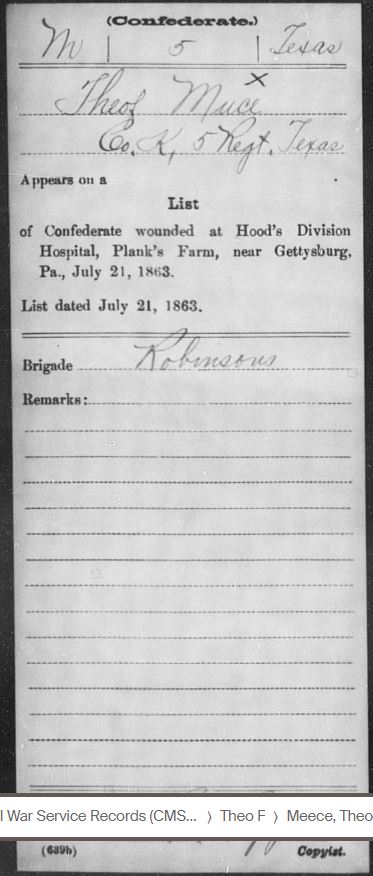
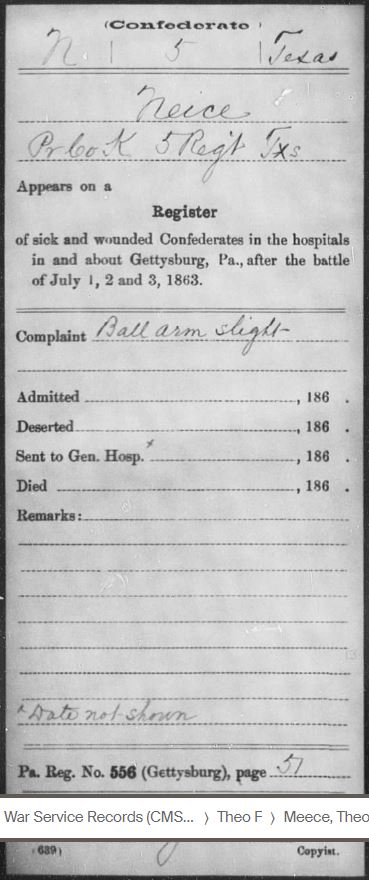
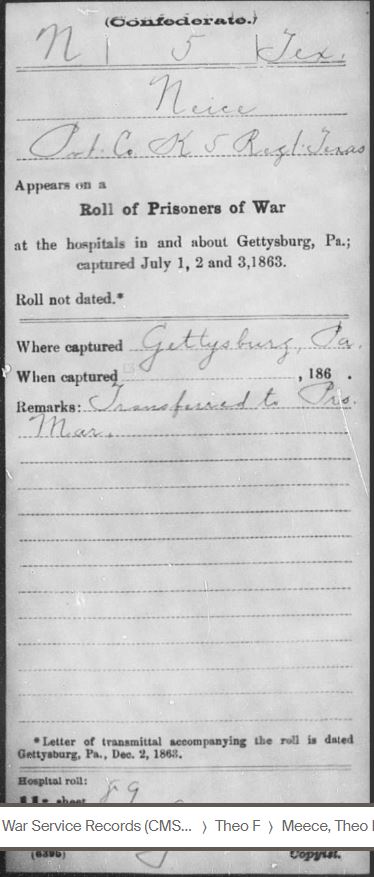
T.F. and John were treated at the John Edward Planks farm which was one of the largest Confederate field hospitals. General Hood was treated there for a serious arm injury, which he suffered at the beginning of the battle for The Little Round Top. Officers, such as Hood, were treated in the farmhouse. Regulars were treated in the barn. According to Reminiscences of the Boys in Gray, 1861-1865 T.F., “Was severely wounded in the right arm and slightly in left groin at Gettysburg, Pa., on July 2, 1863. According to the Civil War service record, he had a slight wound from a ball to the right arm. Once there, he was detailed to stay with the wounded. T.F. was taken prisoner at the field hospital and declared a POW’s on July 5th, 1863.
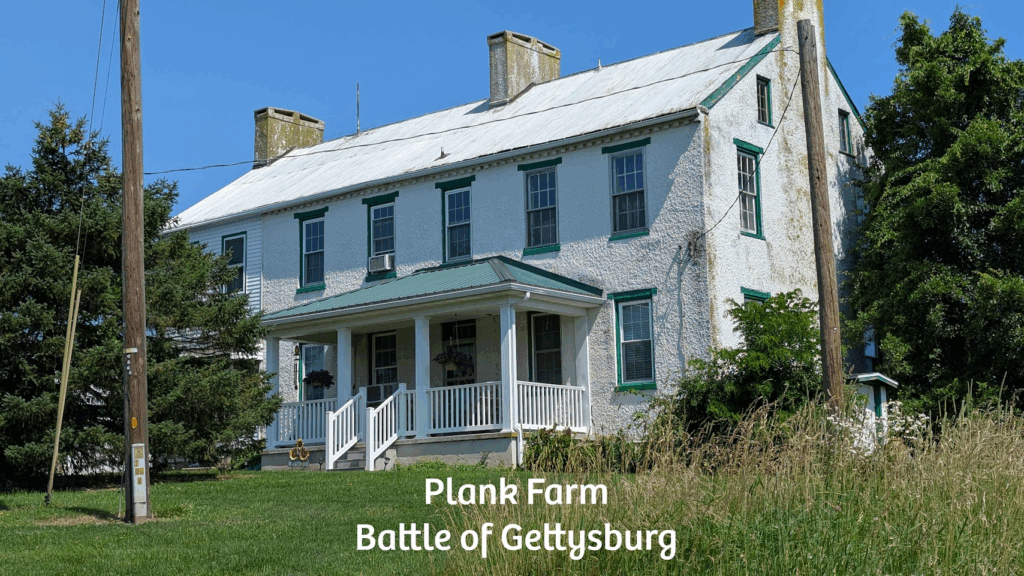

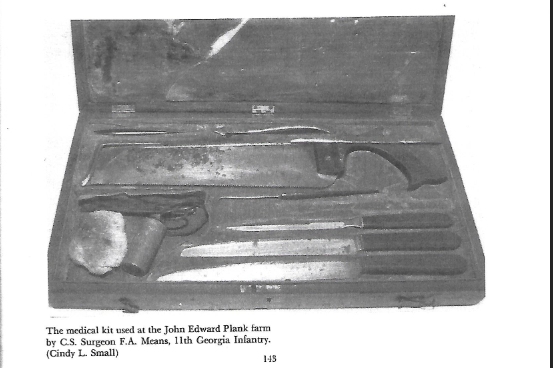
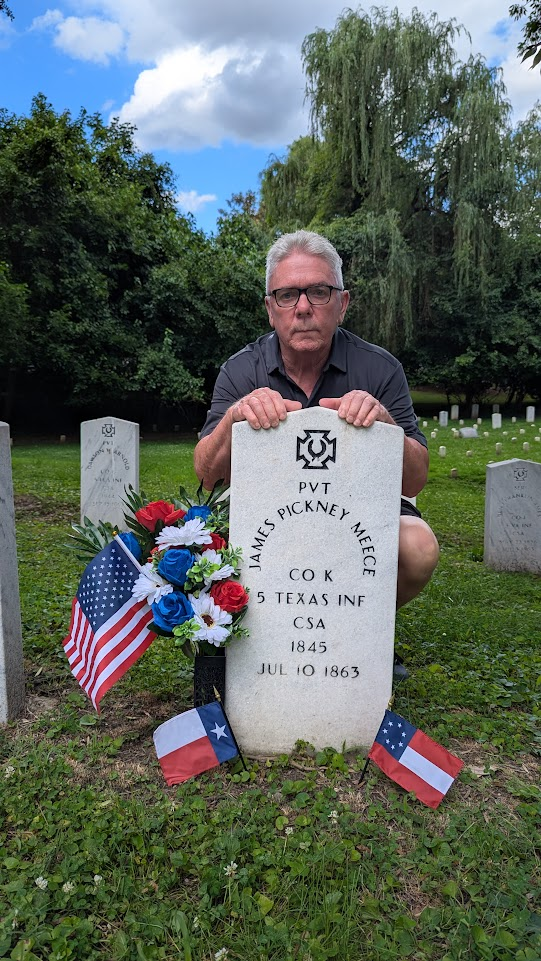
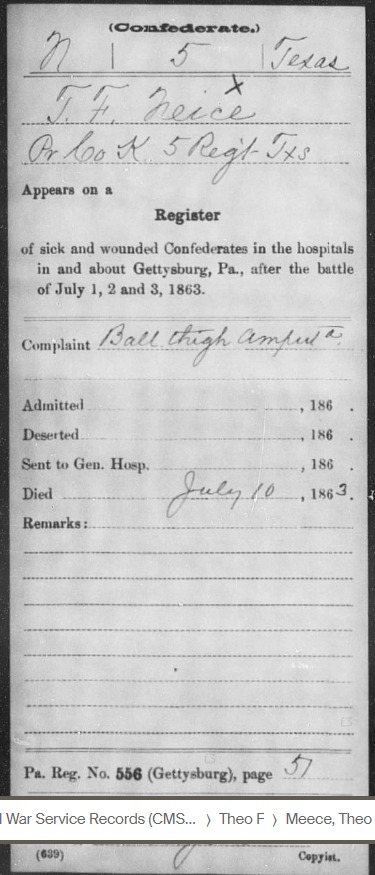
James was wounded in the thigh on July 3rd, 1863. His leg was amputated at Plank farm and sadly he died from his wound on July 10th, 1863. He was only (20) years of age. I can only imagine that Theophilus was by his bedside when he passed. There were more than 60 documented burials on the property and James was one of them. James was buried at “John Edward Planks Farm”, north of house under walnut tree: right and front of house toward Fairfield Road and Gettysburg.” according to Gettysburg’s Confederate Dead by Gregory A. Coco.
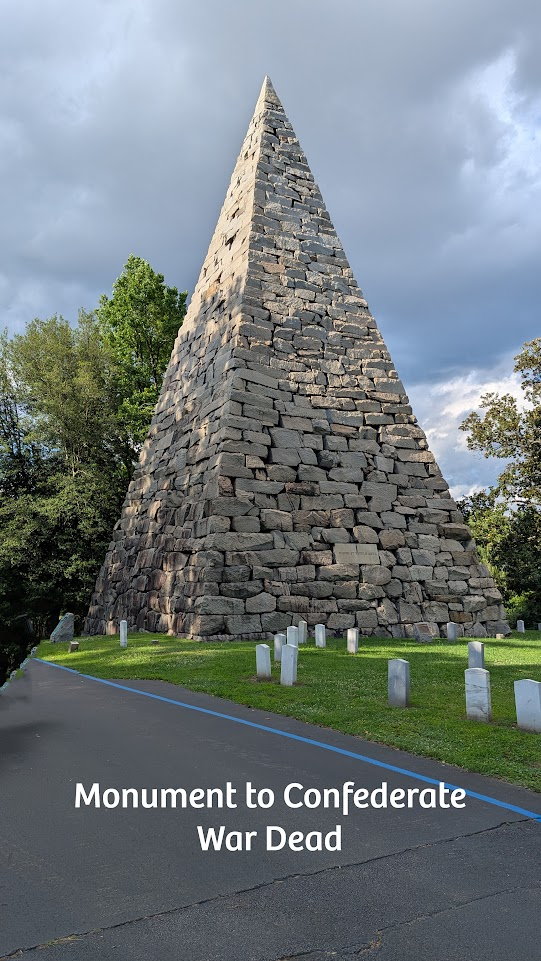
Thanks to Dr. Rufus Benjamin Weaver and the ladies of the Hollywood Memorial Association James was disinterred at Gettysburg, along with 881 other remains, and shipped in the 2nd lot on 08/03/1872 to Hollywood Cemetery. Dr. Weaver basically charged $3.25 for each set of remains. He billed $2,866.00 for this particular lot. In the end, he exhumed 2,935 remains, most of which were reburied at Hollywood Cemetery. Unfortunately, at the time of his death, Dr. Weaver was owed over $11,000.00, which was never paid.
In July of 1862 Congress gave the President the authority to accept blacks into the Army. The south was outraged. In May of 1863 a joint resolution declared that captured black soldiers would be turned over to the states and presumably returned to slavery. Their white officers would be “deemed as inciting servile insurrection, and shall if captured be put to death or otherwise punished at the discretion of the court.” In response the Union cancelled all exchanges.
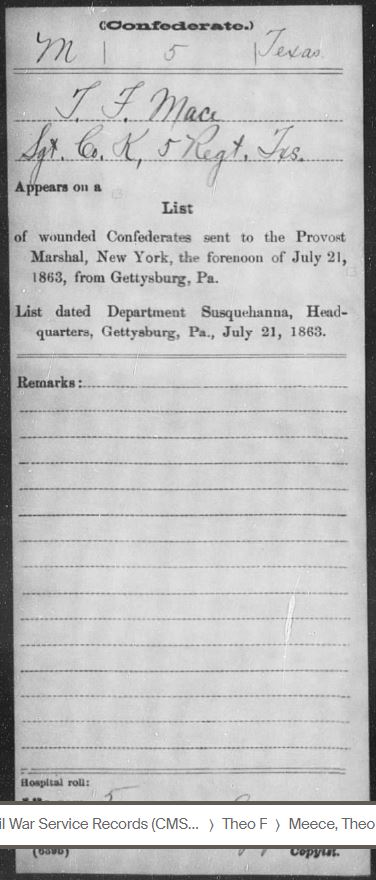
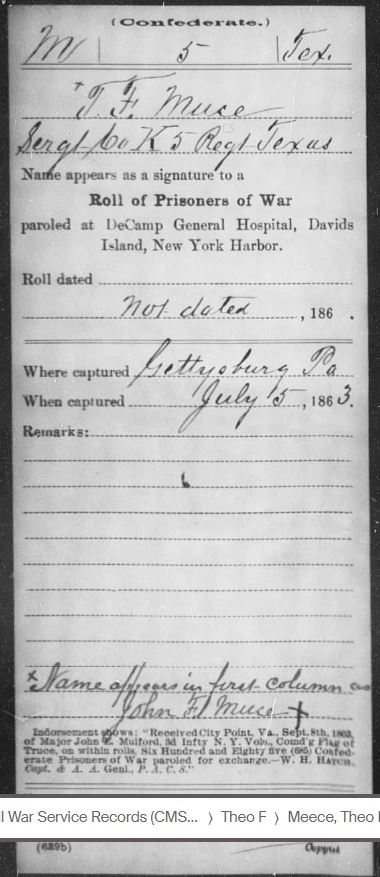
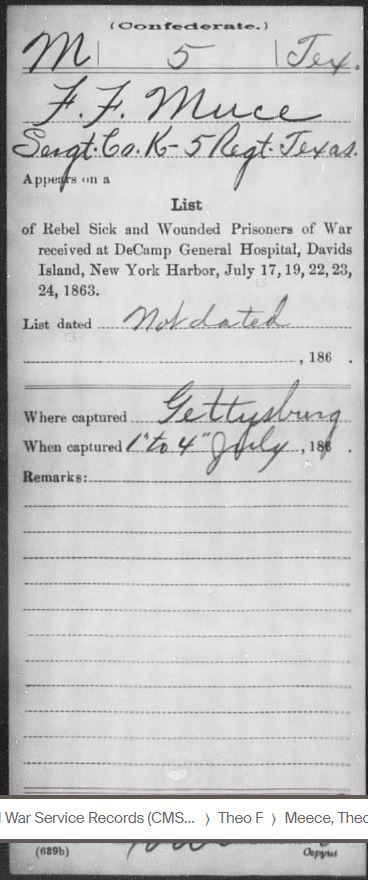
T.F. was sent to David’s Island as a POW on “the forenoon (time period between dawn and noon) of July 21, 1863 from Gettysburg, PA.” David’s Island is located off the coast of New Rochelle, New York in Long Island Sound. Fortunately Theophilus Franklin Meece was released from De Camp General Hospital on David’s Island in New York on Sept. 13th, 1863.
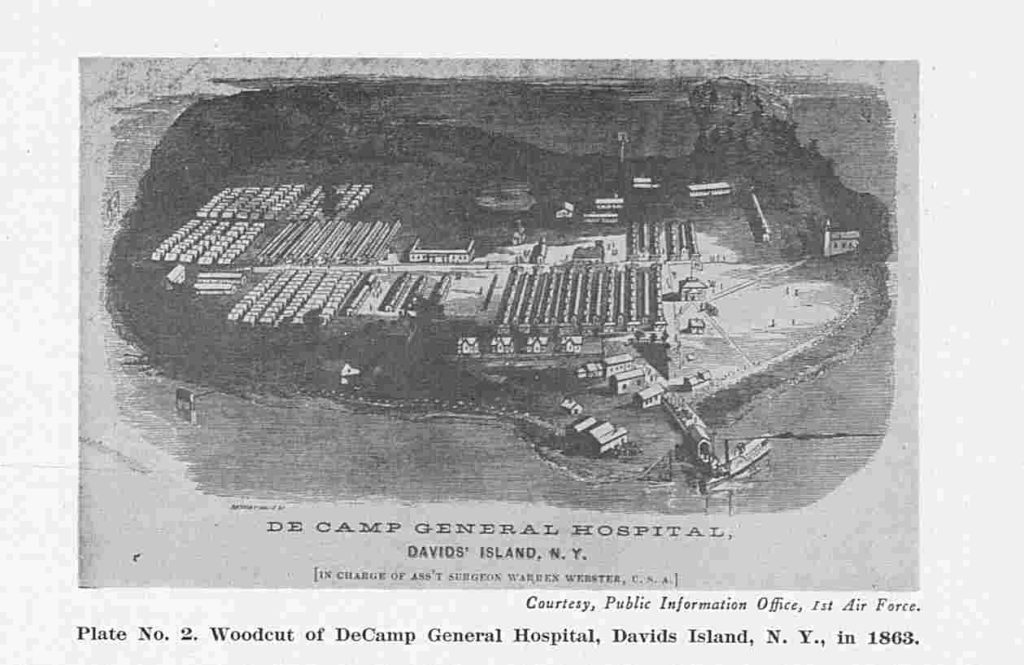
The prisoners from Gettysburg, entering David’ Island, were described as follows: ‘They were in a wretched condition, ragged, and covered with vermin; their soiled and torn uniforms, if such they may be called, were stained and soaked with blood; and their wounds, which had not been dressed from the time of the battles at Gettysburg until their arrival here, were absolutely alive with maggots. Many of them had suffered amputation; some had bullets in their persons; at least a score have died, or were at the point of death when the boat touched the wharf. On their arrival here they were dressed in the dirty gray coats and pants so common in the Southern army. Shakespearean army of beggars must have been better clad than were these Confederate prisoners”.
According to T.F. he, “Was never in prison as I was paroled and returned to Richmond to await exchange. Was furloughed and went home where I remained till exchanged in May following.” According to an Indorsement from Grant’s headquarters in City Point, VA T.F. was part of an exchange involving 685 Confederate POW’s paroled for exchange. The terms of the agreement between the two sides sometimes prohibited paroled prisoners from returning to the military in any capacity.
Unfortunately Calvin Wood Meece would not be so lucky. Calvin was sent to Fort Delaware, which was built in 1859 and sits in the middle of the Delaware River on Pea Patch Island across from Finn’s Point National Cemetery. The conditions of the prison were deplorable, and prisoners were afflicted with smallpox, measles, diarrhea, dysentery and scurvy. The prison was set up to house 4,000 prisoners, but by the end of the war, there were over 12,000 inmates.
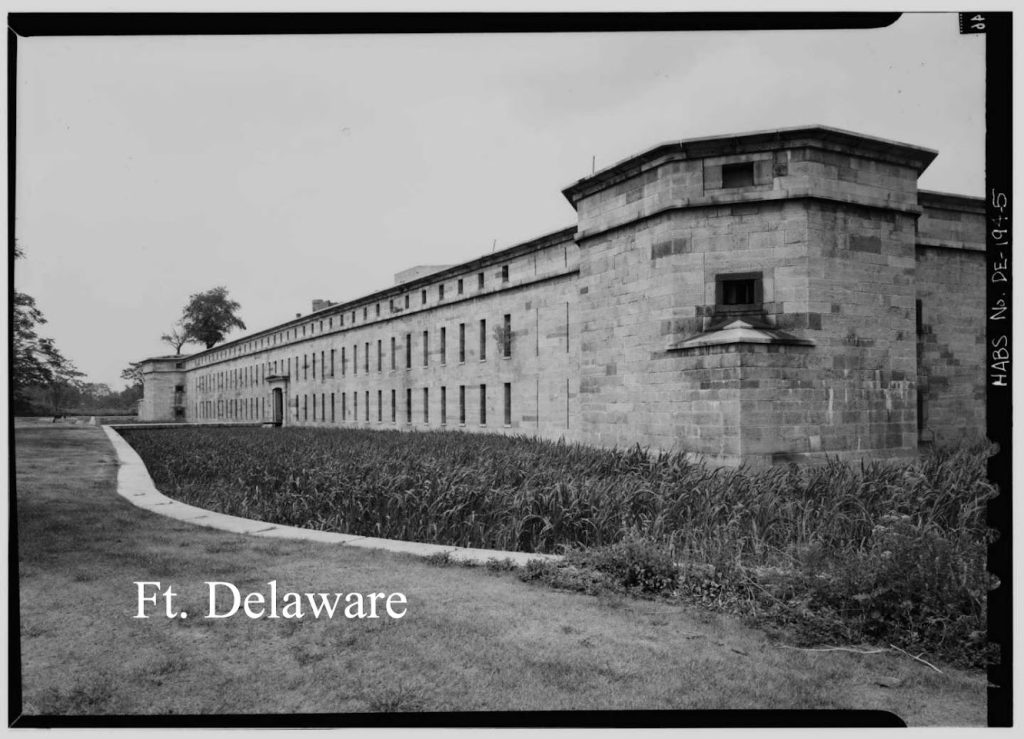
The prison became known as “Andersonville of the North,” because of similar inhumane conditions at the Andersonville Prison in Sumter County, Georgia, where almost 13,000 Union prisoners died of malnutrition, exposure and disease. Andersonville and Fort Delaware became synonymous with the atrocities that both Northern and Southern soldiers experienced as prisoners of war. The commander of Fort Delaware during the Civil War was General Albin F. Schoepf. He was not fond of the Confederate prisoners, who nicknamed him “General Terror.”
Approximately 2,700 Confederate soldiers died while being held captive at Fort Delaware. 2,436 Confederates are interred at Finn’s Point National Cemetery. According to Union records (see attachment), Calvin succumbed to chronic bronchitis on June 15th, 1864. He was only (22) years old. Calvin was buried at Finn’s Point National Cemetery. Rumor has it that many of the Confederates were buried in common graves.
There is one glaring error on one of the cards. “Appears on a Register of sick and wounded Confederates in the hospitals in and about Gettysburg, PA, after the battle of July 1, 2 and 3, 1863.” It describes T.F. as a Private in Co. K. The wound is described as “Ball thigh amputated” and it states that he died on July 10th. If anything I think that T.F. was mistaken for his brother John.
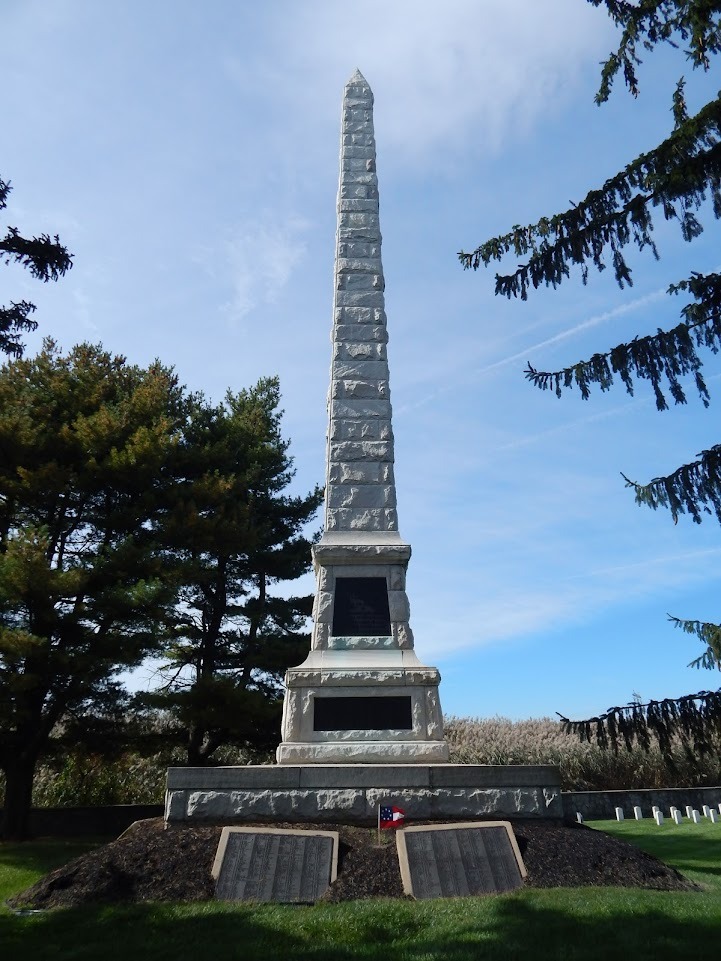
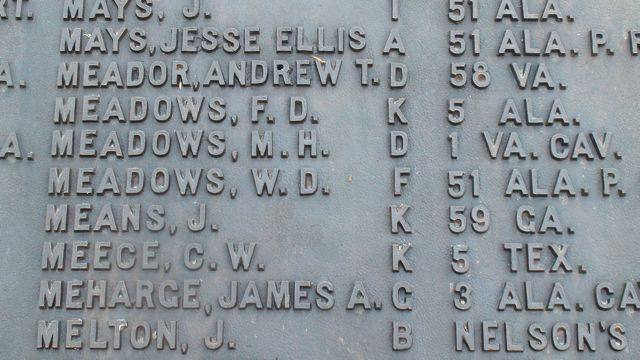
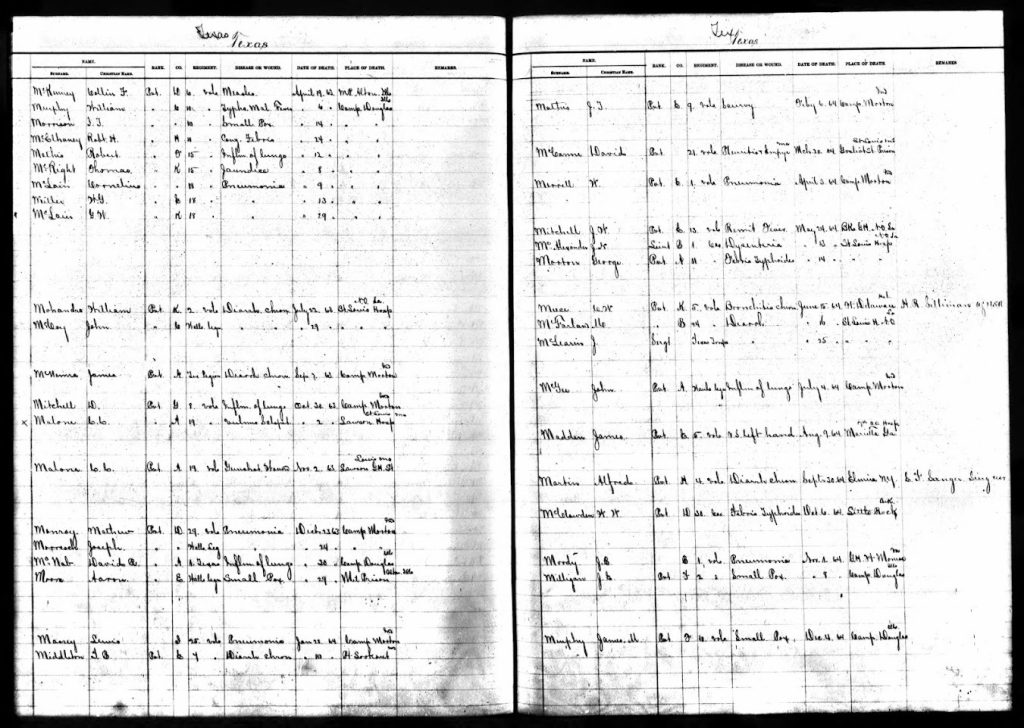
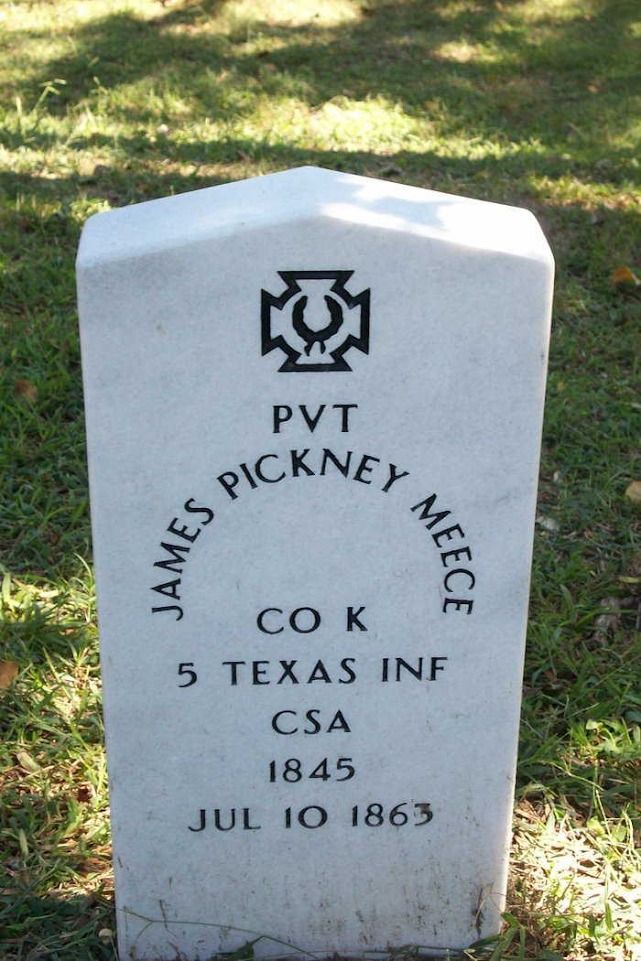
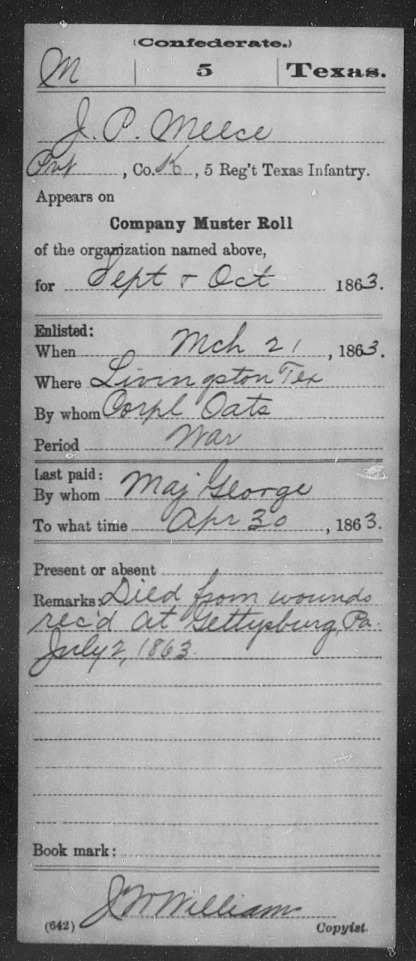
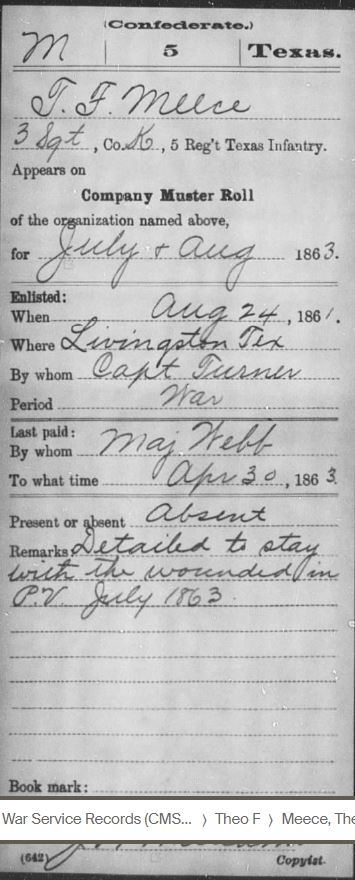
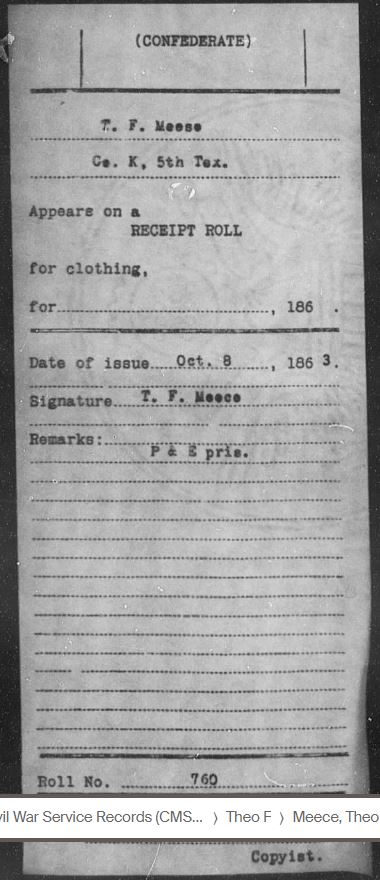
Ernest Hemingway said “Every man has two deaths, when he is buried in the ground and the last time someone says his name. In some ways men can be immortal.” Our guide at Hollywood Cemetery told us that the second death occurs when people stop visiting your grave. A person’s memory and legacy can live on as long as they are kept alive in the thoughts and actions of the living. In Christianity there are three kinds of death. Spiritual death in which man is separated from God. Physical death where there is a separation of man’s soul from his body. And finally, a second death when man is separated from God in the lake of fire forever.
Is it possible that no one has visited the graves of James or Calvin in 153 to 162 years??? I can now attest to the fact that James Pickney Meece and Calvin Wood Meece have not yet suffered a second death.
Upon release from David’s Island hospital T.F. returned to Richmond, VA to await exchange. He was furloughed and went home where he remained until the exchange was made official in May of 1864. T. F. had numerous opportunities to fight with other Confederate forces but he chose to return to Company “K”.
On his way back he helped to defend the Staunton River Bridge. I’m assuming that he traveled through New Orleans, as he did at the start of the war. T.F. states in one of his bios, “On my way back I walked nearly 300 miles before reaching transportation and had to walk from Danville, VA to Petersburg, VA after defending the railroad bridge across the Staunton River.” I would assume that rail travel had become pretty sketchy by then. The distance between Danville and Petersburg was an additional 135 miles that he had to walk.
The Battle of the Staunton River Bridge occurred on June 25th, 1864. Grant wanted to cut off the supply lines, Richmond and Danville Railroad, to Petersburg. They intended to take and burn the bridge. The bridge was defended by 938 Confederates, which included T.F., under the command of Captain Benjamin L. Farinholt. They were able to successfully defend the bridge against 5,000 Union cavalry and 16 artillery pieces. T.F. stated, “Here I had a close call as a ball from a sharpshooter passed between my arm and body, cutting both the sleeve and body of my coat. I did not know of this till next day. I thought the ball knocked the dirt against me by hitting the bank in front of me.” He would finally reach his Company in Petersburg, VA on July 4th, 1864.
In August of 1864, Company K, as part of the 5th Texas Infantry Regiment, was engaged in the Siege of Petersburg, Virginia. According to T.F., he had rejoined his company at Petersburg in July of 1864. T.F. stated that he was injured at White Oak Swamp or the Second Battle of White Oak Swamp. His muster card even states W.O. Swamp, wounded severely–neck & left lung. There was only one recognized battle fought at White Oak Swamp and it occurred in June of 1862. It was a part of the Seven Days Battles (Peninsula Campaign).
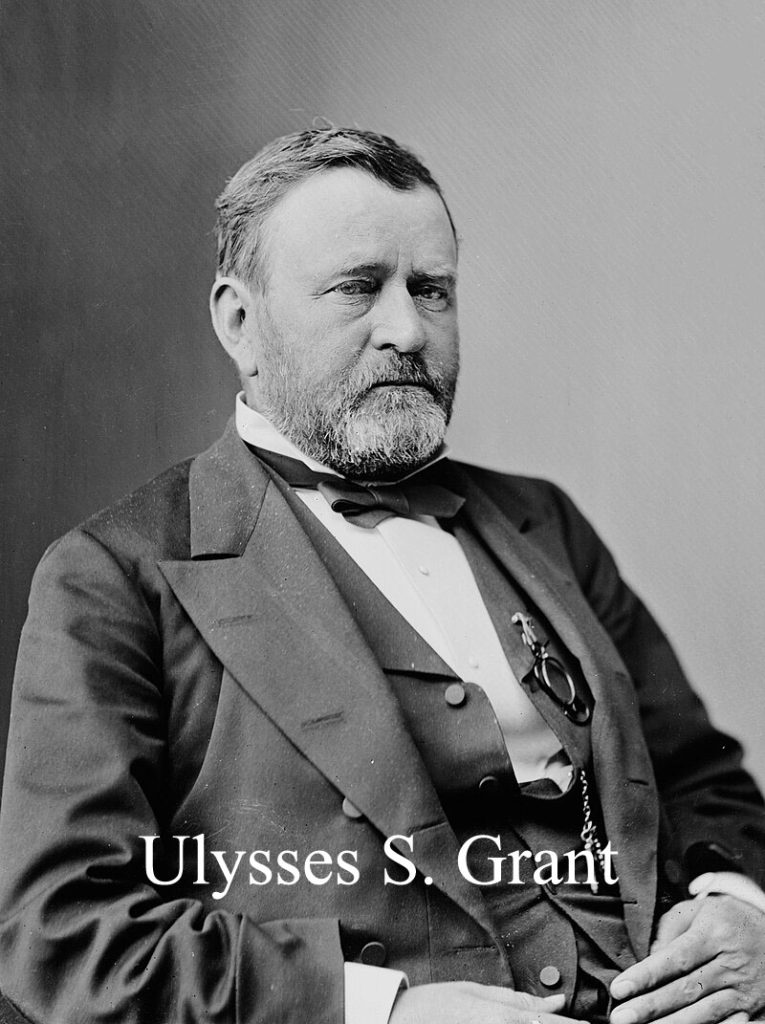
The Richmond-Petersburg campaign or the Siege of Petersburg was fought from June 9th, 1864 until March 25th, 1865. Grant’s strategy was to surround Petersburg, cutting off Lee’s supply route to the South and the Confederate Capital of Richmond, VA. Lee would finally abandon both cities in April of 1865. Lee and his forces would retreat west to the central Virginia village of Appomattox Court House. Robert E. Lee and his Army of Northern Virginia would surrender to the Union Army of the Potomac under the Commanding General of the United States Army, Ulysses S. Grant.
The 5th Texas, along with the rest of the Texas Brigade, fought in numerous engagements during the Siege of Petersburg. In August of 1864, one such engagement was the Second Battle of Deep Bottom, which occurred from August 14th to the 20th in Henrico County, VA. It was also known as Fussell’s Mill, New Market Road, Bailey’s Creek, Charles City Road or White’s Tavern. Confusing right? It’s no small wonder that T.F. referred to it as the Second Battle of White Swamp. The 1st and 5th Texas moved north from Fussell’s mill towards Charles City Road. William Henry Fitzhugh Lee’s Confederate cavalry was engaged with David McMurtrie Gregg’s Union cavalry. The Texas regiments attacked the flank of Gregg’s forces and together they forced the Union cavalry back towards Fisher’s Farm in White Oak Swamp. This is where T.F. was injured. While the skirmish was a success for the Confederate forces, it was by no means considered a significant battle.
T.F. was severely wounded in the neck and left lung during the battle. At the Second Battle of White Oak Swamp (remember, it was the Second Battle of Double Bottom), T. F. Meece recalled, “I was shot in the neck, the ball lodging against the upper posterior portion of the shoulder blade, cutting the windpipe and swallow. I breathed through the wound until closed by lint. .No one thought I could possibly live but was well and could have gone back to the command in 30 days. Took furlough for thirty days and went home and missed the battle in which Gen. Gregg was killed.”
General John Gregg was wounded at the Battle of Chickamauga in Georgia. Gregg was then transferred to Virginia and placed in command of the famous Hood’s Texas Brigade. He participated in most of the battles of the Army of Northern Virginia and was killed in action during the Battle of New Market Road, near Richmond on October 7, 1864.
He was sent to Howard’s Grove Hospital in Richmond, VA for treatment. The Hospital pass shows T.F. as being 6′ tall, he had grey eyes, dark hair, and a florid complexion. The Grove was originally a popular Richmond picnic and recreation area. It was taken over by the Confederacy at the outbreak of the Civil War and used as a drill and bivouac point for the first incoming troops to arrive in Richmond. The Howard’s Grove Hospital, along with other medical buildings, were constructed on this site in June of 1862. Following the war, in December of 1869, it was designated as a mental health hospital for African-Americans. The name was later changed to the Central Lunatic Asylum.
I have absolutely no idea of how to explain this injury. Was this even possible? Lint was used as a material to pack and absorb blood from wounds. Women would often pick lint from old cotton or linen clothing. This could not have been sanitary. The germ theory of disease and how infections spread were not known by physicians at the time of the Civil War.
The treatment of gunshot wounds was one of the most common medical procedures of the war. The bullet, if located, was extracted from the wound, the blood vessels sutured and the wound packed with medicinal lint and bandaged. Were surgeons capable of repairing the trachea or esophagus? A damaged trachea or esophagus can heal, depending on the severity of the damage, with small tears or injuries often healing on their own with proper care. Was any of this possible in 1864??? It was rumored that T.F. was buried with a Yankee bullet lodged in his body. Was this the one? T.F. would return to his Company following rehabilitation.
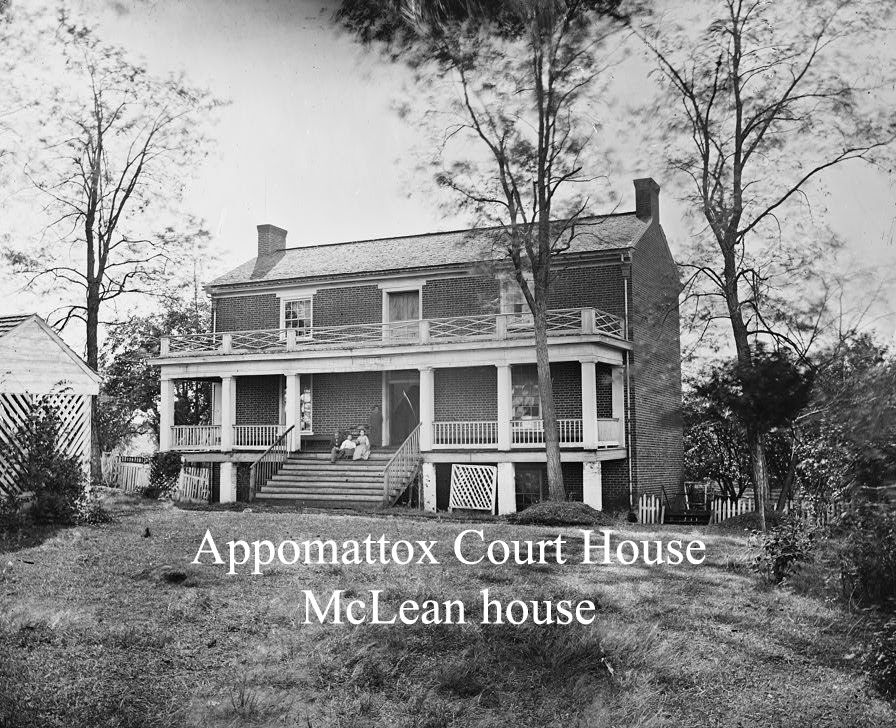
The end was near. Robert E. Lee realized his Army was cornered and he sent two letters to Ulysses S. Grant seeking terms for surrender. They would meet at the McLean House on April 9th, 1865 in a village named Appomattox Court House. It was previously called Clover Hill. T.F. was one of the few remnants of the Army of Virginia remaining to take part in the surrender. The regiment surrendered 12 officers and 149 enlisted men at Appomattox, the largest unit of what was left of the Texas Brigade.
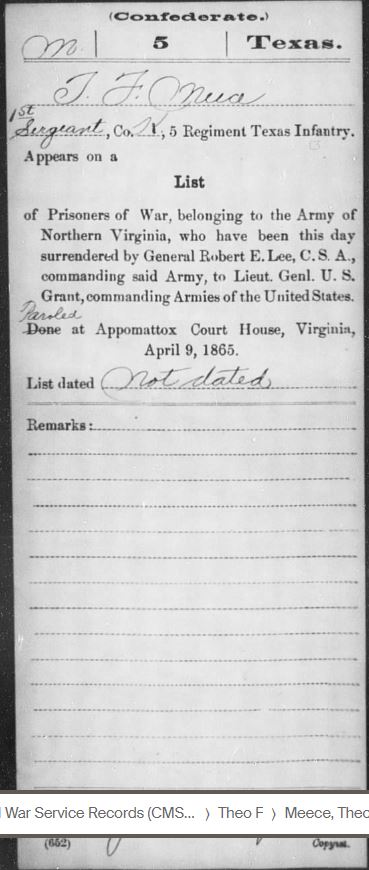
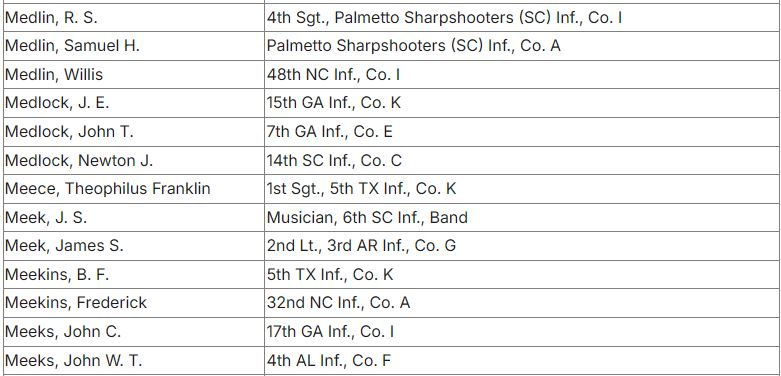
According to Civil War records, T.F. was on a “List of Prisoners of War belonging to the Army of Northern Virginia who have been this day surrendered by General Robert E. Lee, C.S.A. commanding said Army to Lieut. Genl. U.S. Grant, commanding Armies of the United States. Paroled/Done at Appomattox Court House, Virginia, April, 9, 1865.” I’ve included a roster of “The Men of the Original Battery K 5TH TEX. VOL. INF. REGT. COMPANY K – POLK COUNTY FLYING ARTILLERY”, which denotes each soldiers status following the Civil War.
According to his biography, T.F. returned to Livingston via New Orleans and Galveston. He home in June of 1865, just in time for his 25th birthday. Unfortunately, his brothers Calvin and James did not return home with him.
The Long Journey Home
Terms of Surrender
Headquarters Armies of the United States
Appomattox C H Va Apl 9th 1865.
Gen. R. E. Lee,
Comd’g C. S. A.
General,
In accordance with the substance of my letter to you of the 8th inst., I propose to receive the surrender of the Army of N. Va. on the following terms, to wit;
Rolls of all the officers and men to be made in duplicate, one copy to be given to an officer to be designated by me, the other to be retained by such officer or officers as you may designate. The officers to give their individual paroles not to take up arms against the Government of the United States until properly exchanged, and each company or regimental commander to sign a like parole for the men of their commands.
The arms, artillery, and public property to be parked and stacked and turned over to the officers appointed by me to receive them. This will not embrace the side-arms of the officers nor their private horses or baggage. This done officers and men will be allowed to return to their homes, not to be disturbed by the United States authority as long as they observe their parole and the laws in force where they may reside.
Very respectfully
U. S. Grant
Lt. Gen
Some soldiers never returned home. They resettled wherever the winds would take them. Some, fearing arrest or prosecution, fled the country. Some used the time to see the country. They traveled north to visit Washington DC, New York, Baltimore, the Natural Bridge, etc. Some curiously wanted to visit the trenches constructed by the Union during the Siege of Petersburg. Most wanted to go home. All grappled with the transition from military to civilian life.
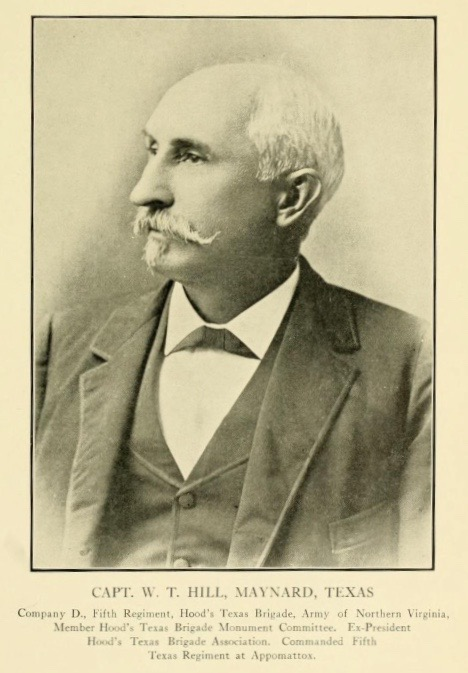
The Civil War was over. It was time for Theophilus Franklin (T.F.) Meece and his fellow Texans to head home. T.F. wrote in one of his many biographies, “surrender returned home via New Orleans-Galveston in June, 1865”. Captain William Traylor (W.T.) Hill, who served in Company “D”, commanded the 5th Texas Infantry Regiment. He was promoted to captain on August 23, 1862. He initially served as a 1st lieutenant under Captain Robert M. Powell in Company D. He was wounded at Gettysburg and again at the Wilderness. He was paroled at Appomattox on April 12, 1865, as Commander of the 5th Texas Infantry Regiment. Major William H. “Howdy” Martin, who served in Company “K”, commanded the 4th Texas Infantry Regiment. Together, they would lead approximately 300 soldiers home to Texas.
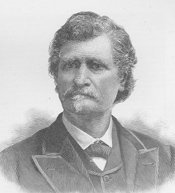
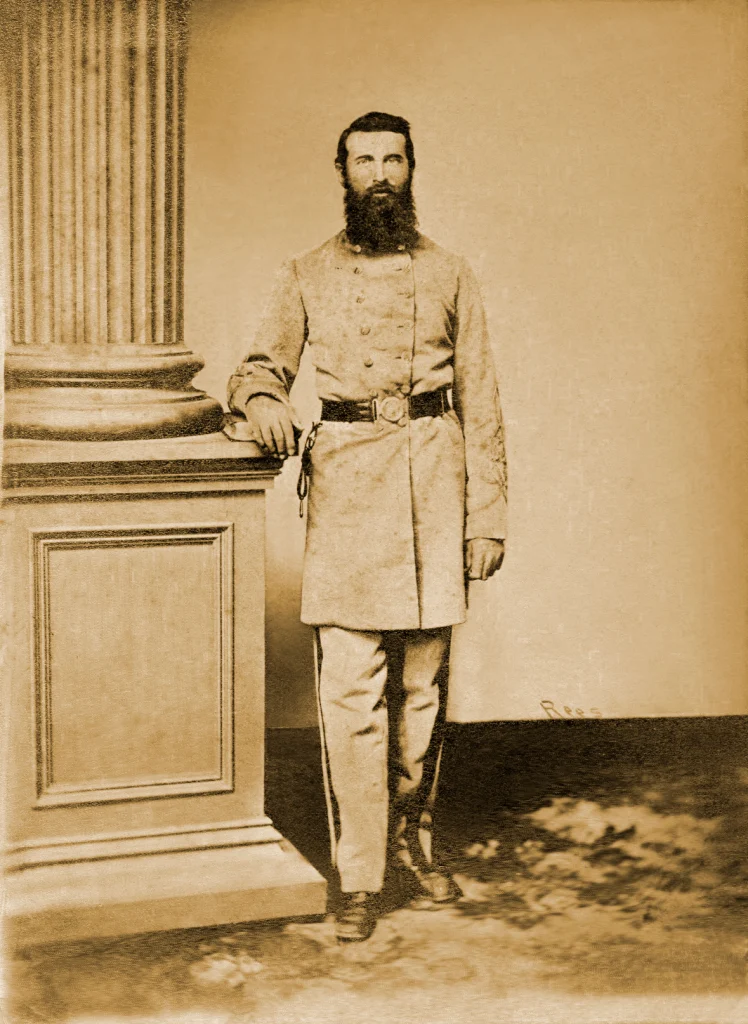
The intent was to travel by train from Danville, VA, through Morgantown, WV and on to Atlanta, GA. These plans were waylaid by the destruction of tracks by Federal troops, at many different places, along that route. I didn’t realize this, speaking of Morgantown, WV, but West Virginia did not become a State until June 20th, 1863. West Virginia was a part of Virginia but broke away after Virginia’s secession vote to leave the Union.
The Texans departed for Danville, VA on Thursday April 13th, 1865. The distance between Appomattox and Danville was approximately 88 miles. T.F. was very familiar with this area. When he returned from Texas to join his company T.F. wrote “On my way back I walked nearly 300 miles before reaching transportation and had to walk from Danville, Va., to Petersburg after defending the railroad bridge across the Staunton River.” On the 14th they reached Nowlan’s Mill, a grist mill located on Falling Creek, which was basically due north of Danville. Clean water and corn meal were plentiful, so they remained there the rest of the day. This also allowed any stragglers or injured soldiers to catch up to the main body. The group soon realized that traveling in such large numbers would make finding food and suitable campsites very difficult. A number of small groups, including A.B. Green, splintered off and went their own way.
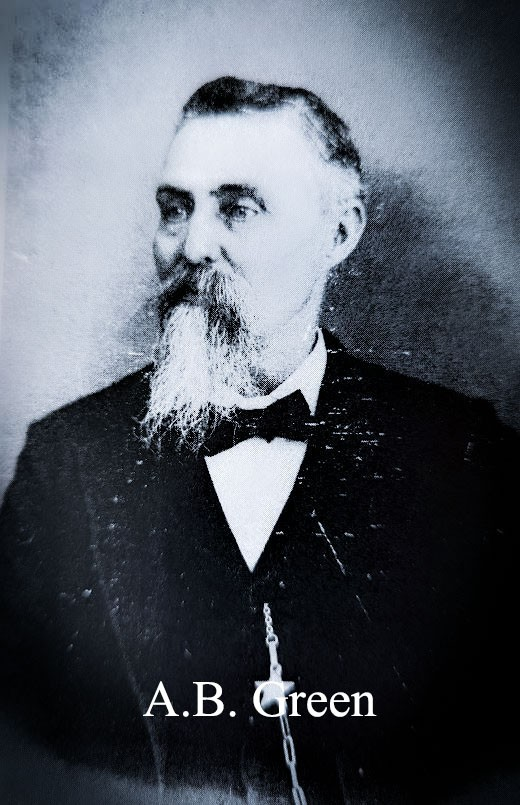
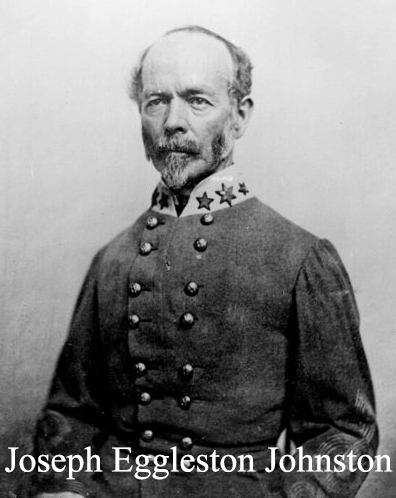
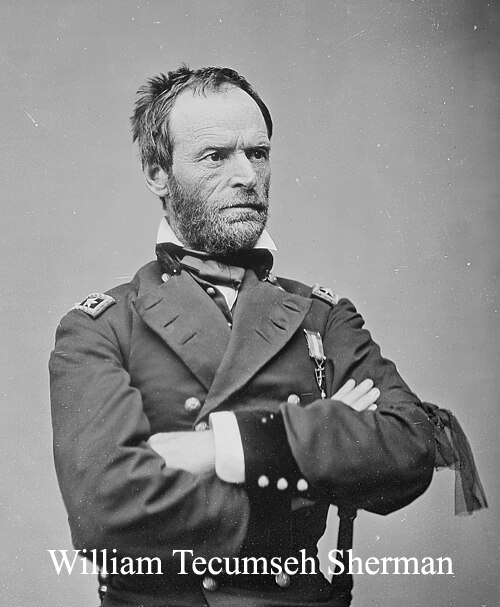
Once they departed Danville, they travelled to Greensboro, NC, which was approximately 45 miles away. Outside of Greensboro they met a group of Texans, from the Army of Tennessee, that had just surrendered to General William T. Sherman at Durham Station. It was called the Bennett Place Surrender, which was the largest surrender of Confederate troops in the war. General Joseph E. Johnston surrendered his army to General William T. Sherman there on April 26, 1865. A member of this group was Moses B. George who was familiar to some of the troops of Appomattox. He was the General Hood’s Quartermaster in Virginia. Surprisingly enough, he still had his cow, which he had brought with him at the onset of the war in 1861. Even more astonishingly was the fact that it was still producing milk. The Texans were thankful for that.
Next, it was on to Charlotte, NC, which was approximately 92 miles away. When the Texans reached Charlotte, just as they had in Danville & Greensboro, the Confederate soldiers raided Confederate warehouses. Once they arrived in Charlotte they discovered that President Jefferson Davis, John H. Reagan, Postmaster General of the Confederacy, and other members of the Congress and Cabinet were there. Reagan was also appointed Secretary of the Treasury towards the end of the war. Major William H. “Howdy” Martin, as senior officer of the Texans provided the Confederate officials with details of the surrender at Appomattox.
Martin also advised the group that he had an ample number of blank Federal parole forms in his possession. A portable printing press was set up at Appomattox and almost 30,000 parole passes were printed. Some of the parole slips for high-ranking Confederate officers were signed by U. S. Army officers, but slips for most Confederate soldiers were signed by their commanding officers. Reagan requested a sufficient number of parole forms to distribute them to the Confederate officials.
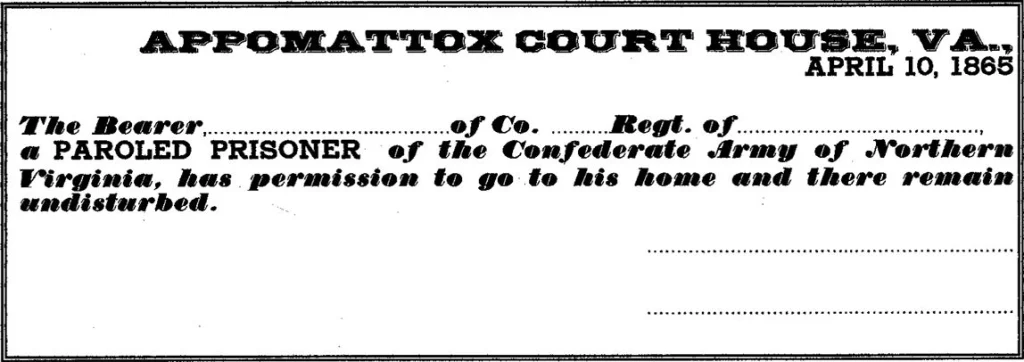
Among those who received a blank Federal pardon form was Louis T. Wigfall. He was a Senator from Texas who was appointed, a political appointment to be sure, to command the Texas Brigade of the Army of Northern Virginia at the outset of the war. He was replaced by John Bell Hood. Not only was he credited with Sam Houston’s defeat for the governorship of Texas in 1857, he also carried on public and conspiratorial campaigns to strip President Jefferson Davis of all power and influence. He reportedly masqueraded as a Private during his return to Texas.
Stephen Mallory was another Cabinet member to receive a parole form. Mallory was the Secretary of the Navy for the Confederate States of America during the Civil War. He served in President Jefferson Davis’s cabinet from 1861 until the end of the war in 1865. He and several of his colleagues in the cabinet were imprisoned and charged with treason. President Andrew Johnson would eventually grant him parole and he returned to Florida. According to the terms of his parole, he was not allowed to hold elective office.
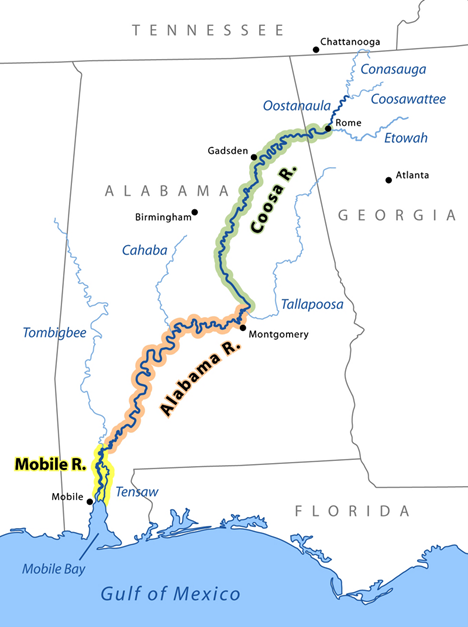
The Texans would continue their trek through Chester, SC, Abbeville, SC, Washington, GA, Atlanta, GA, West Point, GA, Auburn, AL and finally to Montgomery, AL. A portion of Hill’s group would arrive in Montgomery on Sunday May 7th, 1865, roughly (24) days from when they departed Appomattox. (400) plus Texans would arrive over the course of the next week. The troops were assigned temporary quarters in a large two-story building just outside of downtown Montgomery.
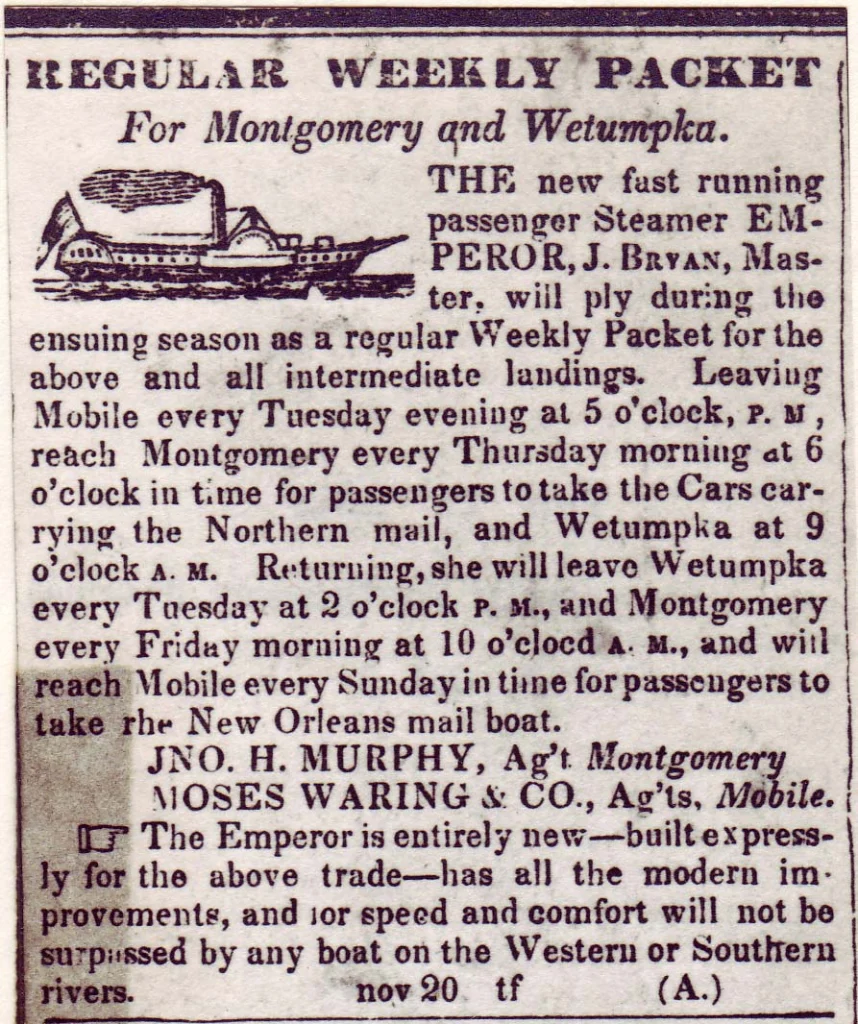
On Thursday May, 11th 1865 the men boarded the steamer Groesbeck. The steamer was fully loaded with supplies from Mobile, so the soldiers had to unload the vessel before departing to Mobile. To their dismay the Texans were ordered ashore at Selma, AL, by Union officers, to make space for a regiment of United States Colored Troops (USCT). “We protested, of course, and bitterly, against what some of our men denounced as a regular ‘Yankee trick,” wrote Captain W.T. Hill of the 5th Texas, “but our protest was unheeded, and we had to wait at Selma until the next day.”
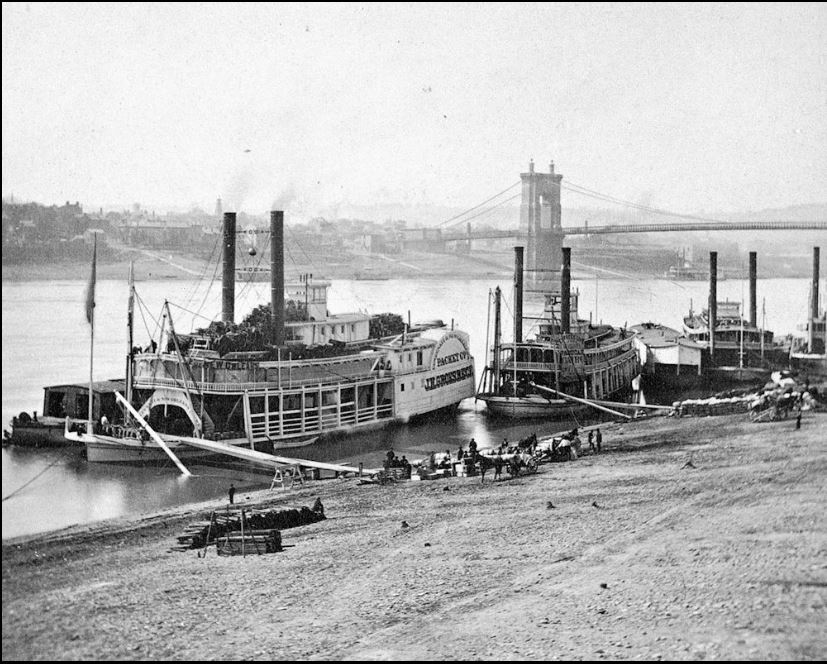
After a second days layover, the Texans boarded the steamer Lockwood and proceeded to Mobile, AL. After the Civil War, the Steamer Lockwood was involved in a significant disaster on the Mississippi River (see article).
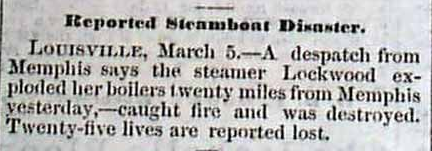
Explosion and Sinking: On March 7, 1866, the steamer Lockwood exploded and burned about eighteen miles below Memphis, Tennessee. Twenty people were killed and twenty-five injured in the incident. The steamboat was valued at $60,000 and was not insured.
Less than a year earlier, on April 27th, 1865, the boilers on the steamboat Sultana exploded and the boat sunk. The Sultana was transporting 1,950 paroled Union prisoners of war from the notorious Confederate prison Andersonville. 1,195 of the 2,200 passengers and crew died. The steamboat was only designed to hold 376 people. To this day, it is the deadliest maritime disaster in U.S. history. Unfortunately, the news of the disaster was overshadowed in the press by the end of the Civil War, the assassination of President Abraham Lincoln and the killing of his assassin, John Wilkes Booth, just the day before.
Once they arrived, the Texans enjoyed (5) relaxing days in the city. On Thursday May 18th, 1865 they departed Mobile for New Orleans on the steamer Iberville). The Iberville almost capsized on Lake Pontchartrain but the Texans arrived safely in New Orleans the following day.
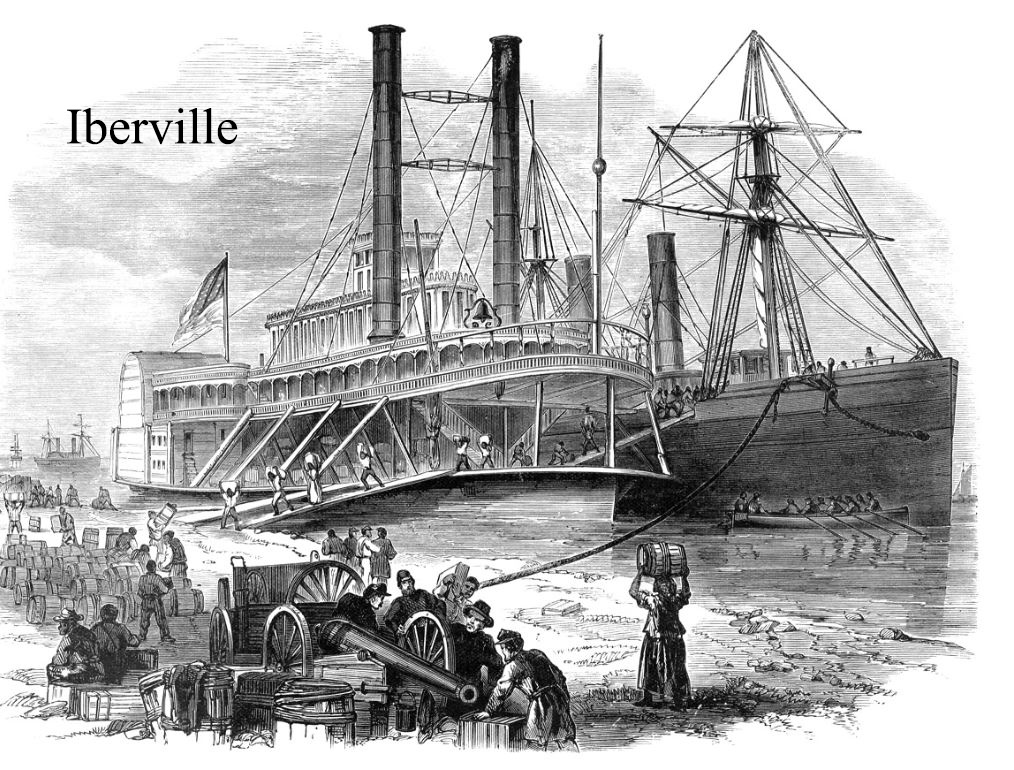
The Iberville, a sidewheel packet boat, was built in New Albany, Indiana in 1859 at the Humphrey & Dowerman Shipyard. Most famously, the steamboat Robert E. Lee was built there in 1866. I worked at Jeffboat Shipyard in Jeffersonville, IN, which is only (6) miles from New Albany. I never realized that there was a shipyard in New Albany. The Iberville was seized by the Union during the Civil War and pressed into service as a transport vessel. The Iberville experienced several encounters during its service as a Union transport, including running the gauntlet of Confederate batteries and guerrilla attacks. Later in the war, during the 1863 Siege of Port Hudson (Louisiana), the Iberville served as a hospital ship. After a fire, the Iberville was laid up in New Orleans in 1866. The Iberville was rebuilt and continued to operate, primarily on the New Orleans-Bayou Sara route. Bayou Sara is located on the Mississippi River, north of Baton Rouge.
As soon as the Texans departed the vessel they were met by the local Provost Marshal. During the Civil War, the Provost Marshal served as the Union Army’s military police, responsible for maintaining order among soldiers and civilians. They were placed in a large cotton shed with no amenities for nine days. While there, the Texans were guarded by USCT (United States Colored Troops) troops. The USCT soldiers attempted to forcibly cut the brass CSA (Confederate States of America) buttons from the Texan’s shirts. The Texans either removed or concealed the buttons themselves. Considering the circumstances, it had to be a very humbling and humiliating experience. You couldn’t think of a worse way to begin Reconstruction. If the loss of the Civil War hadn’t sunk in, I’m certain that it did that particular day. Captain Hill felt that “it was a slight that was intentionally demeaning.”
On Monday May 29th, 1865 the Texans boarded the steamer Hendrick Hudson on their final leg home. On Tuesday May 30th the Hendrick Hudson ran aground at the mouth of the Mississippi River, otherwise known as the Head of Passes. Sedimentation has always been an issue there. The Corps of Engineers keeps a dredge or dredges there on a regular basis to keep the channel at a 45’ depth. The Texans were stranded there for two days, in their cramped quarters, while two tugs attempted to refloat the steamer. On Wednesday May 31st another steamer by the name of “Exact” picked up the stranded passengers. It was described as a filthy, poorly maintained transport. The heat, humidity and the stench forced the men out of the ship’s hold and on to the deck. That sudden movement and shift in weight to one side of the vessel almost caused it to capsize.
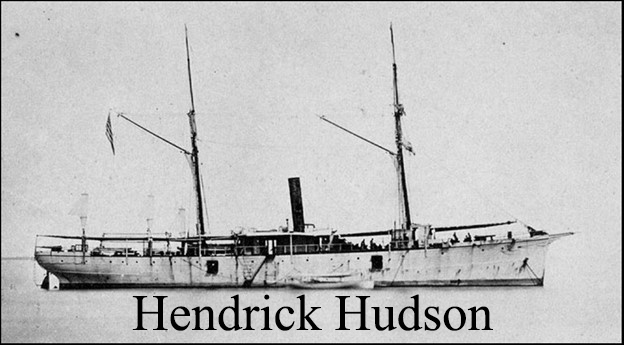
Keep in mind, these vessel were smaller than a standard river barge. A standard hopper barge is either 195′ or 200′ in length and 35′ wide. The hull is rectangular and flat. The beam of the steam-powered propeller ships was narrower and the shape of the hull included round-bottom displacement hulls or V-shaped planing hulls. This would have certainly affected the stability of the vessel it were overloaded to one side or the other. These vessels were designed to operate in the open waters of the Gulf of Mexico, yet they were small enough to operate on the inland waterways.
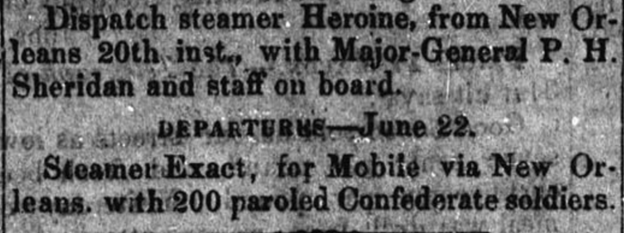
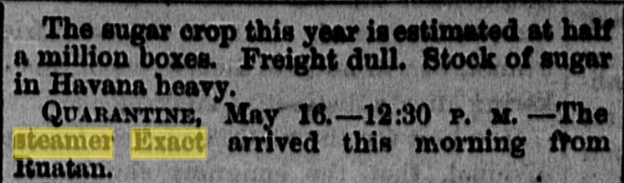
The New York Times had an article that stated “The schooner Saragaway has arrived at Quarantine from Ruatan, with twenty-seven passengers of the wrecked steamer Exact.” The following “Camp & Field” articles are part of a series of 78 columns published in the Holmes County (Ohio) Republican newspaper between February, 24 1881, and August 17, 1882. The articles were written about 20 years after the Civil War by Cpl. Theodore David Wolbach of Company E. Unfortunately, I was unable to find a photograph of the Exact. I’m assuming that it was a vessel similar in style to the Hendrick Hudson.
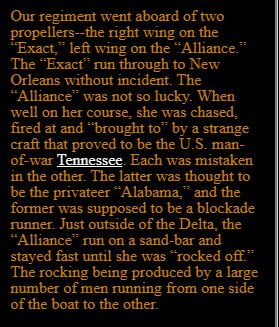
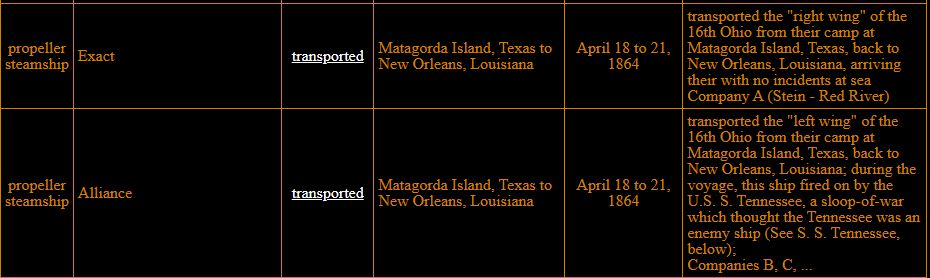
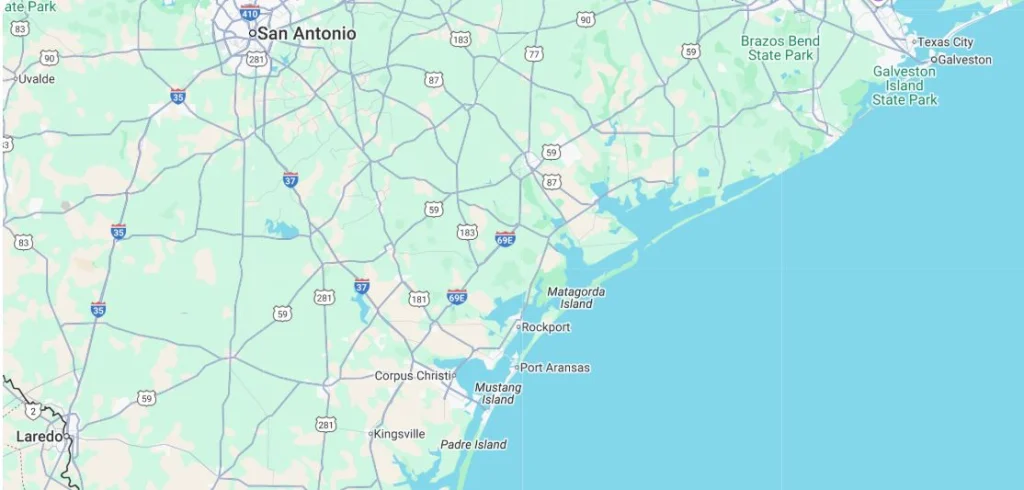
The “Exact” reached Galveston on Friday June, 2nd, 1865, the very day that General Edmund Kirby Smith, commander of the Army of the Trans-Mississippi, surrendered the last significant Confederate army to the Federals in that very same city. It had been nearly eight weeks since Robert E. Lee’s surrender at Appomattox. Smith immediately left the country for Mexico and then to Cuba, to escape potential prosecution for treason.
The captain of the “Exact had to navigate slowly through the Federal blockade fleet. Initially, they were not allowed to berth. Later, they were allowed to dock and they became the first civilian vessel to enter the port following the surrender. I’m positive that the Texans were overjoyed to be back on Texan soil. Some of them had not been back in four years. A delegation of Galveston’s prominent citizens were on hand to welcome them home. The group informed them that the citizens of Houston expected all of them to attend a series of dinners and balls welcoming them home that same evening.
Maj. Gen. Edward R. S. Canby, commander of the Federal Department of the Gulf, refused to allow the returning Texans the use of a Buffalo Bayou steamer to Houston. Buffalo Bayou is a slow-moving river which flows through Houston in Harris County, Texas. It flows approximately 53 miles east through the Houston Ship Channel into Galveston Bay and the Gulf of Mexico. The grateful citizens of Galveston arranged for an old railroad engine and some dilapidated flat cars to transport the Texans to Houston. Galveston, Houston and Henderson Railroad (GH&H) railroad built a bridge spanning Galveston Bay in 1860. The trip was approximately 50 miles. Not the most comfortable, considering they were riding on old flat cars. The convoy was named the “Homecoming Special.”
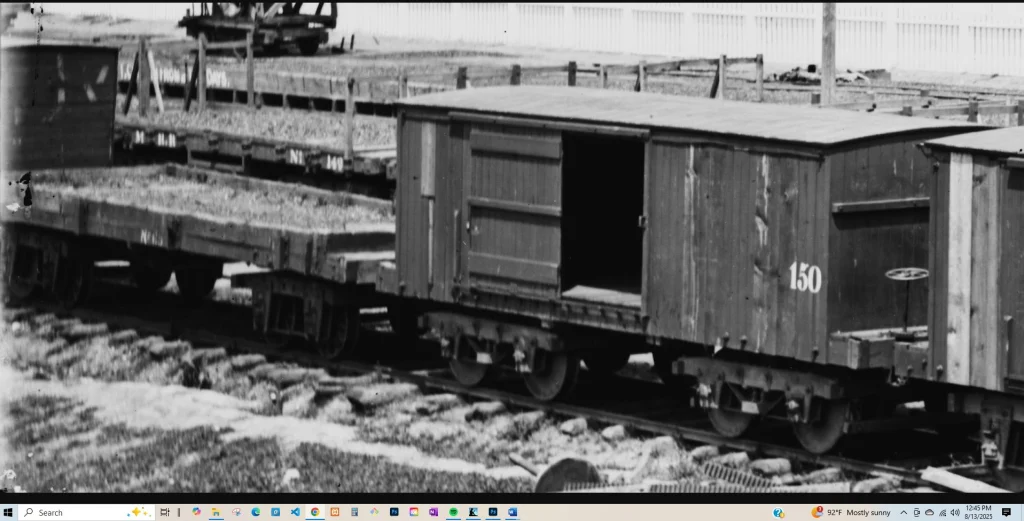
Their reputation preceded them. The exploits of Hood’s Texas Brigade were so well known that a large group of citizens were there to greet them when they arrived in Houston, even though it was midnight. The celebration continued on June 3rd and the group finally disbanded the following day to return to their respective homes. The trip home for T.F. would take another 10 to 14 hours by wagon or stagecoach. Livingston was approximately 74 miles from Houston. There were no railroad connections at that time and there were no paved roads. Upon arriving in Texas, Hill wrote “There let us drop the curtain, for the great drama was over.”
In total, T.F. traveled approximately 1,487 miles over the course of 52 days.
Appomattox Court House to Danville – 80.33 miles
Danville, VA to Greensboro, NC – 44.99 miles
Greensboro, NC to Charlotte, NC – 92.43 miles
Charlotte, NC to Chester, SC – 49.64 miles
Chester, SC to Abbeville, SC – 86.64 miles
Abbeville, SC to Washington, GA – 49.58 miles
Washington, GA to Atlanta, GA – 112.68 miles
Atlanta, GA to West Point, GA – 80.30 miles
West Point, GA to Auburn, AL – 30.42 miles
Auburn, AL to Montgomery, AL – 54.76 miles
Montgomery, AL to Mobile, AL – 169.9 miles
Mobile, AL to New Orleans, LA – 143.59 miles
New Orleans, LA to Galveston, TX – 367.55 miles (486 nautical miles – 559.29 miles)
Galveston, TX to Houston, TX – 50.02 miles
Houston, TX to Livingston, TX – 74.09 miles
Total Miles – 1,487.32